
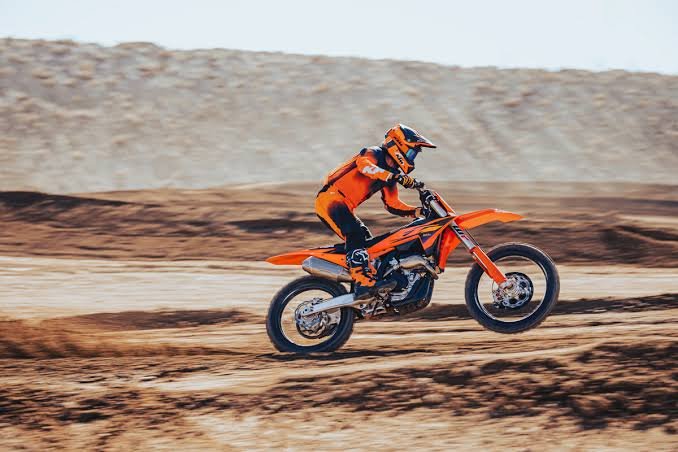
If you are interested in technical off-road motorcycling, you have probably heard the terms Hard Enduro and Extreme Enduro. They are often used to describe motorcycles climbing impossible hills, crossing rocky riverbeds, fighting through mud, and navigating terrain that would stop an ordinary dirt bike rider.
But what is the actual difference between Hard Enduro and Extreme Enduro?
The simplest answer is that Hard Enduro is now the more widely recognized competition term for extremely technical off-road enduro racing, while Extreme Enduro is often used as a broader or informal description of particularly difficult enduro riding and racing.
Both styles demand excellent balance, throttle control, clutch technique, endurance, line selection, and confidence on difficult terrain. The terminology overlaps considerably, which is why riders sometimes use the two names interchangeably.
This guide explains the differences, riding techniques, motorcycles, difficulty levels, famous races, and how these skills relate to enduro riding in destinations such as Morocco.
What Is Hard Enduro?
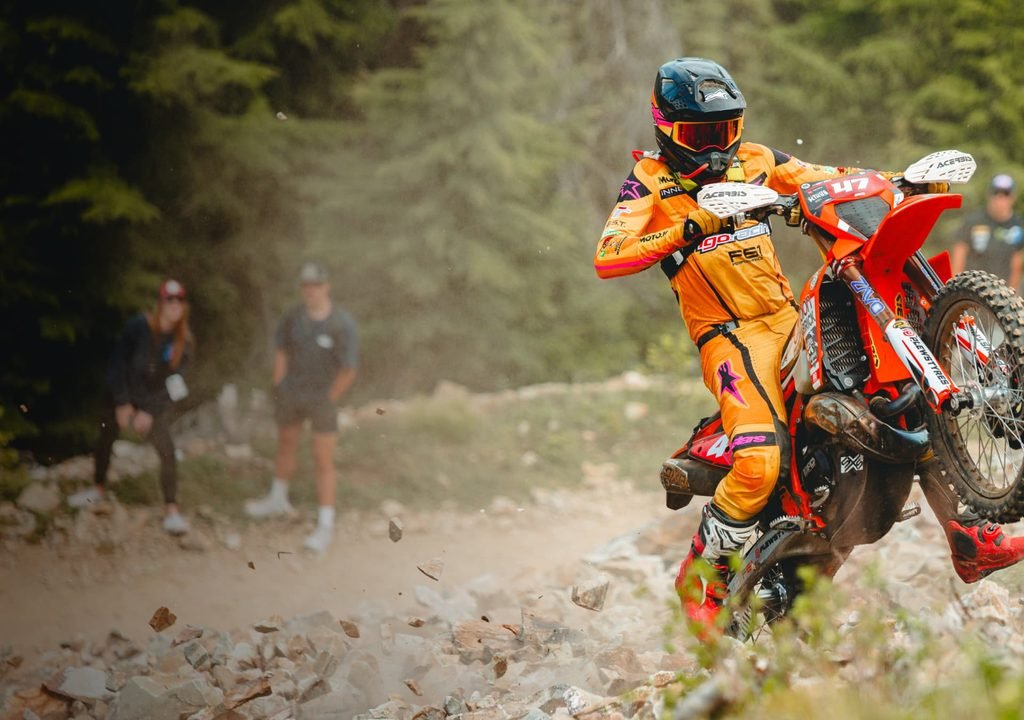
Hard Enduro is an off-road motorcycle discipline designed around extremely difficult natural terrain and technical obstacles.
Instead of concentrating primarily on speed, Hard Enduro forces riders to overcome obstacles that test balance, traction, motorcycle control, physical endurance, and problem-solving ability.
A Hard Enduro route can include steep mountain climbs, loose rocks, boulder fields, tree roots, narrow forest trails, riverbeds, deep mud, logs, sand, rocky descents, and technical off-camber sections.
Some obstacles are so difficult that riders travel only a few kilometres per hour.
This is one of the biggest differences between Hard Enduro and faster off-road disciplines. Winning is not simply about opening the throttle. Riders must constantly decide where to place the motorcycle, how much traction is available, when to use the clutch, and how much energy to conserve.
A technically skilled rider can therefore be faster than a more aggressive rider with greater outright speed.
What Is Extreme Enduro?
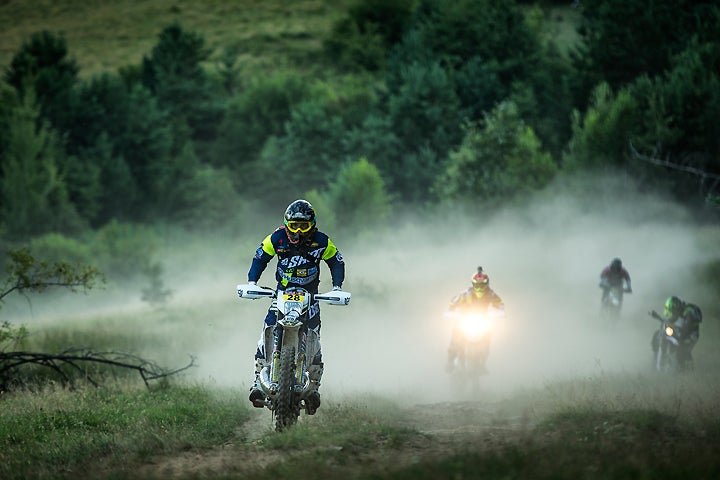
Extreme Enduro generally describes enduro riding or racing performed in exceptionally difficult terrain.
Historically, the term became popular as increasingly demanding enduro competitions appeared around the world.
Today, however, Hard Enduro has become the more standardized competition term. Because of this, riders, organizers, motorcycle manufacturers, and media outlets sometimes use Hard Enduro and Extreme Enduro to describe very similar riding.
Extreme Enduro normally includes the same type of challenges associated with Hard Enduro: steep climbs, rocks, mud, roots, riverbeds, narrow mountain trails, difficult descents, and technical obstacles.
The word “extreme” simply emphasizes the severity of the terrain.
Hard Enduro vs Extreme Enduro: Main Differences
The difference is smaller than many riders imagine.
| Feature | Hard Enduro | Extreme Enduro |
|---|---|---|
| Meaning | Recognized off-road racing discipline | Broader term for extremely difficult enduro |
| Terrain | Rocks, roots, hills, rivers, mud and technical trails | Similar extremely technical terrain |
| Speed | Usually low to medium | Low to medium |
| Main challenge | Technical riding and endurance | Technical riding and obstacle difficulty |
| Navigation | Depends on the event | Depends on the event |
| Duration | Can range from short races to multi-day events | Varies by event |
| Bikes | Lightweight enduro motorcycles | Lightweight enduro motorcycles |
| Skill level | Intermediate to professional | Intermediate to professional |
| Main skills | Balance, clutch, traction and endurance | Balance, clutch, traction and endurance |
In practical riding terms, there may be almost no difference.
The important factor is not what the event is called but how technical the terrain is.
Is Hard Enduro the Same as Extreme Enduro?
Hard Enduro and Extreme Enduro are very closely related, and the terms are frequently used interchangeably.
The modern competition world generally favors the term Hard Enduro.
That means famous events involving extremely difficult natural terrain can be described as Hard Enduro races even when riders or media sometimes refer to them as Extreme Enduro.
It is therefore misleading to think of Hard Enduro and Extreme Enduro as completely separate motorcycle disciplines.
A more practical way to understand them is:
Enduro → Hard Enduro → increasingly extreme terrain and obstacles
The harder the route becomes, the more important technical ability becomes compared with outright speed.
Which Is More Difficult: Hard Enduro or Extreme Enduro?
There is no universal answer because difficulty depends more on the individual race or route than on the name used to describe it.
One Hard Enduro event may involve several days of exhausting mountain riding, while another may consist of shorter but extremely technical sections.
Likewise, an event marketed as Extreme Enduro could contain terrain that is considerably harder than another event called Hard Enduro.
Difficulty is normally determined by several factors:
- Steepness of the terrain
- Size of rocks and obstacles
- Amount of available traction
- Length of the route
- Weather conditions
- Altitude
- Navigation
- Number of consecutive obstacles
- Time limits
- Rider fatigue
The hardest events combine several of these factors at the same time.
A steep climb by itself might be manageable.
A steep climb after six hours of riding, with wet rocks and an exhausted rider, becomes completely different.
What Terrain Is Used in Hard Enduro?
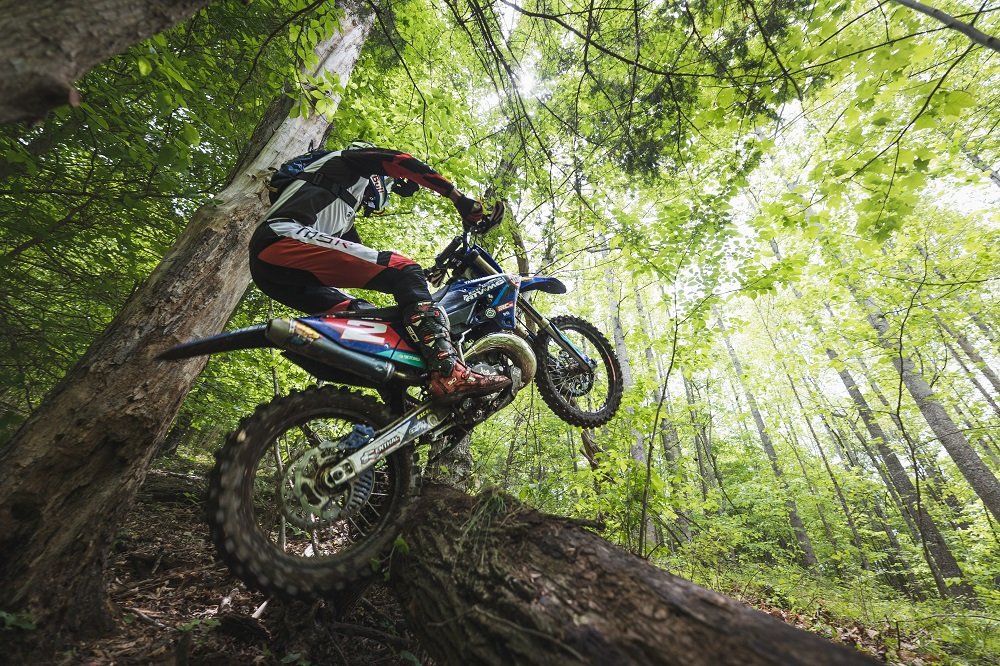
Hard Enduro uses some of the most difficult terrain accessible by motorcycle.
Rocky Climbs
Loose rocks make maintaining traction extremely difficult. Riders must control wheel spin while keeping enough momentum to continue climbing.
Rock Gardens
Rock gardens require precise wheel placement and excellent balance. Hitting the wrong rock can immediately change the motorcycle’s direction.
Riverbeds
Dry and wet riverbeds are common because they provide naturally technical terrain containing loose stones, boulders, drops and unpredictable lines.
Tree Roots
Wet roots are especially challenging because they offer very little grip when crossed at the wrong angle.
Mud
Deep mud tests throttle control, body position and the rider’s ability to maintain momentum without excessive wheel spin.
Steep Descents
Descending can sometimes be harder than climbing. Riders must control both brakes while maintaining balance on loose surfaces.
Logs
Natural fallen trees and artificial log obstacles require good front-wheel lifting technique and accurate throttle timing.
Sand
Deep sand presents a different challenge.
Instead of ultra-slow obstacle riding, sand often requires momentum, body positioning and smooth throttle control.
This is particularly important when riding enduro motorcycles in Morocco.
What Skills Do Hard Enduro Riders Need?
Hard Enduro riders need considerably more than speed.
Balance
Good balance allows riders to move slowly without constantly putting their feet on the ground.
This becomes especially important on narrow trails, rocks and steep climbs.
Clutch Control
The clutch is one of the most important tools in technical enduro riding.
Experienced riders constantly combine throttle and clutch input to control the exact amount of power reaching the rear wheel.
Throttle Control
Too much throttle creates wheel spin.
Too little throttle causes the motorcycle to lose momentum.
Finding the correct balance is essential.
Line Selection
The fastest-looking line is not always the best line.
Experienced riders quickly analyze obstacles and choose the route that provides the best traction and lowest risk.
Body Position
Moving forward, backward or sideways changes how the motorcycle reacts.
Correct body position is essential when climbing, descending and riding through sand.
Front-Wheel Control
Lifting the front wheel allows riders to clear rocks, logs, holes and other obstacles.
Endurance
Hard Enduro is physically exhausting.
Riders frequently stand on the footpegs for long periods while constantly moving their body around the motorcycle.
Physical fitness becomes increasingly important during long riding days.
What Motorcycles Are Used for Hard Enduro?
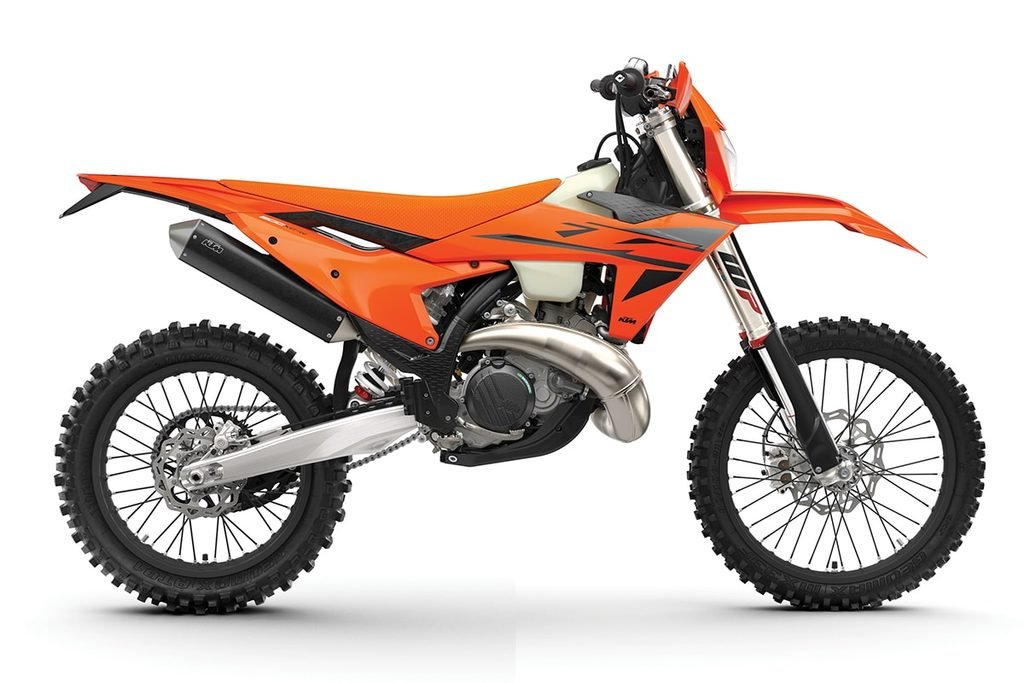
Hard Enduro motorcycles are normally lightweight enduro machines designed specifically for technical off-road riding.
Popular examples include:
KTM 300 EXC
One of the most recognizable motorcycles in technical enduro. Its two-stroke engine provides strong low-speed torque combined with relatively low weight.
Husqvarna TE 300
Another popular two-stroke option offering similar characteristics for difficult technical terrain.
GASGAS EC 300
A lightweight two-stroke frequently used for demanding enduro riding.
Beta RR 300
Popular among riders who prefer a powerful but controllable two-stroke motorcycle.
Four-stroke motorcycles such as the KTM 450 EXC-F are also extremely capable enduro machines, particularly when the terrain includes a mixture of technical sections, faster pistes, open desert and longer distances.
Two-Stroke vs Four-Stroke for Hard Enduro
One of the most common discussions among enduro riders is whether a two-stroke or four-stroke motorcycle is better.
For extremely slow and technical Hard Enduro, many riders prefer 250cc or 300cc two-strokes.
Their low weight makes it easier to change direction, lift the motorcycle over obstacles and recover after a mistake.
Two-stroke engines also provide excellent power for steep climbs.
Four-stroke motorcycles have different advantages.
A four-stroke normally provides predictable traction, strong engine braking and smooth power delivery.
For longer enduro adventures involving gravel tracks, desert terrain, sand, rocky pistes and faster sections, a four-stroke such as the KTM 450 EXC-F can be an excellent choice.
This is one reason 450cc enduro motorcycles work particularly well for riding in Morocco, where the terrain changes considerably throughout the day.
Hard Enduro vs Traditional Enduro
Traditional Enduro and Hard Enduro share the same roots, but their riding styles can feel very different.
Traditional enduro normally combines trail riding, timed sections and varied terrain.
Hard Enduro concentrates much more heavily on technical difficulty.
Traditional enduro riders may encounter fast forest trails, gravel roads, climbs and flowing single track.
Hard Enduro removes much of that comfort.
The obstacles become larger, hills become steeper, traction becomes worse and riders spend considerably more time operating near the limits of what the motorcycle can climb or cross.
Traditional Enduro asks:
How quickly can you ride this terrain?
Hard Enduro often asks:
Can you get through this terrain at all?
That difference completely changes the riding strategy.
Is Hard Enduro Suitable for Beginners?
A complete beginner should normally learn basic enduro techniques before attempting serious Hard Enduro terrain.
Hard Enduro requires several skills simultaneously.
A rider approaching a steep rocky climb may need clutch control, balance, throttle precision, body positioning and correct line selection within a few seconds.
Without those fundamentals, technical riding quickly becomes exhausting.
Beginners should first become comfortable with standing on the motorcycle, braking on loose terrain, turning while standing, climbing moderate hills, descending safely, controlling wheel spin and riding slowly using the clutch.
Once those skills become automatic, more technical obstacles can be introduced progressively.
What Is the Best Way to Start Hard Enduro?
Start slowly.
Technical enduro is not about attempting the biggest obstacle on your first day.
Developing strong fundamentals produces much faster progress.
Begin with slow-speed balance exercises.
Then practice clutch and throttle coordination.
After that, introduce small hills, rocks and obstacles.
As confidence improves, increase the difficulty gradually.
This approach also reduces fatigue.
One of the biggest mistakes beginners make is fighting the motorcycle with their upper body instead of using technique.
A relaxed rider with good balance can often cross difficult terrain using considerably less energy.
Famous Hard Enduro Races
Several events have become legendary within the Hard Enduro community.
Red Bull Romaniacs
Held in Romania, Romaniacs is famous for its long days in mountainous terrain, steep climbs and extremely demanding technical riding.
It combines endurance, navigation and technical ability over multiple days.
Erzbergrodeo
Held at Austria’s Erzberg iron mine, Erzbergrodeo is famous for huge climbs, rocks and exceptionally difficult technical sections.
Simply reaching the finish is a major achievement.
Sea to Sky
Sea to Sky takes riders from the Mediterranean coastline into the mountains of Turkey.
Its combination of beach riding, forests, rocks and mountain terrain creates one of the most distinctive Hard Enduro experiences.
Roof of Africa
Held in Lesotho, Roof of Africa is one of the historic names in technical enduro.
Mountain passes, rocks and demanding elevation changes make it an enormous physical and technical challenge.
Hixpania
Hixpania in Spain combines rocks, steep terrain and technical riding in another well-known Hard Enduro competition.
Each event has its own character, which demonstrates why comparing difficulty based purely on the terms “Hard” or “Extreme” Enduro can be misleading.
How Do Hard Enduro Riders Train?
Hard Enduro training combines motorcycle technique with physical conditioning.
Riders spend significant time practicing slow-speed motorcycle control.
Balance exercises are particularly valuable because many difficult sections cannot be attacked at high speed.
Clutch training is equally important.
A rider should be capable of producing small, controlled bursts of power without suddenly losing rear-wheel traction.
Hill-climb practice teaches riders how to maintain momentum while selecting the correct gear and body position.
Downhill practice develops confidence with front and rear braking.
Riders also practice recovering the motorcycle.
This may sound unimportant until you are standing on a steep hill after dropping a 100-kilogram motorcycle.
Energy management is an important part of Hard Enduro.
Does Fitness Matter in Hard Enduro?
Yes.
Technical motorcycle riding uses much more energy than many beginners expect.
The legs absorb movement from the motorcycle while the upper body controls direction. The hands continuously operate the clutch, throttle and brakes.
Technical sections can also require pushing, lifting or repositioning the motorcycle.
Cardiovascular fitness therefore helps riders maintain concentration during long riding days.
Strength is useful, but technique remains extremely important.
A strong rider using bad technique may become exhausted much faster than a lighter rider who understands balance and traction.
Hard Enduro Riding in Morocco
Morocco provides a completely different environment from traditional European Hard Enduro.
Instead of spending an entire day inside wet forests and muddy mountain trails, riders can experience sand dunes, rocky desert tracks, dry riverbeds, mountain passes, loose stones, fast pistes and remote desert terrain.
That variety makes Morocco particularly interesting for enduro riders.
Around Merzouga, riders can experience the enormous dunes surrounding Erg Chebbi.
Further south and west, areas around Ouzina, Ramlia, Tafraout Sidi Ali, the Saghro Mountains, Zagora and Erg Chegaga introduce rocky pistes, technical riverbeds and remote desert landscapes.
The difficulty can also be adapted to the rider.
Experienced riders can search for more demanding sand and technical lines, while intermediate riders can concentrate on improving control without immediately entering extreme competition-style terrain.
Is Morocco Good for Hard Enduro Training?
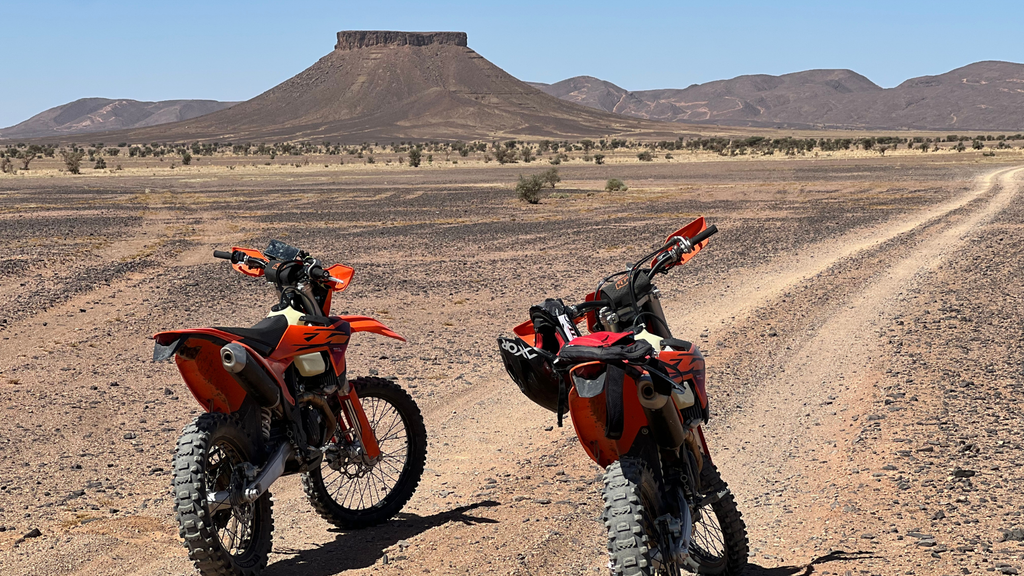
Morocco is especially useful for developing skills that transfer into Hard Enduro and technical off-road riding.
Deep sand improves balance and throttle control.
Loose climbs teach riders how to manage traction.
Rocky tracks improve line selection.
Dry riverbeds develop confidence on unstable surfaces.
Long riding days improve endurance.
The biggest difference is space.
Many European enduro environments involve narrow forests and extremely confined trails.
Morocco provides enormous open landscapes where riders can practice motorcycle control while experiencing terrain that changes continuously.
Enduro Motorcycle Tours in Morocco
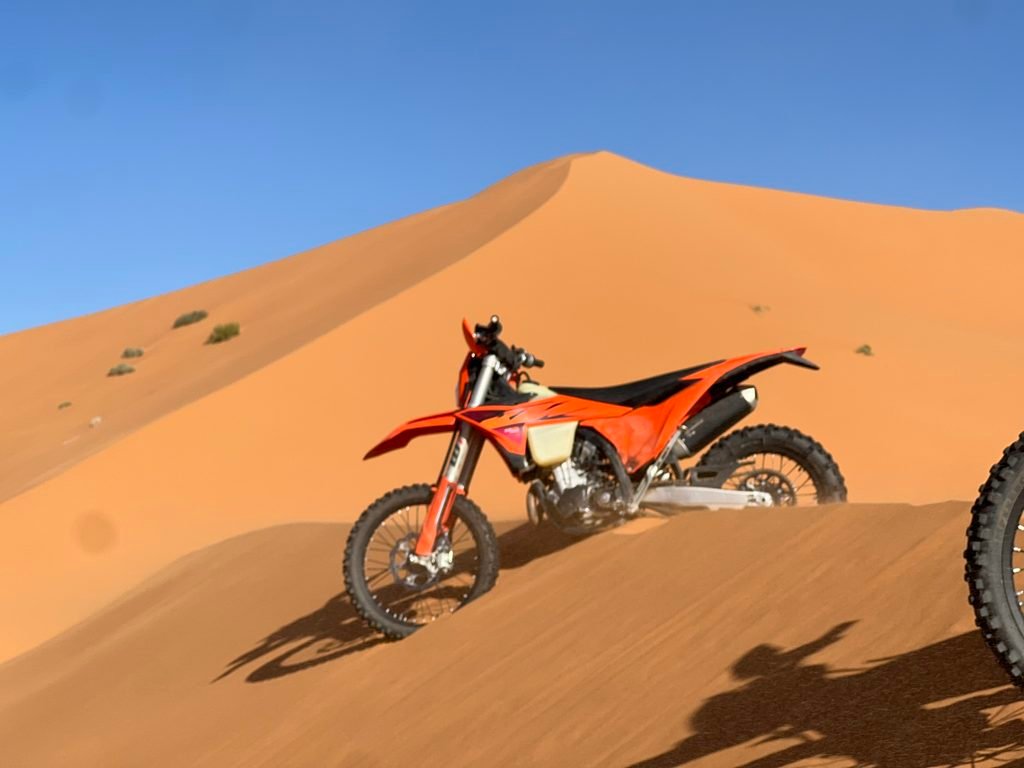
For riders who want to experience technical off-road motorcycling without entering a Hard Enduro race, a guided Morocco enduro motorcycle tour can be an excellent alternative.
At Morocco Enduro Ride, our tours are designed around real off-road riding across Morocco’s desert and mountain environments.
We use KTM 450 EXC-F enduro motorcycles and adapt the route according to the group’s riding experience.
Tours can include dunes, rocky tracks, dry riverbeds, Dakar-style pistes, remote villages, desert plateaus and mountain terrain.
A professional guide leads the route, while an assistance vehicle supports longer multi-day adventures.
Our main Enduro tour starting points include:
Merzouga for Erg Chebbi dunes and Sahara riding.
Errachidia for routes combining mountain terrain, desert tracks and Merzouga.
Ouarzazate for longer adventures through the Saghro Mountains, Draa Valley, Zagora, M’Hamid and Erg Chegaga.
Tours can range from short rides to multi-day off-road expeditions.
Why Experienced Enduro Riders Enjoy Morocco
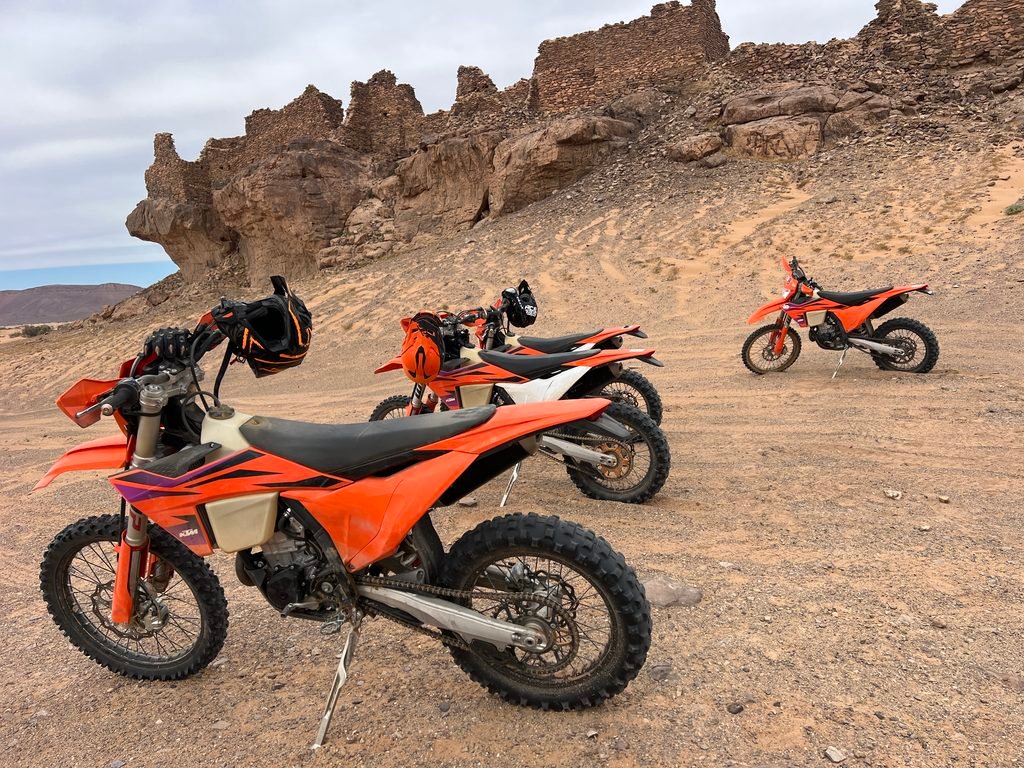
Experienced riders often enjoy Morocco because the terrain rewards smooth motorcycle control rather than simply aggressive riding.
A rider who constantly spins the rear wheel in deep sand quickly becomes tired.
A rider who understands momentum can cross the same terrain using much less effort.
Rocky Moroccan pistes create the same lesson.
Selecting the correct line and allowing the motorcycle to move underneath the body is normally more effective than fighting every stone.
This combination of endurance, traction management and changing terrain makes Morocco an excellent destination for developing overall enduro ability.
Hard Enduro vs Rally Raid
Hard Enduro should not be confused with Rally Raid.
Hard Enduro concentrates heavily on technical obstacles.
Rally Raid concentrates much more heavily on long-distance riding, navigation, endurance and maintaining speed across large areas.
Hard Enduro may involve crawling across a rocky section at walking speed.
Rally Raid riders may travel hundreds of kilometres during a stage.
Morocco has an important connection with Rally Raid because many desert tracks have been used historically in cross-country rally competition.
Enduro riders visiting Morocco can therefore experience terrain that feels completely different from European Hard Enduro while still developing important off-road skills.
Hard Enduro vs Motocross
Motocross takes place on relatively short closed circuits containing jumps, berms, straights and purpose-built obstacles.
Speed is extremely important.
Hard Enduro usually takes place across natural terrain.
Instead of clearing large jumps, riders deal with rocks, roots, rivers, steep climbs and unpredictable traction.
A talented motocross rider will already possess excellent motorcycle control, but transitioning to Hard Enduro still requires learning slow-speed balance, clutch modulation and technical obstacle riding.
Hard Enduro vs EnduroCross
EnduroCross brings technical enduro obstacles into a compact racing environment.
Tracks can include rocks, logs, water, tires and other artificial obstacles.
Because everything happens inside a relatively small area, races are intense and spectator-friendly.
Hard Enduro takes similar motorcycle-control skills into natural outdoor terrain and often extends the physical challenge over considerably longer distances.
What Makes a Good Hard Enduro Rider?
The best Hard Enduro riders combine several characteristics.
They remain calm when traction disappears.
They understand how to use the clutch precisely.
They can balance the motorcycle at extremely low speeds.
They recognize good lines quickly.
They conserve energy instead of fighting the motorcycle.
Most importantly, they know when to attack an obstacle and when to slow down.
Technical riding rewards intelligence as much as aggression.
Hard Enduro vs Extreme Enduro: Which Should You Choose?
For most recreational riders, the name of the discipline matters less than the type of experience you want.
If you enjoy rocks, logs, roots, extremely steep climbs and slow technical riding, Hard Enduro-style training is the natural direction.
If your objective is broader off-road adventure, you might prefer traditional Enduro or desert Enduro.
And if you want long-distance navigation and faster open terrain, Rally Raid may appeal more to you.
Morocco offers an interesting middle ground.
You can experience challenging Enduro riding without spending an entire day attempting impossible competition obstacles.
Instead, you can combine technical riding with dunes, mountains, fast desert pistes and long-distance adventure.
Frequently Asked Questions About Hard Enduro vs Extreme Enduro
What is the main difference between Hard Enduro and Extreme Enduro?
There is no universally clear separation between the two. Hard Enduro is the more established modern competition term, while Extreme Enduro is commonly used to describe extremely difficult enduro riding or events. In everyday conversation, the terms often overlap.
Is Extreme Enduro harder than Hard Enduro?
Not necessarily. Difficulty depends on the event, terrain, weather, duration and route rather than the name alone.
What motorcycle is best for Hard Enduro?
Lightweight 250cc and 300cc two-stroke enduro motorcycles are extremely popular for highly technical riding. KTM 300 EXC, Husqvarna TE 300, GASGAS EC 300 and Beta RR 300 are common examples.
Can you ride Hard Enduro on a 450?
Yes. A 450cc four-stroke can handle difficult enduro terrain, although the additional weight and stronger engine characteristics can make very slow technical riding more demanding. A bike such as the KTM 450 EXC-F is especially versatile when a route combines technical sections with faster tracks and longer distances.
Is Hard Enduro dangerous?
Hard Enduro involves inherent risks because riders negotiate steep, unstable and difficult terrain. Proper protective equipment, suitable riding experience and progressive training are extremely important.
Is Hard Enduro suitable for beginners?
Serious Hard Enduro is not ideal for complete beginners. New riders should first develop fundamental off-road skills including standing position, braking, balance, clutch control and hill riding before progressing to difficult obstacles.
Is Hard Enduro slower than motocross?
Usually, yes. Hard Enduro can contain extremely slow technical sections where riders move at walking speed. Motocross places greater emphasis on speed, jumps and racing around a prepared circuit.
Do Hard Enduro riders use two-strokes?
Many do. Two-stroke motorcycles are popular because they are lightweight and provide excellent power for technical climbs. Four-strokes are also used depending on terrain and rider preference.
Is Red Bull Romaniacs Hard Enduro or Extreme Enduro?
Red Bull Romaniacs is widely regarded as one of the world’s major Hard Enduro events. The term Extreme Enduro may also be used informally to describe the extreme nature of its terrain.
Is Erzbergrodeo a Hard Enduro race?
Yes. Erzbergrodeo is one of the most famous examples of extremely technical Hard Enduro racing.
Is Morocco good for Enduro riding?
Yes. Morocco offers a remarkable combination of Sahara dunes, rocky tracks, dry riverbeds, mountain passes, fast desert pistes and remote landscapes. Routes can be adjusted for intermediate and experienced off-road riders.
Final Thoughts: Hard Enduro or Extreme Enduro?
The debate around Hard Enduro vs Extreme Enduro is more about terminology than two completely separate styles of motorcycle racing.
Both terms describe riding where technical ability becomes more important than pure speed.
Riders must control traction, select lines carefully, balance the motorcycle and conserve enough energy to continue through difficult terrain.
Modern competitive motorcycling increasingly uses Hard Enduro as the established name for this discipline, while Extreme Enduro remains a widely understood description of exceptionally difficult enduro riding.
Whether your goal is eventually competing in technical races or simply becoming a stronger off-road rider, the same fundamentals matter: balance, clutch control, throttle precision, endurance and confidence.
And you do not need to enter one of the world’s toughest races to develop those skills.
A multi-day Enduro motorcycle tour in Morocco offers a different kind of challenge, combining sand dunes, rocky desert tracks, mountain terrain and long-distance adventure aboard a lightweight enduro motorcycle.
For riders who want to experience Morocco beyond the asphalt, that combination is difficult to beat.