
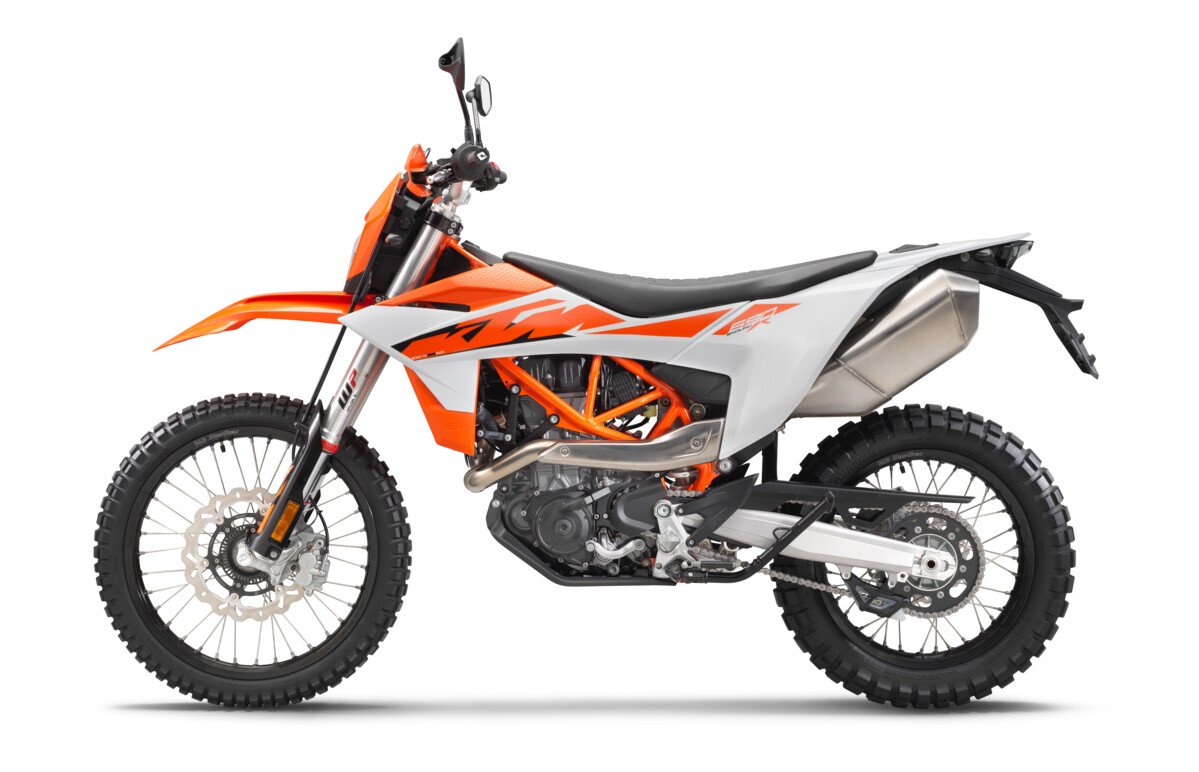
Dual sport motorcycles remain one of the best ways to explore beyond the pavement in 2026.
Unlike large adventure motorcycles that can weigh well over 450 pounds, the best dual sport bikes keep things relatively simple: a capable single-cylinder engine, long-travel suspension, off-road-friendly wheels and tires, and enough road equipment to legally connect one trail to another.
Some are essentially street-legal enduro motorcycles. Others are comfortable all-rounders designed to commute during the week and explore dirt roads at the weekend.
And that is exactly why choosing the best dual sport motorcycle is not simply about horsepower.
A rider tackling technical singletrack has very different needs from someone crossing hundreds of kilometers of pavement before reaching a desert trail.
For this 2026 guide, we compared performance, weight, suspension, reliability, road comfort, maintenance, accessibility and overall versatility to identify nine of the best dual sport motorcycles you can ride in 2026.
Best Dual Sport Motorcycles in 2026 at a Glance
| Motorcycle | Engine | Approx. Weight | Seat Height | Best For |
|---|---|---|---|---|
| Husqvarna FE 350s | 349cc single | 254 lb without fuel | 37.4 in | Serious off-road riding |
| KTM 690 Enduro R | 693cc single | 357 lb fueled | 36.8 in | Best high-performance all-rounder |
| Honda CRF300L | 286cc single | Around 311 lb | 34.7 in | Beginners and everyday riding |
| Honda CRF450RL | 450cc single | 289 lb curb | 37.2 in | Japanese enduro performance |
| Stark VARG EX | Electric | 264 lb | 39.0 in | Electric enduro riding |
| Suzuki DR650S | 644cc single | 366 lb curb | 34.8 in | Simple long-distance travel |
| Kawasaki KLX300 | 292cc single | 302 lb curb | 35.2 in | Value and trail riding |
| Kawasaki KLR650 | 652cc single | 456 lb curb | 34.3 in | Highway and adventure travel |
| Yamaha TW200 | 196cc single | 278 lb wet | 31.1 in | Beginners and technical slow-speed riding |
Specifications and prices can vary by country and trim. Weight definitions also differ between manufacturers.
What Is a Dual Sport Motorcycle?
A dual sport motorcycle is designed to operate both on public roads and off-road terrain.
Most traditional dual sports use a single-cylinder engine, 21-inch front wheel, long-travel suspension, narrow bodywork and relatively upright ergonomics. Unlike pure dirt bikes, they normally include the equipment required for road registration, such as headlights, mirrors, indicators and a license-plate holder.
The category ranges from machines that are practically plated enduro bikes to heavier motorcycles designed for long-distance road and dirt-road travel.
That flexibility is what makes dual sports so appealing.
You can ride from home, spend the day exploring trails, gravel roads, mountain tracks or desert pistes, and then ride home without needing a trailer.
Dual Sport vs Adventure Motorcycle: What’s the Difference?
The boundary between a dual sport motorcycle and an adventure bike has become increasingly blurred.
Generally, dual sports prioritize:
- Lower weight
- Better off-road handling
- Longer suspension travel
- Narrower bodywork
- Single-cylinder engines
- 21-inch front wheels
Adventure motorcycles normally provide better wind protection, larger fuel tanks, more luggage capacity, more comfortable seats and stronger highway performance.
Think of it this way:
A dual sport is usually a dirt bike that has learned to ride on the road. An adventure bike is usually a road motorcycle that has learned to ride in the dirt.
There are exceptions, of course, and motorcycles such as the KTM 690 Enduro R sit directly between the two categories.
1. Husqvarna FE 350s — Best Dirt-Focused Dual Sport
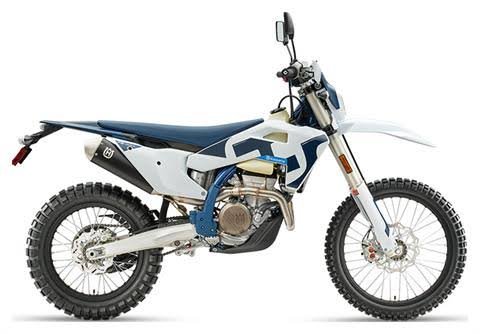
If off-road performance is your main priority, the Husqvarna FE 350s deserves to be near the top of your shopping list.
The 2026 FE 350s is much closer to an enduro race bike than a conventional road-going dual sport. It combines a lightweight chassis with WP XACT suspension, Brembo brakes, an approximately 7.7-liter fuel tank and 300 mm of suspension travel at both ends. Claimed weight is roughly 115 kg before fuel.
That low weight becomes extremely important once the terrain gets difficult.
On rocky climbs, deep sand, narrow trails and technical terrain, a difference of 50 or 100 pounds can completely change how manageable a motorcycle feels.
Why the FE 350s stands out
The 350cc engine occupies an excellent middle ground. It provides considerably more performance than most 250–300cc recreational dual sports without delivering the aggressive feel and additional rotating mass riders sometimes associate with larger 450–500cc enduro machines.
The chassis and suspension are also designed for riders who actually intend to spend significant time off-road.
Best for
Experienced riders who prioritize technical trail riding, enduro terrain and minimum weight.
Things to consider
The FE 350s is expensive, tall and requires more maintenance than relaxed Japanese dual sports such as the CRF300L or KLX300.
It is also much less pleasant for prolonged highway riding.
Verdict: One of the best street-legal choices available when your definition of dual sport is roughly 90% dirt and 10% pavement.
2. KTM 690 Enduro R — Best Powerful Dual Sport
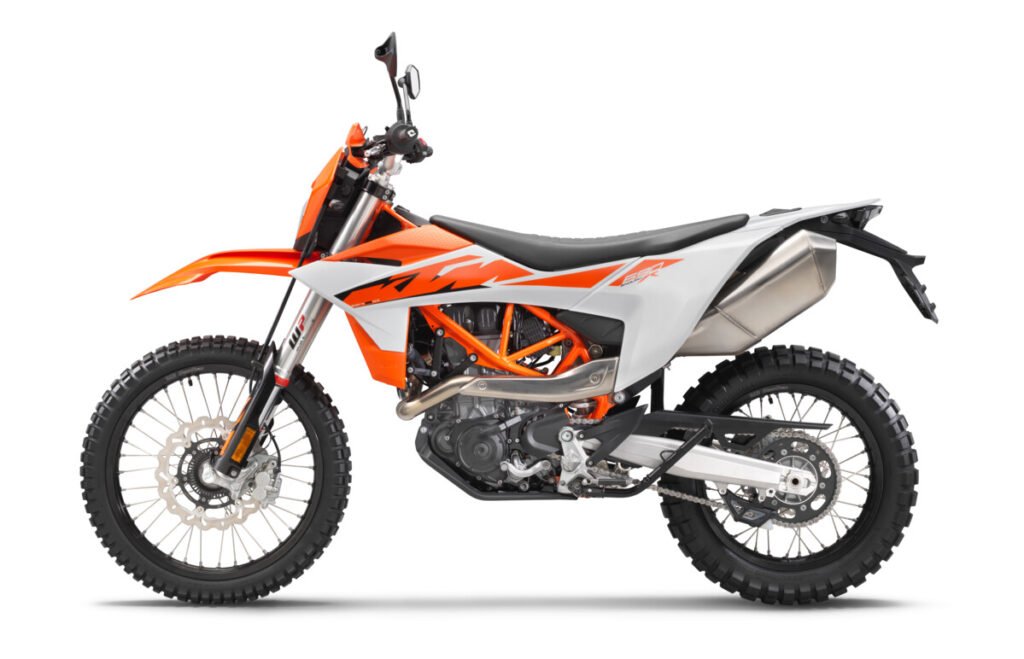
Few motorcycles cover as broad a range of terrain as the 2026 KTM 690 Enduro R.
Its updated 692.7cc LC4 single produces 79 PS and 73 Nm of torque, while KTM claims a fully fueled weight of approximately 162 kg or 357 pounds. It also gets 265 mm of front suspension travel, 250 mm at the rear and a 13.3-liter fuel tank.
That gives the 690 something lightweight enduro-based dual sports struggle to provide: genuine road performance.
You can comfortably connect distant trails, travel at highway speeds and still attack rough terrain when the pavement disappears.
For 2026 KTM also revised the LC4 engine and added updated electronics and technology, further improving the bike’s road/off-road versatility.
Why the 690 Enduro R stands out
Its biggest advantage is the combination of serious horsepower and manageable weight.
It’s substantially faster on pavement than a CRF300L, KLX300 or DR650 while remaining considerably lighter and more dirt-oriented than most middleweight adventure motorcycles.
Add soft luggage, improved wind protection and a more comfortable seat, and the 690 can become an exceptionally capable lightweight adventure machine.
Best for
Riders who need one motorcycle for fast roads, desert tracks, gravel, travel and serious off-road exploration.
Things to consider
At approximately 357 pounds fueled, it still feels heavy compared with proper enduro machines when the terrain becomes deeply technical.
Its tall seat and strong engine also make it less beginner-friendly.
Verdict: Possibly the strongest choice in 2026 for riders wanting a genuinely fast 50/50 road-and-dirt motorcycle.
3. Honda CRF300L — Best Dual Sport Motorcycle for Beginners
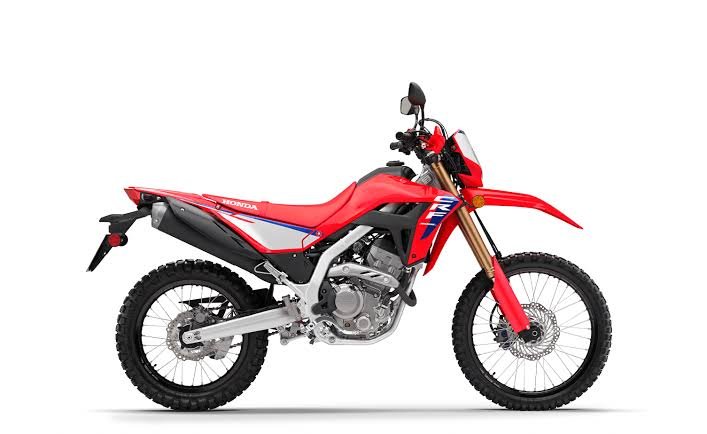
You don’t need 70 horsepower to have an unforgettable off-road adventure.
For many riders, the Honda CRF300L actually makes more sense than a high-performance enduro.
Its 286cc fuel-injected single-cylinder engine is smooth and predictable, while the chassis is narrow and manageable. Honda’s current-generation model also features revised suspension, improved heat management and LED lighting.
The biggest advantage, however, is simplicity.
Instead of demanding race-bike maintenance schedules or expert-level riding ability, the CRF300L is comfortable commuting, exploring backroads and learning basic off-road technique.
Why the CRF300L stands out
Honda has created an extremely approachable motorcycle that can still tackle surprisingly difficult terrain in capable hands.
It also benefits from enormous aftermarket support.
Owners can choose from:
- Larger fuel tanks
- Skid plates
- Handguards
- Luggage racks
- Windscreens
- Suspension upgrades
- Seats
- Exhaust systems
- Navigation towers
That makes the CRF300L an excellent platform for building your own lightweight adventure bike.
Best for
Newer riders, commuters, budget-conscious travelers and anyone looking for a reliable do-everything dual sport.
Things to consider
Its suspension and power output cannot compete with motorcycles such as the FE 350s or CRF450RL.
It is also noticeably heavier than true enduro-derived machines.
Verdict: One of the easiest dual sports to recommend because it is affordable, approachable and capable enough for almost any casual adventure.
Model-year availability differs by market; Honda’s U.S. site currently lists the standard CRF300L as a 2025 model while offering the CRF300L Rally as a 2026 model.
4. Honda CRF450RL — Best Japanese Performance Dual Sport
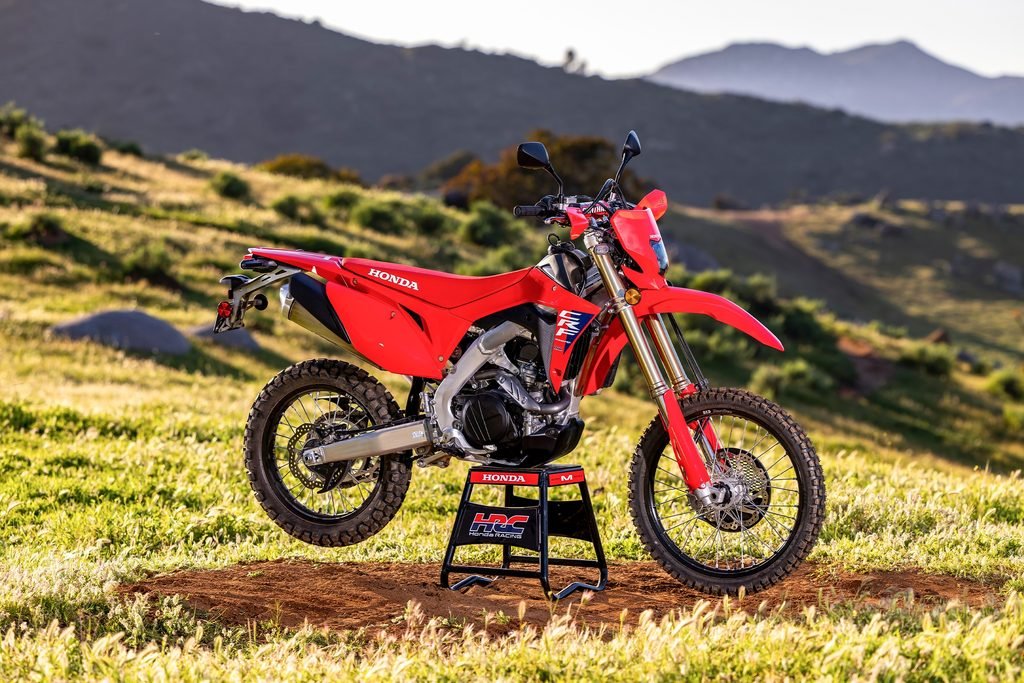
Want enduro-level performance but prefer Japanese engineering?
Meet the Honda CRF450RL.
The 2026 model uses a 450cc liquid-cooled Unicam four-stroke engine combined with a wide-ratio six-speed transmission. Suspension is serious business: a 49 mm inverted Showa fork provides 12 inches of travel, while the Pro-Link rear setup provides 11.8 inches.
Honda lists curb weight at just 289 pounds, seat height at 37.2 inches and fuel capacity at 2.0 gallons.
Those numbers make its intentions obvious.
This isn’t a CRF300L with a bigger engine. It is fundamentally a performance-oriented machine.
Why the CRF450RL stands out
It offers the suspension travel, ground clearance and chassis characteristics serious off-road riders expect while remaining fully street legal.
The engine also delivers much stronger performance than entry-level Japanese dual sports.
Best for
Experienced riders wanting a street-legal Japanese enduro motorcycle.
Things to consider
Performance comes with compromises.
Maintenance requirements are higher than those of relaxed dual sports, the seat is tall and long motorway trips aren’t where the CRF450RL feels happiest.
Verdict: A compelling alternative to European performance dual sports for riders who want a Honda badge on a genuinely dirt-focused machine.
5. Stark VARG EX — Best Electric Dual Sport Motorcycle
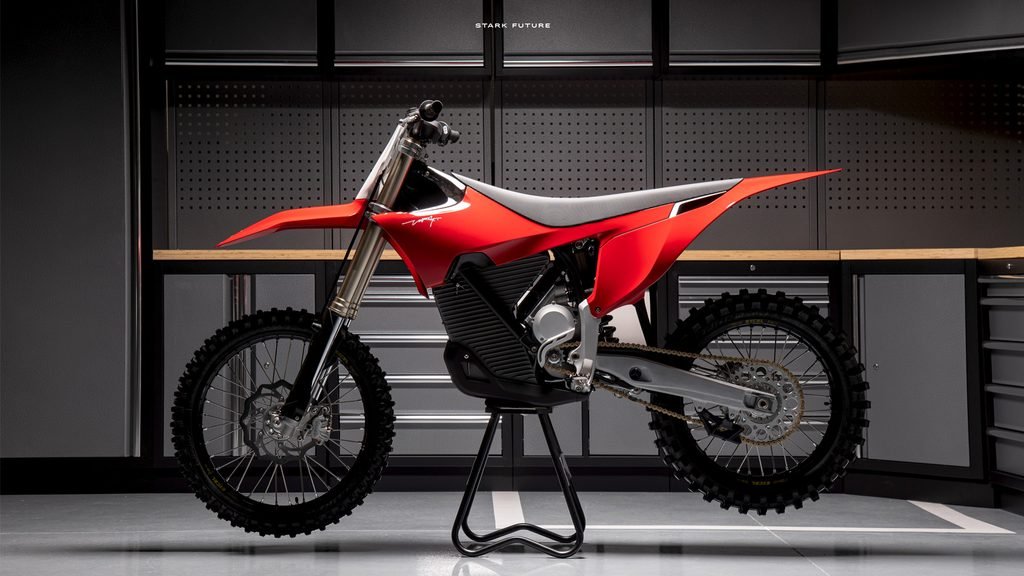
The Stark VARG EX proves that electric motorcycles are becoming impossible for serious off-road riders to ignore.
Stark offers adjustable power between 10 and 80 hp, a claimed weight of 120 kg or roughly 264 pounds and KYB suspension with 300 mm of front travel and 303 mm at the rear.
It also eliminates several traditional enduro-bike concerns.
There is no clutch, no conventional gearbox, no engine oil changes, no valve adjustments and no possibility of stalling the engine on a difficult climb.
Power and regenerative braking can also be configured electronically.
Why the VARG EX stands out
The absence of a clutch dramatically simplifies technical riding.
You can concentrate on traction, braking, line selection and body position rather than constantly managing engine rpm and clutch engagement.
The adjustable power delivery is equally clever. Instead of being permanently stuck with the behavior of an 80-horsepower motorcycle, riders can reduce output for difficult terrain or increase it when conditions allow.
Stark says the EX’s 7.2 kWh battery can provide up to six hours of trail riding depending heavily on pace, rider ability and conditions.
Best for
Technical enduro, short-distance trail riding and riders interested in cutting-edge electric performance.
Things to consider
Charging infrastructure still makes electric motorcycles less practical for remote multi-day travel.
A gasoline motorcycle can be refueled in minutes almost anywhere. A battery requires electricity and time.
Verdict: Perhaps the most interesting motorcycle on this list and an indication of where performance enduro could be heading.
6. Suzuki DR650S — Best Simple Adventure Dual Sport
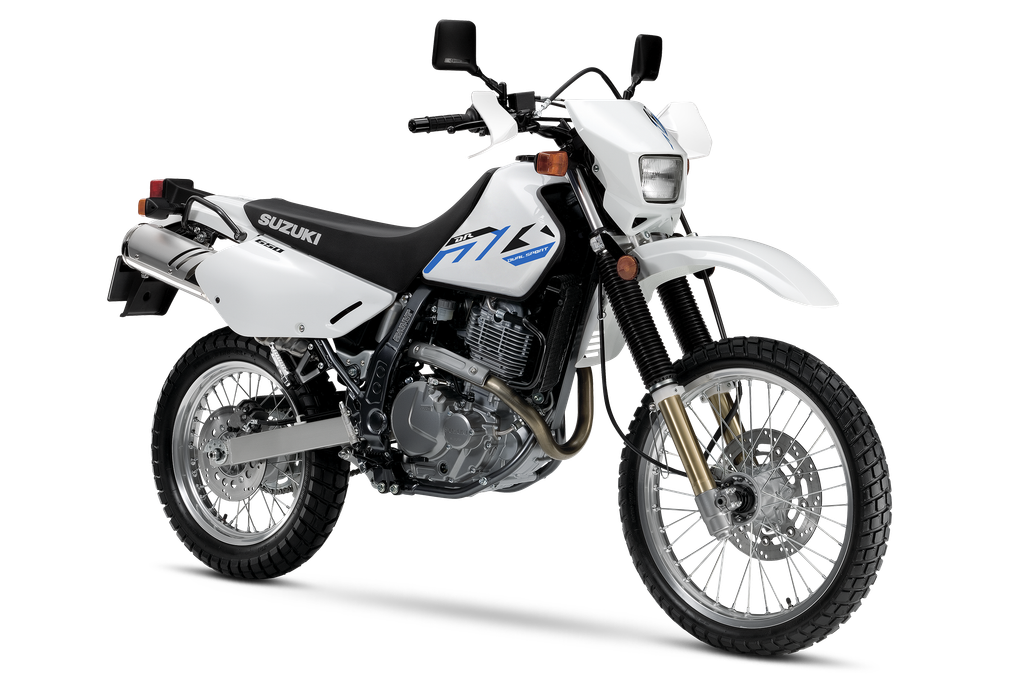
The Suzuki DR650S refuses to disappear, and there is a good reason.
Its formula is almost aggressively simple: a 644cc air/oil-cooled single-cylinder engine, carburetor, five-speed gearbox, steel chassis and very little unnecessary technology.
For 2026 Suzuki lists a 366-pound curb weight, 34.8-inch seat height and 3.4-gallon fuel tank. The U.S. base MSRP is $7,299.
On paper, that doesn’t sound particularly exciting.
In the real world, that simplicity can be extremely valuable.
Why the DR650S stands out
The DR is easy to understand, easy to modify and well suited to remote travel.
There is also an enormous aftermarket available for:
- Larger fuel tanks
- Suspension upgrades
- Luggage systems
- Windscreens
- Bash plates
- Seats
- Engine protection
- Carburetor modifications
A properly prepared DR650 can become an excellent lightweight overland motorcycle.
Best for
Long-distance explorers who value reliability, simplicity and repairability more than electronics and outright horsepower.
Things to consider
Stock suspension is basic and aggressive off-road riders will quickly find its limits.
The motorcycle also feels noticeably heavier than modern enduro-based dual sports.
Verdict: Old-school technology can still be extremely effective. For remote adventure travel, the DR650 remains one of the most proven formulas around.
7. Kawasaki KLX300 — Best Value Trail Dual Sport
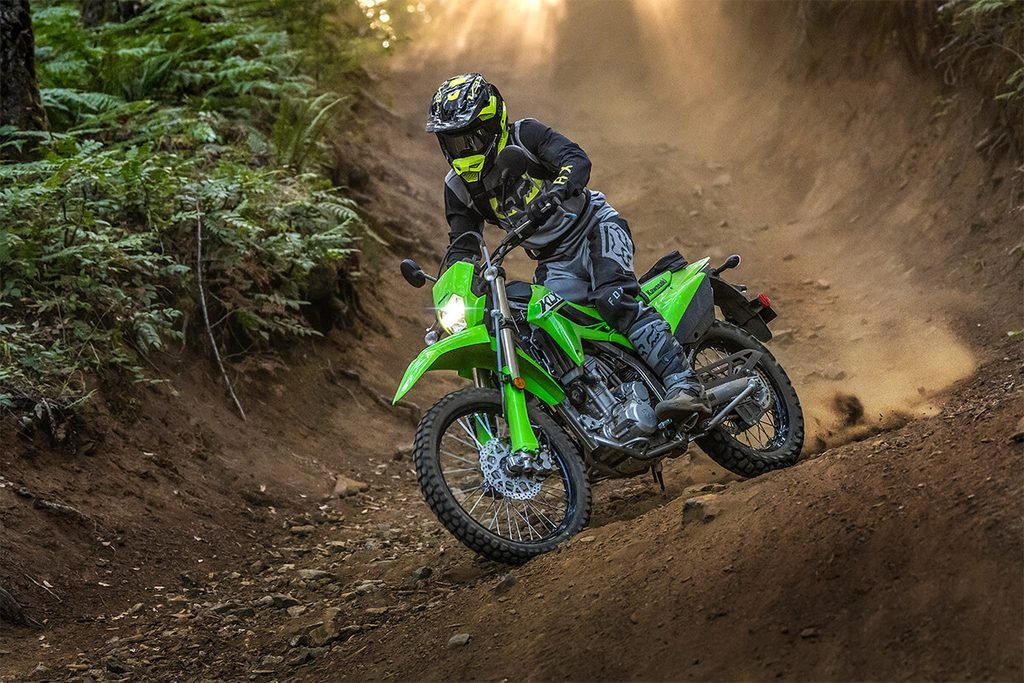
The 2026 Kawasaki KLX300 occupies the same general category as Honda’s CRF300L but takes a slightly different approach.
Its 292cc liquid-cooled DOHC single produces a claimed 25 hp, while Kawasaki lists a curb weight of 302.1 pounds and seat height of 35.2 inches.
Where the KLX really scores points is suspension.
The 43 mm inverted fork offers adjustable compression damping and 10 inches of travel. The Uni-Trak rear shock provides 9.1 inches and adjustment for compression, rebound and spring preload.
For a motorcycle with a U.S. starting MSRP of $5,649, that’s impressive.
Why the KLX300 stands out
Its suspension specification gives the Kawasaki an edge for riders who expect to spend substantial time on trails but don’t need the extreme performance or maintenance requirements of an enduro race bike.
The engine is manageable, fuel injection makes ownership easy and full-size 21/18-inch wheels provide access to a wide range of off-road tires.
Best for
Beginners through intermediate riders wanting a budget-friendly trail-focused dual sport.
Things to consider
Aftermarket support is good but still doesn’t match the enormous ecosystem surrounding Honda’s CRF300L.
Power is also modest.
Verdict: One of the best-value dual sport motorcycles available in 2026, particularly if suspension quality matters more to you than maximum horsepower.
8. Kawasaki KLR650 — Best Dual Sport for Long Road Trips
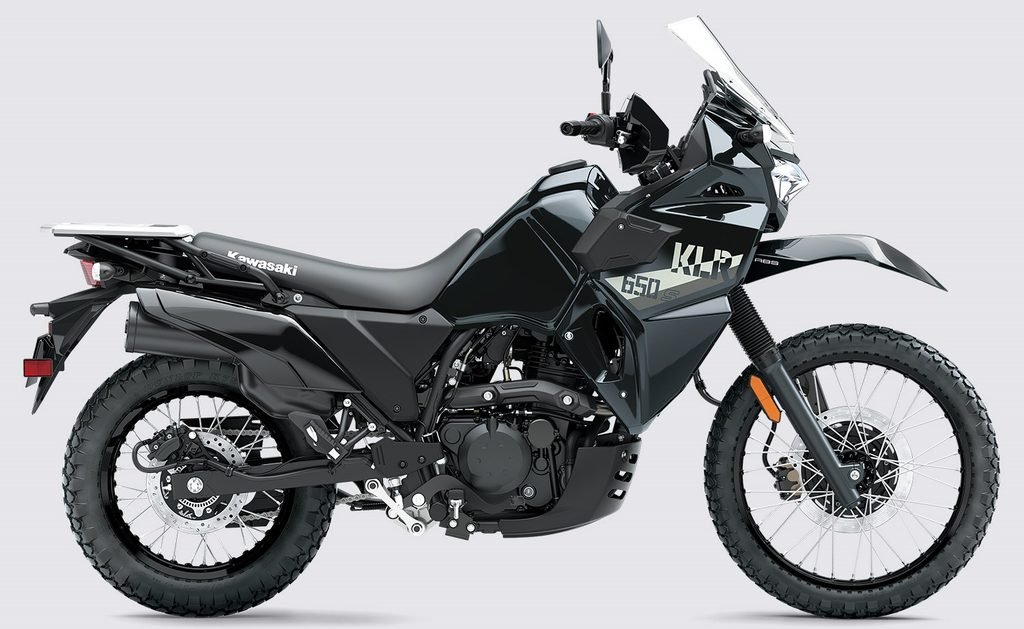
Calling the modern Kawasaki KLR650 a lightweight dual sport is becoming a stretch.
At roughly 456 pounds in non-ABS form, it is much closer to a simple adventure motorcycle than a trail bike.
But it still belongs in the conversation because few affordable motorcycles combine long-range touring and dirt-road capability so effectively.
The 2026 KLR uses a 652cc fuel-injected single producing a claimed 40 hp and 39.1 lb-ft of torque. Fuel capacity is a substantial 6.1 gallons.
That large tank transforms the bike’s usability in remote areas.
Why the KLR650 stands out
Where lighter dual sports become tiring, the KLR starts making sense.
A fairing and windscreen provide actual wind protection, the riding position works for long days and the engine is comfortable maintaining road speeds.
It’s also one of the most established motorcycles in the adventure community.
Best for
Long-distance travel involving highways, gravel roads, easy trails and remote destinations.
Things to consider
Weight.
Once you’re dealing with deep sand, mud or technical singletrack, those extra pounds become impossible to ignore.
Its suspension is also tuned much more toward comfort than aggressive off-road riding.
Verdict: Not the bike we’d choose for hard enduro, but potentially one of the best affordable motorcycles for crossing a country before turning down a dirt road.
9. Yamaha TW200 — Best Dual Sport for Short Riders and Beginners
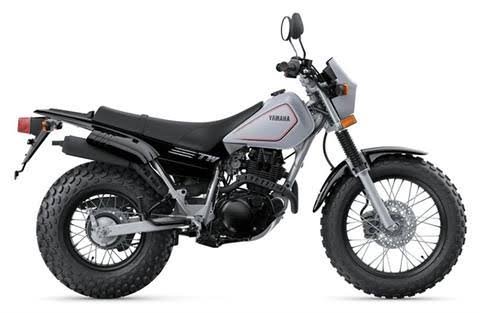
Horsepower figures rarely tell the entire story, and the Yamaha TW200 is proof.
Its 196cc air-cooled engine, five-speed gearbox and enormous tires aren’t designed to win races.
They’re designed to keep moving.
The 2026 TW200 weighs 278 pounds wet, carries 1.8 gallons of fuel and has an exceptionally approachable 31.1-inch seat height. Yamaha lists U.S. MSRP at $4,999.
That low seat is a major advantage for new riders and anyone uncomfortable with the 37-inch-plus seats found on performance enduro machines.
Why the TW200 stands out
The oversized tires provide excellent traction at low speeds, while the modest engine output makes throttle management easy.
It excels on:
- Forest trails
- Farm tracks
- Sand
- Campsites
- Tight technical terrain
- Short backroad journeys
Best for
Beginners, shorter riders and anyone who values confidence and simplicity over speed.
Things to consider
Highway performance is limited.
So are the suspension and brakes compared with modern performance dual sports.
But criticizing a TW200 for being slow rather misses the point.
Verdict: One of the friendliest and most distinctive dual sport motorcycles ever produced.
Which Is the Best Dual Sport Motorcycle in 2026?
There isn’t one winner for every rider.
Choosing the best dual sport motorcycle depends primarily on where you expect to ride.
If serious off-road performance comes first, the Husqvarna FE 350s is difficult to beat.
If you want substantial road performance without moving into a full-size adventure motorcycle, the KTM 690 Enduro R is one of the most versatile options available.
Beginners and everyday riders should seriously consider the Honda CRF300L or Kawasaki KLX300.
For performance riders who prefer Japanese motorcycles, the Honda CRF450RL is the obvious choice.
Travelers who value simplicity can still make an excellent case for the Suzuki DR650S, while riders spending long days on pavement may be happier on the heavier Kawasaki KLR650.
And if low seat height and easy handling matter more than speed, the humble Yamaha TW200 remains hard to dislike.
Best Dual Sport Bikes by Riding Style
| Riding Style | Our Pick |
|---|---|
| Best for technical off-road | Husqvarna FE 350s |
| Best road/off-road performance | KTM 690 Enduro R |
| Best for beginners | Honda CRF300L |
| Best Japanese performance bike | Honda CRF450RL |
| Best electric dual sport | Stark VARG EX |
| Best for simple adventure travel | Suzuki DR650S |
| Best value | Kawasaki KLX300 |
| Best for highway travel | Kawasaki KLR650 |
| Best for shorter riders | Yamaha TW200 |
What Makes a Good Dual Sport Bike for Desert Riding?
Desert terrain puts different demands on a motorcycle than forest trails or paved touring.
For deep sand and dunes, low weight is one of the biggest advantages. A motorcycle that feels manageable on gravel can suddenly become exhausting once the front wheel starts digging into soft sand.
Good desert motorcycles also benefit from:
Strong suspension: Repeated whoops, rocky tracks and unexpected compressions quickly expose weak suspension.
Predictable power: More horsepower isn’t automatically better. Smooth torque and accurate throttle response make maintaining traction easier.
21/18-inch wheels: These remain the preferred combination for serious off-road riding because of tire availability and their ability to handle obstacles.
Good standing ergonomics: Desert riders spend significant time standing on the footpegs.
Fuel range: This becomes especially important when routes pass through remote regions with limited fuel stations.
For serious desert and dune riding, lightweight enduro-style motorcycles generally make more sense than 400- to 500-pound adventure bikes.
Dual Sport or Enduro Bike for Morocco?
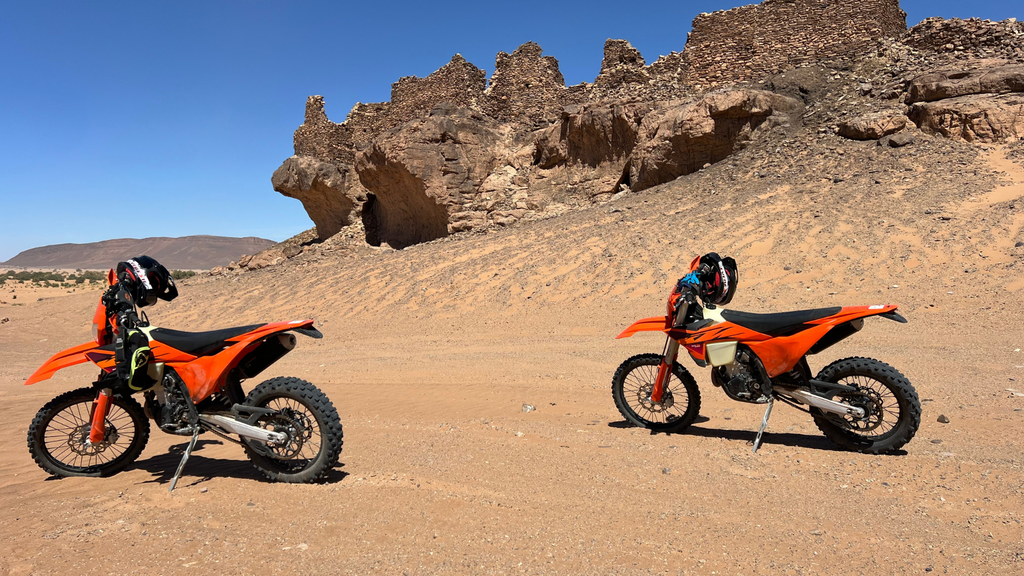
If your goal is riding Morocco’s desert tracks, rocky pistes and Sahara dunes, the answer depends on how much pavement you need to cover.
A dual sport such as the KTM 690 Enduro R makes sense when you need to combine longer paved sections with dirt roads.
For dedicated off-road riding, however, a lighter enduro motorcycle is normally easier to control, less tiring and considerably more enjoyable in deep sand.
That is why organized off-road tours often use machines around the 350–450cc enduro category rather than large adventure motorcycles.
If you’re planning a motorcycle trip to Morocco, this section is also an excellent place to internally link to your Morocco Enduro Tours, Merzouga Motorcycle Tours, KTM Enduro Tours in Morocco, or Motorcycle Tours from Errachidia pages.
Frequently Asked Questions About Dual Sport Motorcycles
What is the best dual sport motorcycle in 2026?
The answer depends on riding style. The Husqvarna FE 350s is one of the strongest options for serious off-road riding, while the KTM 690 Enduro R offers a better balance between road and dirt performance. The Honda CRF300L and Kawasaki KLX300 are excellent choices for less experienced riders.
What is the best dual sport motorcycle for beginners?
The Honda CRF300L and Kawasaki KLX300 are two of the best beginner-friendly options. Both have manageable power delivery, reasonable weight and significantly lower maintenance requirements than competition-derived enduro motorcycles.
What is the lightest dual sport motorcycle?
Enduro-derived motorcycles such as the Husqvarna FE 350s are among the lightest full-size street-legal dual sports, weighing around the mid-250-pound range before fuel.
What is the best dual sport for highway riding?
The KTM 690 Enduro R offers substantially stronger highway performance than most lightweight dual sports. Riders prioritizing comfort and range over technical trail ability may prefer the Kawasaki KLR650.
What is the best dual sport for short riders?
The Yamaha TW200 is one of the most accessible full-size dual sport motorcycles thanks to its approximately 31.1-inch seat height.
Is a 300cc dual sport powerful enough?
For trail riding, backroads, commuting and moderate-distance travel, yes. Motorcycles such as the CRF300L and KLX300 can handle a huge variety of terrain. Riders regularly traveling at high motorway speeds or carrying heavy luggage may prefer a larger engine.
Is a dual sport motorcycle good for long-distance travel?
Yes, but choosing the right model matters. Larger dual sports such as the KTM 690 Enduro R, Suzuki DR650S and Kawasaki KLR650 are better suited to long-distance travel than race-derived enduro models.
Are dual sport motorcycles good in sand?
Lightweight dual sports can work extremely well in sand when fitted with suitable tires. Generally, lighter motorcycles are easier to correct, lift and maneuver than heavy adventure motorcycles in deep sand.
Final Thoughts: Choosing the Best Dual Sport Bike
The biggest mistake when shopping for a dual sport is choosing a motorcycle based entirely on specifications.
More horsepower isn’t always better. Neither is the lightest possible weight or largest possible fuel tank.
Start by deciding where you actually intend to ride.
For technical trails and dunes, prioritize weight and suspension.
For weekend trail riding and commuting, prioritize reliability and manageable maintenance.
For cross-country travel, fuel range, comfort and road stability become far more important.
There is no motorcycle that dominates every category, and that’s exactly what makes the dual sport market so interesting in 2026.
From the race-inspired Husqvarna FE 350s to the simple Yamaha TW200, today’s best dual sport motorcycles cover almost every imaginable riding style.
Choose the machine that matches your terrain, experience and ambitions—and then go find out where the road ends.
2 thoughts on “9 Best Dual Sport Motorcycles in 2026: Top Picks Ranked”