
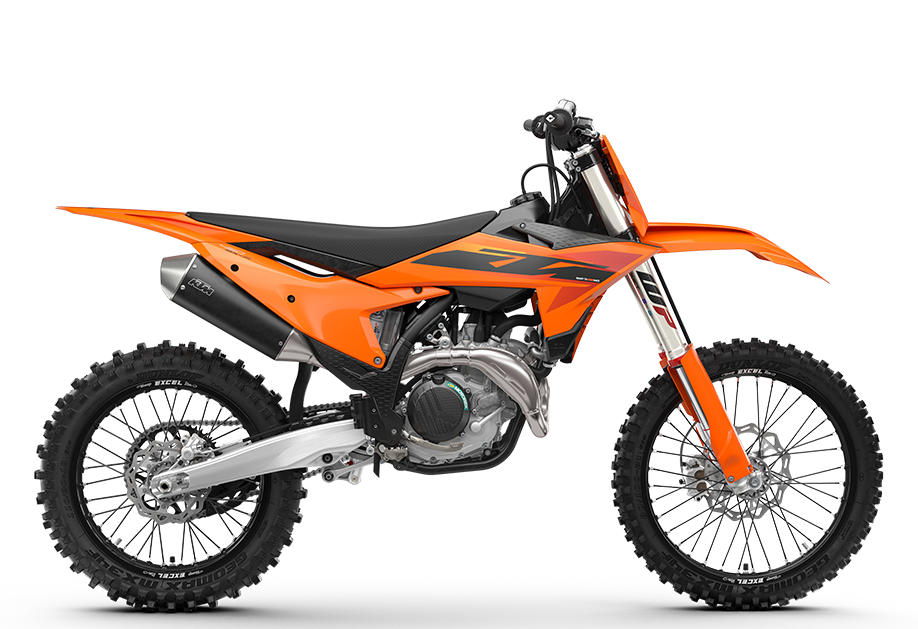
Dirt bikes are designed to be light, agile and capable of handling terrain that would stop most motorcycles. Their priorities are normally acceleration, suspension, traction and maneuverability rather than maximum speed.
But some dirt bikes have pushed those limits much further.
From the enormous two-stroke machines of the 1980s and 1990s to today’s fuel-injected 500cc enduro bikes and powerful electric motorcycles, manufacturers have produced off-road machines capable of extraordinary performance.
So, what is the fastest dirt bike in the world?
The ATK 700 Intimidator is commonly cited as one of the fastest production dirt bikes ever made, with reported top-speed potential of approximately 110–120 mph (177–193 km/h) depending on gearing and conditions.
However, top speed does not tell the entire story.
The legendary Honda CR500R and Kawasaki KX500 became famous for their brutal two-stroke acceleration. Modern motorcycles such as the KTM 500 EXC-F and Husqvarna FE 501 offer enormous speed with considerably more control, while electric machines such as the Stark VARG are changing the meaning of dirt-bike performance through instant torque and huge horsepower.
In this complete guide, we compare the fastest dirt bikes ever made, their reported top speeds, acceleration, engine configurations and what actually makes a dirt bike fast in real off-road conditions.
Important: Dirt-bike top-speed figures are rarely measured under standardized manufacturer testing. Actual maximum speed can vary significantly according to gearing, tires, model year, engine condition, restrictions, altitude, terrain and rider weight. The figures in this article should therefore be considered approximate real-world or commonly reported values.
Fastest Dirt Bikes at a Glance
Here is a quick comparison of some of the fastest production dirt bikes ever built.
| Rank | Dirt Bike | Engine | Approx. Top Speed |
|---|---|---|---|
| 1 | ATK 700 Intimidator | ~685cc 2-stroke | 110–120 mph / 177–193 km/h |
| 2 | Maico 620 / 700 | 620–700cc 2-stroke | 100–110 mph / 161–177 km/h |
| 3 | Honda XR650R | 649cc 4-stroke | 98–105 mph / 158–169 km/h |
| 4 | Kawasaki KX500 | 499cc 2-stroke | 90–100 mph / 145–161 km/h |
| 5 | KTM 380 SX / EXC | 368cc 2-stroke | 95–100 mph / 153–161 km/h |
| 6 | KTM 500 EXC-F | 510.9cc 4-stroke | 90–100 mph / 145–161 km/h |
| 7 | Husqvarna FE 501 | 500cc-class 4-stroke | 90–100 mph / 145–161 km/h |
| 8 | Honda CR500R | 491cc 2-stroke | 90–95 mph / 145–153 km/h |
| 9 | Beta 480 RR / 500 RR-S | Big-bore 4-stroke | 90+ mph / 145+ km/h |
| 10 | Husqvarna TC/TE 510 | 500cc-class 4-stroke | 85–95 mph / 137–153 km/h |
A motorcycle’s position in this table should not be interpreted as an exact scientific ranking. Changing the final-drive gearing alone can have a major effect on maximum speed.
What Counts as a Production Dirt Bike?
Before deciding which motorcycle deserves the title of fastest dirt bike, we need to define what counts as a dirt bike.
For this comparison, we focus primarily on motorcycles that are:
- Purpose-built for off-road riding
- Mass-produced or commercially available to the public
- Capable of genuine off-road use in relatively standard form
- Considerably closer to an enduro or motocross motorcycle than a road motorcycle
That means heavily modified land-speed motorcycles and one-off factory prototypes are not included.
Large dual-sport machines create another complication.
Motorcycles such as the KTM 690 Enduro R, Husqvarna 701 Enduro and GasGas ES 700 can achieve higher road speeds than many of the bikes on this list, but their greater size, weight and road-oriented capabilities place them in a different category from traditional lightweight dirt bikes.
For that reason, our main ranking concentrates on genuine motocross, enduro and desert-racing machines.
1. ATK 700 Intimidator
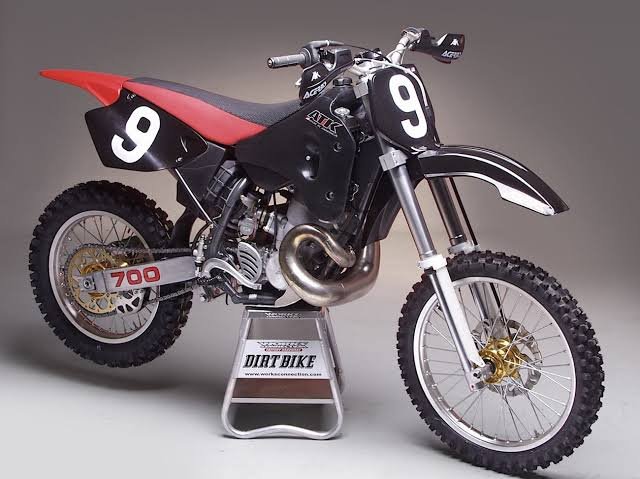
Approximate Top Speed: 110–120 mph / 177–193 km/h
If there is one motorcycle that deserves to be mentioned whenever someone asks about the fastest production dirt bike ever made, it is the ATK 700 Intimidator.
This was not a motorcycle designed around moderation.
The ATK 700 used an enormous two-stroke single-cylinder engine derived from the Maico big-bore platform. With approximately 685cc of displacement, roughly 78 horsepower and extremely low weight, it offered an extraordinary power-to-weight ratio.
The result was one of the most intimidating off-road motorcycles ever offered to the public.
Why Was the ATK 700 So Fast?
Several factors made the Intimidator exceptional:
- Approximately 685cc of two-stroke displacement
- Around 78 horsepower
- Very low motorcycle weight
- Massive torque
- Extremely strong power-to-weight ratio
- Tall gearing suitable for high-speed riding
- Minimal electronic intervention
Two-strokes already produce impressive power for their size, and increasing displacement to nearly 700cc created a completely different animal.
Reported top-speed figures vary, but the ATK 700 is commonly associated with maximum speeds above 110 mph, with some claims approaching 120 mph under suitable conditions.
That makes the Intimidator one of the strongest candidates for the title of fastest dirt bike ever produced.
2. Maico 620 / 700
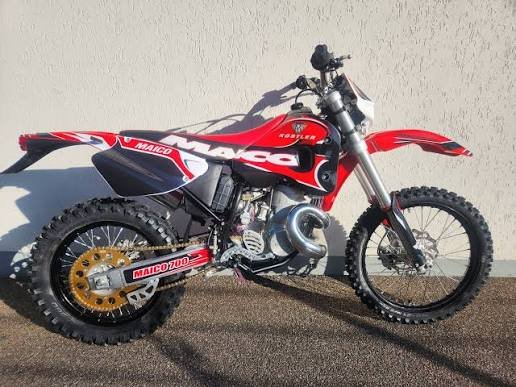
Approximate Top Speed: 100–110 mph / 161–177 km/h
The Maico 620 and 700 belong to an era of motorcycle engineering that may never return.
Take an enormous two-stroke engine.
Put it inside a lightweight off-road chassis.
Keep electronics and restrictions to a minimum.
Then give the rider control of the throttle.
The result is exactly as wild as it sounds.
The Maico 700 became famous because very few manufacturers were willing to build a two-stroke dirt bike with this much displacement.
What Made the Maico 700 So Powerful?
Its formula included:
- Huge 620–700cc two-stroke displacement
- Enormous low- and mid-range torque
- Lightweight chassis
- Rapid throttle response
- Tall gearing potential
- Minimal electronic intervention
Depending on gearing and configuration, reported top speeds generally fall around 100–110 mph (161–177 km/h).
The Maico was not necessarily the easiest motorcycle to ride quickly. Putting that much power through a dirt-bike rear tire creates another problem: traction.
A motorcycle can have enormous horsepower, but it only becomes useful when the rider can transfer that power to the ground.
3. Honda XR650R
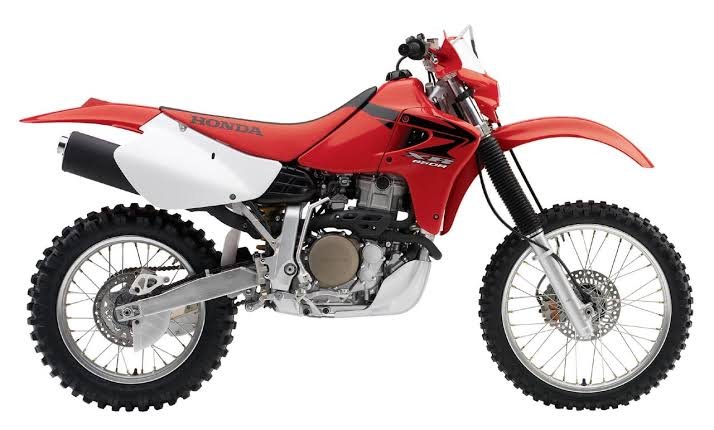
Approximate Top Speed: 98–105 mph / 158–169 km/h
The Honda XR650R approached speed very differently from the giant two-strokes.
Instead of explosive motocross-style power, Honda built a large, durable, liquid-cooled four-stroke designed to cover desert terrain at extremely high speeds.
Nicknamed the Big Red Pig, the XR650R became one of Honda’s most famous desert motorcycles.
Its 649cc four-stroke engine produced massive usable torque, while its chassis was particularly well suited to fast, open terrain.
Why Was the XR650R So Fast?
The key ingredients were:
- 649cc liquid-cooled four-stroke engine
- Strong low- and mid-range torque
- Tall gearing
- Excellent high-speed stability
- Durable construction
- Desert-racing design
An appropriately configured or unrestricted XR650R can approach or exceed 100 mph.
What really made the motorcycle special, however, was not simply its maximum speed.
The XR650R could remain relatively composed while traveling very quickly across rough desert terrain.
That is much more difficult than achieving a high speed on smooth asphalt.
For riders interested in desert racing history, the XR650R remains one of the most iconic high-speed off-road motorcycles ever produced.
4. Kawasaki KX500
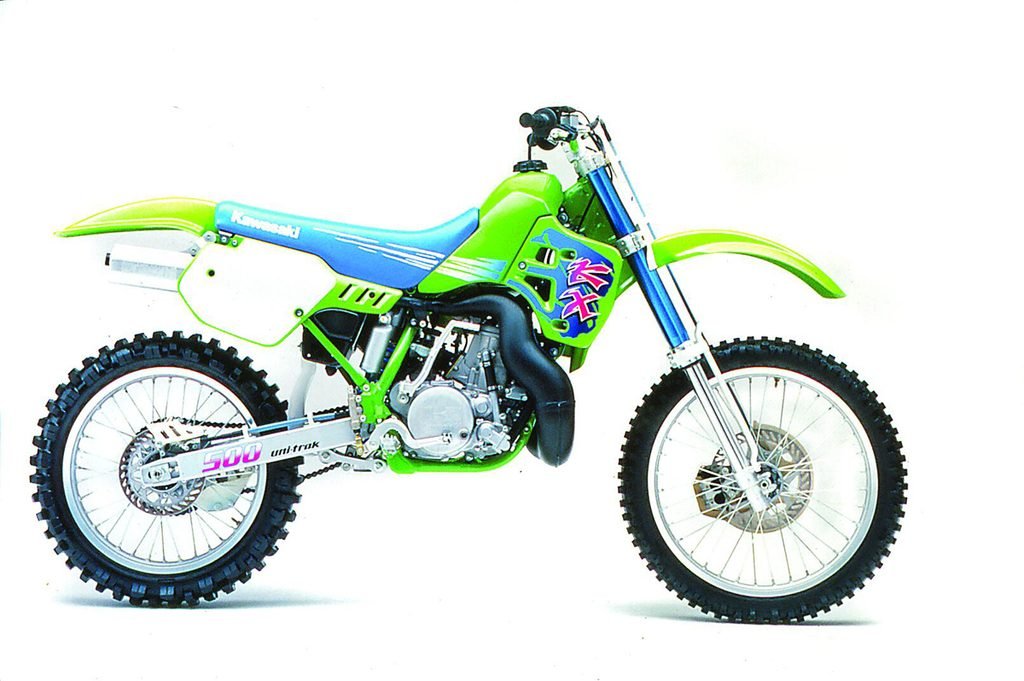
Approximate Top Speed: 90–100 mph / 145–161 km/h
Few motorcycles represent the classic open-class two-stroke era better than the Kawasaki KX500.
Produced from 1983 until 2004, the KX500 used a 499cc two-stroke engine inside a lightweight motocross chassis.
Its great rival was the Honda CR500R.
Even today, riders continue to debate which one was faster, more powerful or more difficult to control.
Kawasaki KX500 Top Speed
In typical gearing, a KX500 can run well beyond the speeds most riders will ever need off-road.
Depending on model, setup and gearing, figures around 90–100 mph are commonly reported.
Desert-racing versions using taller gearing can be even more impressive.
Why Was the KX500 So Fast?
The KX500 combined:
- 499cc two-stroke power
- Huge torque
- Low chassis weight
- Strong high-rpm performance
- Good high-speed stability
- Excellent desert-racing potential
Compared with the CR500, the Kawasaki was often described as delivering its power somewhat more progressively.
Do not mistake smoother delivery for a lack of performance.
A KX500 still produces enough acceleration to demand serious respect from the rider.
5. KTM 380 SX / EXC
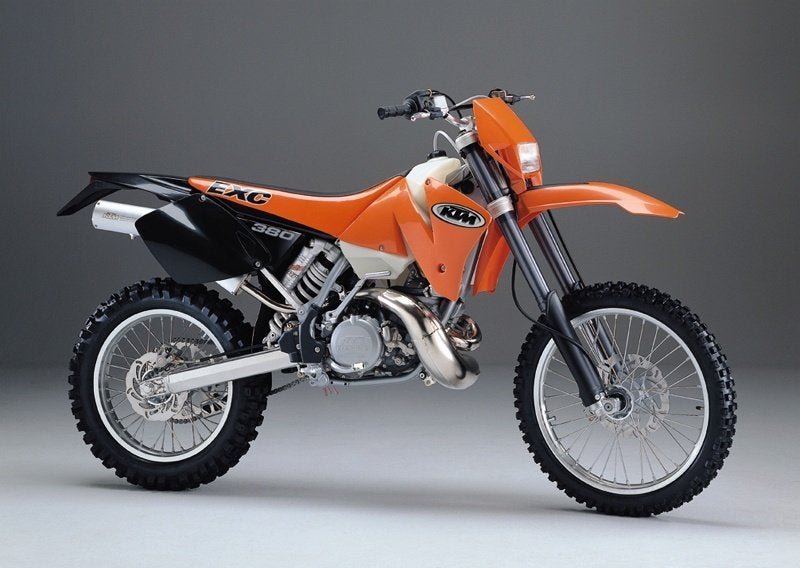
Approximate Top Speed: 95–100 mph / 153–161 km/h
The KTM 380 rarely receives the same attention as the CR500 and KX500, but it deserves a place among the fastest dirt bikes ever made.
Its 368cc two-stroke engine occupied an interesting middle ground.
It offered substantially more torque than a conventional 250cc two-stroke while avoiding some of the weight and brutality associated with the 500cc open-class machines.
The result was a motorcycle capable of extremely rapid acceleration with a lighter and more manageable feeling.
Why Was the KTM 380 So Quick?
- Powerful 368cc two-stroke engine
- Excellent power-to-weight ratio
- Rapid throttle response
- Broad power delivery
- Lightweight chassis
- Strong top-end performance
With taller gearing and sufficient terrain, the KTM 380 could approach the 95–100 mph range.
For many experienced two-stroke riders, the 380 represented a particularly attractive combination of huge performance and slightly more manageable handling than the biggest 500cc machines.
6. KTM 500 EXC-F
Approximate Top Speed: 90–100 mph / 145–161 km/h

The KTM 500 EXC-F represents the modern interpretation of a very fast enduro motorcycle.
It does not deliver power with the explosive violence of an old CR500 or KX500.
Instead, it combines large-displacement four-stroke torque with fuel injection, a six-speed transmission, modern suspension and a sophisticated lightweight chassis.
The result is speed that is far easier to use.
KTM lists the 2026 500 EXC-F with a 510.9cc single-cylinder four-stroke engine, six-speed transmission and a weight without fuel of approximately 108.2 kg.
KTM 500 EXC-F Top Speed
KTM does not publish a standardized official maximum-speed figure for the model.
Real-world maximum speed therefore depends heavily on:
- Final-drive gearing
- Tire choice
- Country-specific restrictions
- Rider weight
- Altitude
- Surface
- Available distance
With suitable gearing, approximately 90 mph or more is realistic for big-bore 500-class enduro motorcycles, while taller-geared configurations can potentially approach the 100 mph mark.
Why Is the KTM 500 EXC-F So Fast?
- 510.9cc four-stroke engine
- Six-speed gearbox
- Strong torque throughout the rev range
- Low weight for its displacement
- Fuel injection
- Modern chassis
- High-quality suspension
- Excellent stability in faster terrain
Perhaps more importantly, the KTM allows riders to use a much greater percentage of its performance.
That can make it faster in real enduro riding than an older motorcycle producing more violent peak power.
7. Husqvarna FE 501
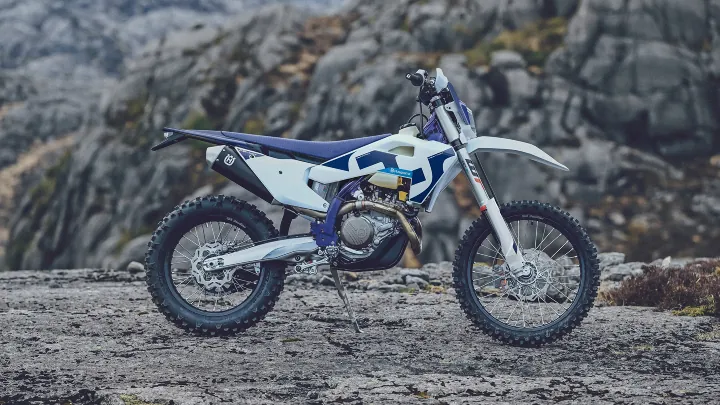
Approximate Top Speed: 90–100 mph / 145–161 km/h
The Husqvarna FE 501 belongs to the same modern big-bore enduro category as the KTM 500 EXC-F.
It combines a large four-stroke engine with a lightweight chassis, sophisticated suspension and smooth fuel-injected power.
Rather than overwhelming the rider with a sudden two-stroke hit, the FE 501 provides strong torque over a broad part of the rev range.
That makes the motorcycle particularly effective in:
- Fast desert riding
- Open enduro trails
- Rocky tracks
- Long climbs
- Rally-style terrain
- High-speed off-road sections
Maximum speed varies according to gearing and configuration, but speeds in the 90 mph-plus range are possible under suitable conditions.
The FE 501 shows how much dirt-bike performance has changed.
Modern motorcycles are not simply powerful.
They are designed to make that power usable.
8. Honda CR500R

Approximate Top Speed: 90–95 mph / 145–153 km/h
If we were ranking dirt bikes according to reputation rather than maximum speed, the Honda CR500R might be number one.
Few motorcycles have achieved the same legendary status.
Produced from 1984 until 2001, the CR500R used a 491cc two-stroke engine inside an extremely light motocross chassis.
The combination created breathtaking acceleration.
Honda CR500 Top Speed
Depending on model year, gearing, condition and terrain, the Honda CR500 is generally associated with top speeds around 90–95 mph.
Taller-geared modified motorcycles can go faster, but they should not be confused with stock production examples.
Why Was the CR500 So Feared?
The CR500 became famous because of:
- 491cc two-stroke displacement
- Massive torque
- Explosive throttle response
- Extremely light weight
- Strong mid-range acceleration
- Minimal electronic assistance
On loose ground, traction often becomes the limiting factor.
Open the throttle too aggressively and much of the available power can become wheelspin rather than forward acceleration.
That is part of what made the CR500 so demanding—and why experienced riders still speak about it with so much respect.
9. Beta 480 RR / 500 RR-S
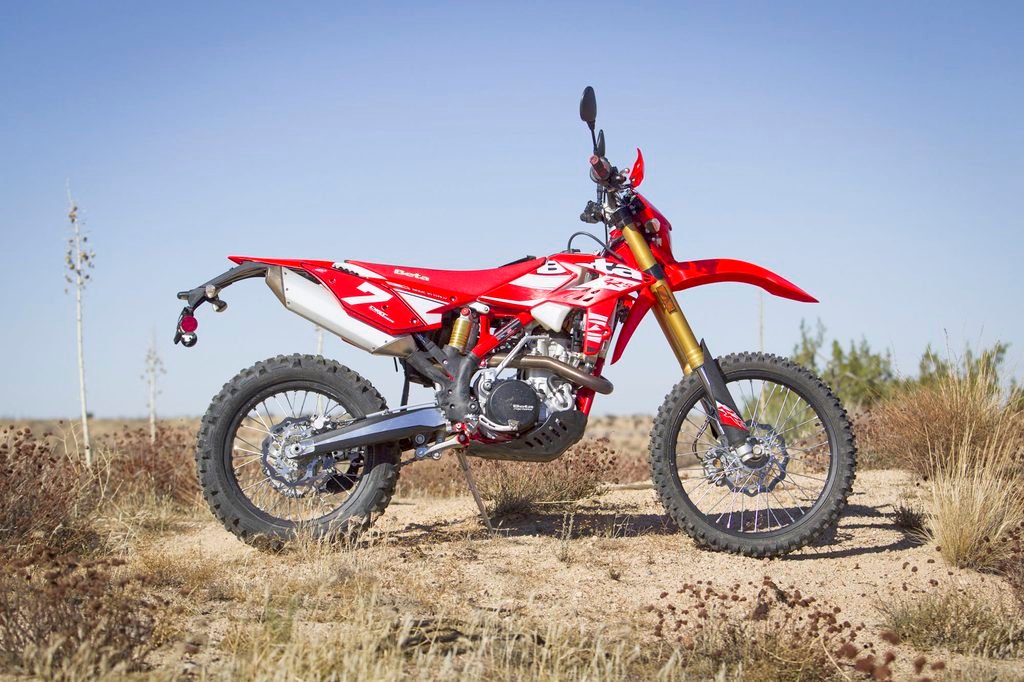
Approximate Top Speed: Around 90+ mph / 145+ km/h
Beta’s modern big-bore four-strokes are another example of how contemporary enduro engineering delivers speed differently from older machines.
The Beta 480 RR and 500 RR-S provide strong torque without requiring an aggressive, difficult-to-control power delivery.
They are designed to work across varied terrain rather than simply win a drag race.
Why Are Big-Bore Beta Enduros Fast?
They combine:
- Large four-stroke displacement
- Strong torque
- Relatively low weight
- Smooth throttle response
- Modern suspension
- Good high-speed stability
- Strong top-end pull
Depending on model, market and gearing, big-bore Beta motorcycles can achieve speeds around 90 mph or higher.
In real enduro conditions, their predictable delivery may actually help riders maintain a higher average speed than they could on a more aggressive motorcycle.
10. Husqvarna TC/TE 510
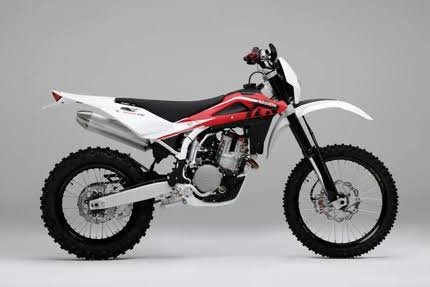
Approximate Top Speed: 85–95 mph / 137–153 km/h
Before today’s highly refined big-bore enduro motorcycles, Husqvarna’s 500cc-class four-strokes already demonstrated how effective the combination of displacement and low weight could be.
The Husqvarna TC/TE 510 platform offered substantial torque without the weight of traditional 600cc-plus desert motorcycles.
Its strengths included:
- Large-displacement four-stroke power
- Broad torque
- Lightweight construction
- Stable handling
- Strong high-speed performance
Depending on model and gearing, maximum speeds around 85–95 mph are commonly associated with the platform.
Fastest Dirt Bikes 0–60 mph
Top speed tells us what a motorcycle can eventually achieve.
Acceleration tells us how hard it actually hits.
For dirt bikes, acceleration can be more relevant because riders constantly accelerate between corners, dunes, climbs, jumps and technical sections.
The problem is that accurate 0–60 mph testing is difficult.
A dirt bike can:
- Spin the rear wheel
- Lift the front wheel
- Lose traction
- Require gear changes
- Behave very differently on asphalt, gravel and sand
The rider also makes a significant difference.
For that reason, the following figures should be considered approximate ranges rather than standardized laboratory test results.
| Dirt Bike | Approximate 0–60 mph |
|---|---|
| Stark VARG | ~3-second range |
| KTM 500 EXC-F | ~3.7–4.0 sec |
| Husqvarna FE 501 | ~3.7–4.0 sec |
| Honda CR500R | ~3.8–4.0 sec |
| Kawasaki KX500 | ~3.8–4.1 sec |
| KTM 380 SX / EXC | ~4.0–4.3 sec |
| Husqvarna TC/TE 510 | ~4.2–4.4 sec |
| Honda XR650R | ~4.2–4.5 sec |
| Beta 480 / 500 | ~4.3–4.6 sec |
| Maico 620 / 700 | ~4.0–4.8 sec |
The Maico is a good example of why horsepower alone does not determine acceleration.
It has extraordinary torque, but getting all of that power through one off-road rear tire without wheelspin can be extremely difficult.
What Is the Most Powerful Dirt Bike?
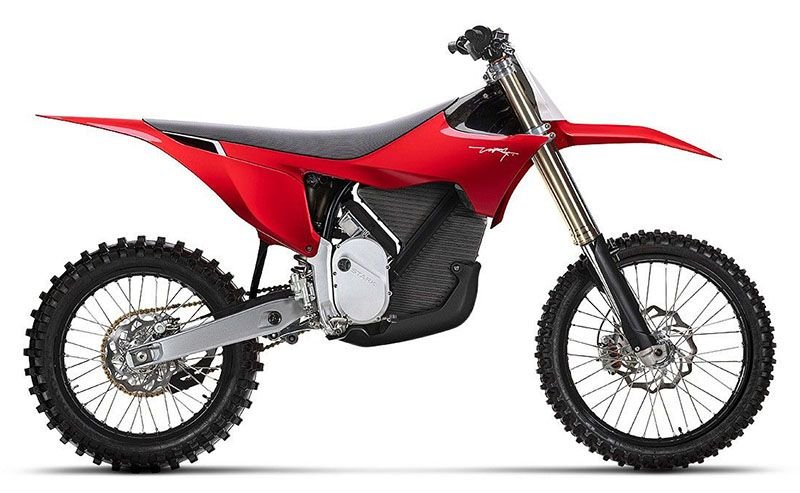
Stark VARG
The electric Stark VARG has completely changed the conversation around dirt-bike horsepower.
Stark currently advertises the VARG platform with up to 80 hp, making it exceptionally powerful for a production motocross/off-road motorcycle.
Unlike a gasoline engine, an electric motor does not need to build revs in the same way.
Torque delivery is effectively immediate.
That changes acceleration dramatically.
Why Is the Stark VARG So Fast?
The VARG offers:
- Up to 80 hp
- Immediate electric torque
- No conventional gear changes
- No traditional clutch operation
- Adjustable power delivery
- Strong power-to-weight ratio
- Smooth, controllable response
Stark’s documentation has listed different maximum-speed figures for different versions of the VARG platform. Earlier documentation listed around 110 km/h (68 mph), while VARG EX documentation lists approximately 129 km/h (80 mph).
That means the VARG does not necessarily win the outright top-speed battle against giant two-strokes or long-geared desert motorcycles.
Its advantage is how quickly it reaches speed.
On a motocross track, tight trail or shorter straight, that immediate acceleration can make the VARG one of the fastest-feeling dirt bikes ever built.
Fastest Modern Dirt Bikes You Can Buy
Historic motorcycles such as the CR500, KX500 and ATK 700 are fascinating, but they are no longer normal showroom motorcycles.
So what about modern dirt bikes?
Among current high-performance off-road machines, several categories stand out.
KTM 500 EXC-F
The KTM 500 EXC-F is one of the best examples of a modern high-speed big-bore enduro bike.
Its combination of 510.9cc, a six-speed gearbox and low weight makes it highly effective across open terrain.
Husqvarna FE 501
The FE 501 provides similar big-bore four-stroke performance with modern suspension, fuel injection and excellent enduro capability.
Beta Big-Bore Enduro Models
Beta’s 480/500-class machines provide strong torque and high-speed capability with a particularly smooth, controllable character.
Stark VARG
The electric VARG represents a completely different performance philosophy.
It may not have the highest maximum velocity, but with up to 80 hp and instant torque it can deliver staggering acceleration.
What Is the Fastest 2-Stroke Dirt Bike?
If we concentrate specifically on two-strokes, the big-bore machines dominate.
The strongest candidates include:
- ATK 700 Intimidator
- Maico 700
- Kawasaki KX500
- KTM 380 SX/EXC
- Honda CR500R
The ATK/Maico 700 platform stands apart because of its extraordinary displacement.
A nearly 700cc single-cylinder two-stroke is something completely different from a modern 250cc or 300cc enduro bike.
But maximum speed does not necessarily make it the best motorcycle.
For technical enduro riding, modern 250cc and 300cc two-strokes are normally much easier to manage.
What Is the Fastest 4-Stroke Dirt Bike?
The answer depends on whether we include large desert/enduro machines and how strictly we define a dirt bike.
Among famous high-speed four-strokes, the following models deserve consideration:
- Honda XR650R
- KTM 500 EXC-F
- Husqvarna FE 501
- Beta 480/500
- Husqvarna TE/TC 510
The XR650R has an especially strong claim because its big engine and desert-oriented gearing allowed exceptionally high maximum speeds.
Modern 500cc-class enduro bikes, however, deliver substantially more sophisticated handling and power management.
Can a 450cc Dirt Bike Really Go 120 mph?
You may find online articles claiming that standard modern 450cc motocross bikes can reach more than 120 mph.
Those numbers need context.
A motocross motorcycle is normally geared for acceleration, not maximum velocity.
Dirt Bike Magazine once recorded a bone-stock Honda CRF450R at 82 mph before beginning a project specifically designed to make the motorcycle faster through gearing, aerodynamics and engine development.
This illustrates an important difference between:
A stock dirt bike
and
A modified dirt bike prepared for maximum speed.
A sufficiently powerful 450 with extremely tall gearing, appropriate aerodynamics and enough distance may achieve extraordinary velocities.
But that does not mean the same bike will reach those speeds in standard motocross configuration.
Why Isn’t the KTM 690 Enduro R the Fastest Dirt Bike?
The KTM 690 Enduro R, Husqvarna 701 Enduro and GasGas ES 700 can travel considerably faster on pavement than many motorcycles on this list.
So why aren’t they ranked first?
Because they belong to a different category.
These motorcycles are larger, heavier and designed to combine road riding with serious off-road capability.
They are generally described as:
- Dual-sport motorcycles
- Large enduro motorcycles
- Lightweight adventure motorcycles
rather than pure motocross or traditional lightweight enduro bikes.
Comparing them directly with a CR500 or KTM 500 EXC-F would not be completely fair.
Two-Stroke vs Four-Stroke: Which Is Faster?
There is no simple answer.
Both engine types have advantages.
Two-Stroke Speed
Historically, two-strokes produced exceptional horsepower relative to their weight.
That is why motorcycles such as the:
- Honda CR500
- Kawasaki KX500
- KTM 380
- Maico 700
- ATK 700
became so legendary.
A large two-stroke can deliver incredible acceleration from an extremely light package.
Four-Stroke Speed
Modern four-strokes provide:
- Smooth torque
- Better traction
- Predictable throttle response
- Fuel injection
- Broad power delivery
- Easier high-speed control
A KTM 500 EXC-F may feel considerably less violent than a CR500.
That does not necessarily mean it is slower in real riding.
A motorcycle that allows the rider to apply more throttle earlier and maintain traction can cover terrain faster than a motorcycle producing more dramatic peak power.
What Makes a Dirt Bike Fast?
Maximum speed is much more complicated than simply comparing horsepower numbers.
Several factors work together.
1. Horsepower
Horsepower becomes increasingly important as speed rises.
At high speeds, the engine must overcome rapidly increasing aerodynamic drag.
More horsepower helps the motorcycle continue accelerating.
2. Torque
Torque determines how strongly the motorcycle can accelerate and pull taller gears.
Big-bore engines such as the XR650R, CR500, KX500 and KTM 500 generate substantial torque.
3. Gearing
Gearing is one of the biggest factors affecting dirt-bike top speed.
Install taller gearing and the motorcycle can theoretically travel farther for every engine revolution.
But there is a trade-off.
Tall gearing can reduce:
- Low-speed acceleration
- Technical riding ability
- Climbing responsiveness
- Wheel torque
A bike geared for motocross will behave very differently from the same motorcycle prepared for Baja or open desert.
4. Weight
Low weight improves acceleration and makes the motorcycle easier to control.
Interestingly, weight has less effect on outright maximum velocity than many riders expect.
At very high speeds, aerodynamic drag becomes more important.
5. Aerodynamics
Dirt bikes have terrible aerodynamics compared with sport motorcycles.
The rider sits upright.
There is little bodywork.
The front fender catches air.
The handlebars are wide.
At 40 mph, this is not a major problem.
At 100 mph, it matters considerably.
6. Tires and Traction
Horsepower means nothing if the tire cannot transfer it to the ground.
Loose sand, gravel and dirt significantly reduce available traction.
This is one reason huge two-strokes can be difficult to launch effectively.
7. Terrain
A motorcycle’s maximum theoretical speed and its actual off-road speed can be completely different.
Terrain may include:
- Sand
- Rocks
- Washouts
- Riverbeds
- Ruts
- Dunes
- Gravel
- Vegetation
- Elevation changes
The faster the motorcycle travels, the less reaction time the rider has.
8. Rider Skill
The rider is one of the most important factors.
Throttle control, braking, body positioning, line choice and the ability to read terrain determine how much of a motorcycle’s performance can safely be used.
Is 100 mph Fast for a Dirt Bike?
Yes—extremely fast.
100 mph equals approximately 161 km/h.
At 100 mph, a motorcycle travels almost 45 meters every second.
That means a rider approaching an unexpected obstacle has very little time to react.
The situation becomes even more serious off-road because the terrain is constantly changing.
A small bump at 30 km/h can be insignificant.
At 150 km/h, that same bump can become extremely dangerous.
Maximum-speed testing should therefore only be attempted by experienced riders in appropriate controlled environments.
Is a 450cc Dirt Bike Faster Than a 500cc Dirt Bike?
Not necessarily.
Displacement is only one factor.
A modern 450cc motocross bike is:
- Extremely light
- Aggressively tuned
- Designed for rapid acceleration
- Built for racing
A 500cc enduro bike normally offers:
- More torque
- Wider gearbox ratios
- Taller gearing
- Better long-distance versatility
On a motocross circuit, the 450 may be faster.
Across long open desert tracks, a 500 can have the advantage.
In technical terrain, a smaller motorcycle may actually be quicker than either of them.
The fastest motorcycle depends on where and how you ride.
What Desert Riding Teaches You About Dirt Bike Speed
Maximum speed becomes particularly interesting in desert riding.
Unlike a tight forest trail, the desert can provide long open tracks where riders can use higher gears.
But the Sahara quickly teaches an important lesson:
Speed is not simply about horsepower.
A very fast motorcycle is useless if the rider cannot control it across changing terrain.
Sand
Deep sand absorbs power.
Maintaining momentum is often more important than maximizing speed.
The rider must remain relaxed, keep the motorcycle balanced and use smooth throttle input.
Sand Dunes
Riding dunes requires a completely different technique.
The rider must:
- Read the shape of each dune
- Maintain momentum
- Choose safe lines
- Avoid dangerous drop-offs
- Control the throttle near dune crests
The goal is not maximum velocity.
It is maintaining the correct speed at the correct moment.
Rocky Desert Tracks
Power matters less when the terrain becomes broken and rocky.
Suspension performance, visibility and rider positioning become much more important.
Fast Pistes
Long desert pistes are where big motorcycles can finally stretch their legs.
Stability becomes critical.
At high speed, the rider must look far ahead and remain prepared for sudden terrain changes.
Dry Riverbeds
Riverbeds can contain rocks, sand, gravel and unpredictable channels.
A rider who enters too quickly can lose control even on an extremely capable motorcycle.
This is why real off-road speed cannot be measured only with a GPS.
Why 450cc Enduro Bikes Work So Well in Morocco

If 500cc, 650cc and even 700cc dirt bikes exist, why are modern 450cc enduro motorcycles so popular for desert and rally-style riding?
Because they provide an excellent compromise.
A good 450 enduro offers:
- Plenty of power
- Relatively low weight
- Good handling
- Strong suspension
- Manageable throttle response
- Enough speed for open desert
- Better agility in technical terrain
A larger and more powerful motorcycle may have a higher theoretical maximum speed, but that does not necessarily make it quicker through a complete day of varied off-road terrain.
In Morocco, riders may encounter dunes, fast tracks, rocks, dry riverbeds and technical terrain during the same ride.
A balanced motorcycle is therefore often more useful than the motorcycle with the highest horsepower figure.
Experience KTM Enduro Riding in Morocco

Reading about the world’s fastest dirt bikes is fascinating.
Riding a high-performance enduro motorcycle across the Sahara is something completely different.
At Morocco Enduro Ride, we organize guided motorcycle adventures through some of southern Morocco’s most spectacular off-road terrain.
Our riding areas include Merzouga, Erg Chebbi, Errachidia, Ouarzazate and the surrounding Sahara Desert.
Depending on the route, riders can experience:
- Erg Chebbi sand dunes
- Fast desert pistes
- Dakar-style tracks
- Dry riverbeds
- Rocky plateaus
- Mountain trails
- Palm groves
- Remote desert villages
- Sand and gravel crossings
Our tours use modern KTM 450 EXC-F enduro motorcycles, providing an excellent balance between speed, power, agility and control.
Multi-day tours can include professional local guiding, fuel, accommodation, meals, riding equipment, luggage transport and support from an assistance vehicle and mechanic.
Routes can also be adapted according to the group’s riding experience.
For experienced riders, Morocco offers fast and demanding desert terrain.
For riders looking to improve, it provides an extraordinary environment to develop sand and off-road riding skills.
The goal is not simply to ride as fast as possible.
It is to experience what a modern enduro motorcycle can really do across one of the world’s great off-road landscapes.
Explore Morocco Enduro Ride and experience KTM enduro riding in the Sahara.
Frequently Asked Questions About the Fastest Dirt Bikes
What Is the Fastest Dirt Bike in the World?
The ATK 700 Intimidator is commonly cited as one of the fastest production dirt bikes ever built, with reported maximum speeds of approximately 110–120 mph (177–193 km/h) depending on gearing and conditions.
Because dirt-bike top-speed testing is rarely standardized, it is better to treat this as an approximate figure rather than a certified world record.
What Is the Fastest Dirt Bike Ever Made?
For traditional production dirt bikes, the ATK 700 Intimidator and Maico 700 are among the strongest candidates.
Their enormous two-stroke engines gave them exceptional power-to-weight ratios and potential maximum speeds exceeding 100 mph.
What Is the Fastest 2-Stroke Dirt Bike?
The ATK 700 Intimidator and Maico 700 are among the fastest big-bore two-strokes produced.
The Honda CR500, Kawasaki KX500 and KTM 380 are also legendary high-performance two-stroke dirt bikes.
What Is the Fastest 4-Stroke Dirt Bike?
The Honda XR650R is one of the fastest famous four-stroke desert motorcycles, while modern bikes such as the KTM 500 EXC-F and Husqvarna FE 501 provide excellent high-speed enduro performance.
Can a Dirt Bike Go 100 mph?
Yes.
Several powerful big-bore dirt bikes can approach or exceed 100 mph (161 km/h) with appropriate gearing and suitable conditions.
However, most dirt bikes are not designed around maximum speed.
How Fast Is a Honda CR500?
The Honda CR500R is generally associated with maximum speeds of approximately 90–95 mph (145–153 km/h) in typical configurations.
Gearing and modifications can significantly change this number.
How Fast Is a Kawasaki KX500?
A Kawasaki KX500 can reach approximately 90–100 mph (145–161 km/h) depending on gearing and configuration.
Desert-prepared examples can be particularly fast.
How Fast Is a KTM 500 EXC-F?
The exact maximum speed varies by gearing, specification, tires and conditions.
Approximately 90 mph or more is possible, while taller-geared configurations may approach the 100 mph range.
KTM does not publish a standardized official maximum-speed figure for the model.
What Is the Most Powerful Dirt Bike?
The modern Stark VARG is notable for producing up to 80 horsepower, making it one of the most powerful production off-road motorcycles available.
What Is the Fastest Electric Dirt Bike?
The Stark VARG family is among the fastest and most powerful production electric dirt bikes.
Depending on version, official Stark documentation lists maximum speeds ranging from approximately 68 to 80 mph, while its biggest performance advantage is extremely rapid acceleration from instant electric torque.
Is the Stark VARG Faster Than a Honda CR500?
It depends on what type of speed you mean.
A CR500 may achieve a higher outright maximum speed depending on gearing, while the VARG’s immediate electric torque can make it exceptionally fast during acceleration.
Are Two-Stroke Dirt Bikes Faster Than Four-Strokes?
Not automatically.
Large two-strokes offer exceptional power-to-weight ratios, but modern four-strokes provide smoother torque and better traction.
Terrain, gearing and rider ability often matter more than whether the engine is two-stroke or four-stroke.
How Fast Can a 450cc Dirt Bike Go?
Many modern 450 motocross motorcycles can reach approximately 80 mph in standard gearing, although exact figures differ by model.
Taller gearing and modifications can increase maximum speed significantly.
Why Are Dirt Bikes Geared So Low?
Dirt bikes need rapid acceleration and strong wheel torque for:
- Corners
- Jumps
- Hills
- Sand
- Mud
- Technical trails
Manufacturers therefore prioritize useful off-road gearing rather than maximum highway speed.
Final Verdict: What Is the Fastest Dirt Bike Ever Made?
The history of high-performance dirt bikes includes some extraordinary motorcycles.
The giant two-strokes of the past delivered performance through displacement, simplicity and extremely low weight.
Modern four-strokes use advanced fuel injection, sophisticated suspension and smoother power delivery to make their performance considerably easier to control.
Electric motorcycles are now changing the equation again.
So, which bikes take the titles?
Fastest Production Dirt Bike by Reported Top Speed
ATK 700 Intimidator – approximately 110–120 mph
Fastest Big-Bore Two-Strokes
ATK 700 / Maico 700
Most Legendary 500cc Two-Strokes
Honda CR500R and Kawasaki KX500
Fastest Modern Big-Bore Enduro Bikes
KTM 500 EXC-F and Husqvarna FE 501
Most Powerful Modern Electric Dirt Bike
Stark VARG – up to 80 hp
Best Definition of Real Off-Road Speed?
That answer is more complicated.
The fastest motorcycle on paper is not always the fastest motorcycle across real terrain.
A rider needs traction, suspension, stability, braking, confidence and control.
That is especially true in places like the Moroccan Sahara, where the terrain can change from fast tracks to deep sand, rocks and dunes within minutes.
Ultimately, horsepower determines potential—but rider skill and control determine how much of that potential reaches the ground.