
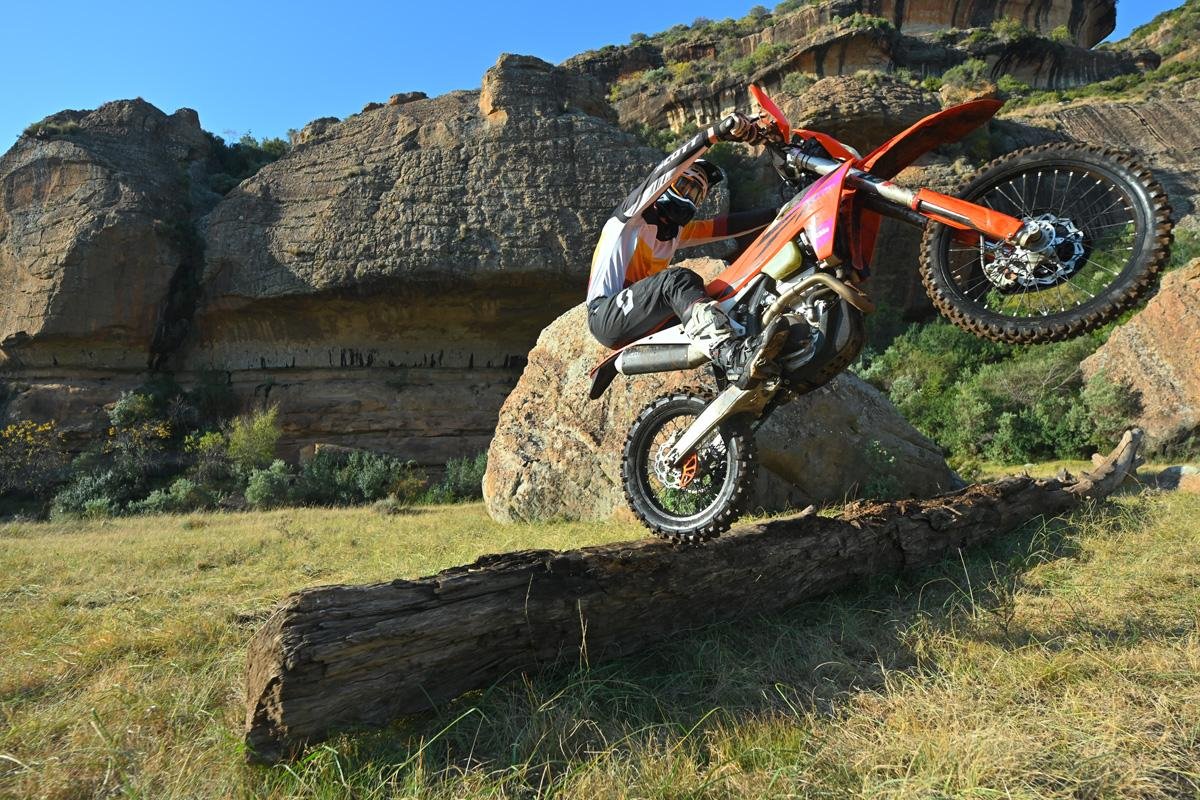
Hard Enduro is one of the most demanding forms of off-road motorcycle riding in the world.
Steep rock climbs, loose stones, deep mud, riverbeds, logs, narrow mountain trails and obstacles that sometimes seem impossible are all part of the experience.
Unlike conventional enduro, where riders often cover long distances across varied terrain, Hard Enduro places much greater emphasis on technical difficulty. Speed alone will not get you very far. Balance, throttle control, clutch technique, traction, physical endurance and determination are usually far more important.
That combination has helped Hard Enduro grow from a relatively specialized discipline into one of the most spectacular forms of motorcycle competition.
Events such as the Red Bull Erzbergrodeo, Red Bull Romaniacs and Roof of Africa attract some of the world’s best off-road motorcycle riders while inspiring recreational riders to improve their own technical skills.
But what exactly is Hard Enduro?
What motorcycles are used?
What equipment do you need?
And how can you start developing the skills required for extreme terrain?
This complete Hard Enduro guide explains everything you need to know.
What Is Hard Enduro?
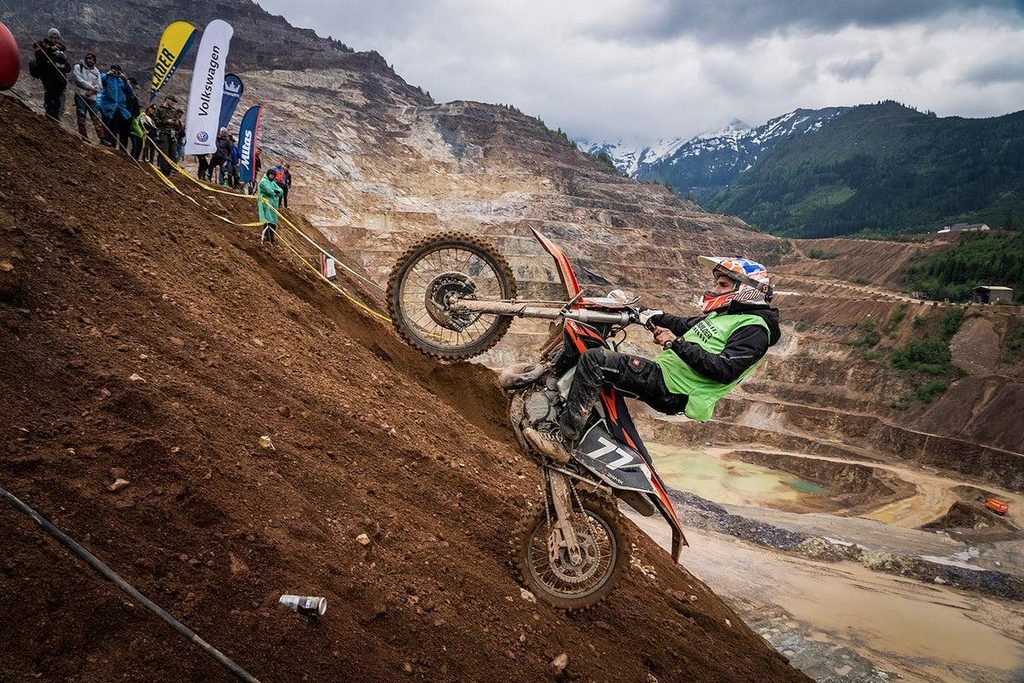
Hard Enduro is an extreme form of enduro motorcycle riding where competitors tackle exceptionally difficult natural terrain and technical obstacles.
A Hard Enduro course can include:
- Extremely steep climbs
- Rocky riverbeds
- Large boulders
- Loose stones
- Mud
- Tree roots
- Fallen logs
- Narrow trails
- Deep ruts
- River crossings
- Sharp descents
- Rock steps
- Tight forest sections
- Off-camber terrain
In some sections, simply keeping the motorcycle moving becomes the challenge.
Riders may need to push, pull or lift their motorcycles to overcome an obstacle.
It is this combination of motorcycle skill, endurance and problem solving that separates Hard Enduro from many other motorcycle disciplines.
Rather than asking, “How fast can I ride this section?” the question often becomes:
“How can I get my motorcycle through this section at all?”
Why Is It Called Hard Enduro?
Traditional enduro already requires riders to handle challenging off-road terrain for long periods.
Hard Enduro takes the technical element much further.
Courses deliberately include sections that test:
- Balance
- Precision
- Traction
- Clutch control
- Body positioning
- Motorcycle handling
- Fitness
- Mental concentration
- Problem-solving ability
Some obstacles can take several attempts to complete.
This means the fastest rider on an open trail is not necessarily the fastest Hard Enduro rider.
A rider who understands traction and can calmly negotiate technical obstacles may make considerably better progress than somebody relying only on power and speed.
Hard Enduro vs Enduro: What’s the Difference?
Hard Enduro and traditional enduro share many similarities, but the level and type of difficulty are different.
| Hard Enduro | Traditional Enduro |
|---|---|
| Extremely technical terrain | Mixed natural terrain |
| Slow-speed control is critical | Combines speed and technical riding |
| Very steep climbs and descents | Generally more moderate climbs |
| Large rocks, logs and obstacles | Trails, tracks, rocks and mud |
| Frequent clutch use | Less intensive clutch use |
| Trials-style techniques | Endurance-focused techniques |
| Completion can be the main challenge | Maintaining a strong overall pace is important |
| Often favors lightweight motorcycles | Wider range of enduro motorcycles suitable |
Traditional enduro can include fast forest tracks, rocky trails, mountain passes, sand, gravel and technical sections.
Hard Enduro compresses many of the most difficult elements into extremely demanding courses.
If you are completely new to off-road motorcycles, learning what an enduro motorcycle is before moving into Hard Enduro techniques is a good starting point.
Hard Enduro vs Motocross
Although Hard Enduro and motocross both use lightweight off-road motorcycles, the riding styles are very different.
Motocross normally takes place on a prepared circuit with:
- Jumps
- Berms
- Fast corners
- Whoops
- High acceleration
- Short, intense races
Hard Enduro normally takes place across natural terrain.
Instead of repeatedly racing around a prepared circuit, riders may spend hours navigating mountains, forests, riverbeds and rocky valleys.
Motocross rewards speed, jumping ability and aggressive cornering.
Hard Enduro places much greater emphasis on:
- Balance
- Traction
- Clutch control
- Low-speed maneuvering
- Obstacle negotiation
- Endurance
A motocross rider can certainly transition into enduro, but learning slow-speed control is often one of the biggest adjustments.
Hard Enduro vs Trials
Trials motorcycle riding has had a huge influence on Hard Enduro.
Trials riders learn incredible motorcycle control while negotiating obstacles at very low speeds.
Techniques involving:
- Balance
- Front-wheel placement
- Rear-wheel placement
- Clutch control
- Pivot turns
- Controlled wheelies
- Rock steps
are extremely useful in Hard Enduro.
Several successful Hard Enduro riders have strong trials backgrounds.
However, Hard Enduro also requires riders to cover much greater distances than traditional motorcycle trials, making endurance and physical conditioning especially important.
What Makes Hard Enduro So Difficult?
There is no single challenge.
Hard Enduro is difficult because riders must solve many different problems while already physically tired.
Technical Terrain
A Hard Enduro course is rarely smooth.
You may encounter rocks, roots, mud, loose slopes and steep climbs within a very short distance.
The motorcycle is constantly moving underneath the rider.
Maintaining balance while choosing the correct line becomes essential.
Limited Traction
Power is useless if the rear tire cannot transfer it to the ground.
Learning how to maintain traction on:
- Wet rocks
- Loose stones
- Sand
- Mud
- Steep slopes
is one of the most important Hard Enduro skills.
Physical Effort
Hard Enduro is extremely physical.
Riders frequently stand on the footpegs, move their weight around the motorcycle, recover from mistakes and occasionally push or lift the bike.
The arms, legs, shoulders, back and core all work continuously.
Mental Pressure
Technical terrain can quickly become frustrating.
A rider may fail the same climb several times while becoming increasingly tired.
Successful riders learn to remain calm, analyze the obstacle, choose another line and try again without wasting unnecessary energy.
What Is the Best Motorcycle for Hard Enduro?

There is no single motorcycle that works perfectly for every rider.
However, 250cc and 300cc two-stroke enduro motorcycles dominate extreme technical riding because they combine low weight with strong, controllable power.
Popular Hard Enduro motorcycles include models such as:
- KTM 300 EXC
- Husqvarna TE 300
- GASGAS EC 300
- Sherco 300 SE
- Beta RR 300
Four-stroke motorcycles are also used, particularly by riders who prefer smoother power delivery.
Popular capacities include approximately 250cc to 350cc.
Why Are 300cc Two-Strokes So Popular in Hard Enduro?
A 300cc two-stroke offers several characteristics that work extremely well in difficult terrain.
Low Weight
Every kilogram becomes important when you are trying to change direction between rocks or recover a motorcycle on a steep hill.
Strong Low-RPM Performance
Modern 300cc two-strokes can produce excellent low-speed torque while still delivering strong power when needed.
Easy Direction Changes
Technical terrain requires constant corrections.
A lightweight motorcycle reacts quickly to rider input.
Easier Recovery
Eventually, almost every Hard Enduro rider drops the motorcycle.
Lifting a lighter machine several times during a difficult ride requires considerably less energy.
Can You Ride Hard Enduro on a 450?
Yes, but a 450cc four-stroke is generally not the easiest motorcycle for extreme Hard Enduro terrain.
A KTM 450 EXC-F, for example, provides strong torque and excellent performance across many forms of enduro riding.
It is especially capable on:
- Fast desert pistes
- Gravel
- Rocky tracks
- Sand
- Mountain trails
- Open terrain
- Long-distance off-road routes
That makes motorcycles such as the KTM 450 EXC-F extremely suitable for enduro riding in Morocco, where a typical riding day can combine fast desert tracks, rocky terrain, dry riverbeds and dunes.
However, when the riding becomes extremely slow and technical—with constant large rocks, logs and near-vertical climbs—a lighter 250cc or 300cc two-stroke is usually easier to manage.
The best motorcycle therefore depends heavily on the terrain.
How Should a Hard Enduro Motorcycle Be Set Up?
Hard Enduro motorcycles are often modified to improve control, traction, cooling and durability.
Suspension
Hard Enduro suspension normally needs to maintain traction rather than simply absorb big jumps.
A compliant suspension setup allows the wheels to follow rocks, roots and uneven surfaces more effectively.
Suspension should also be adjusted according to:
- Rider weight
- Rider ability
- Terrain
- Motorcycle model
- Riding style
Extremely stiff suspension can make technical terrain more difficult.
Tires
Tire choice is critical.
Hard Enduro riders often use soft-compound rear tires designed to maximize grip on rocks, roots and loose terrain.
Traction can make a bigger difference than engine power.
Mousse Inserts
Many competitive riders use mousse inserts instead of conventional inner tubes.
A mousse eliminates traditional punctures, which is especially useful when riding through sharp rocks and remote terrain.
However, tire and insert choices should always match the terrain, speed and manufacturer’s recommendations.
Lower Gearing
Hard Enduro normally requires much more slow-speed riding than open off-road riding.
Changing the final drive ratio can give the rider:
- Better low-speed control
- Easier technical climbing
- Reduced need for excessive clutch slipping
- More precise power delivery
However, lower gearing also reduces maximum speed.
The ideal gearing therefore depends on whether the motorcycle is being used mainly for technical Hard Enduro or faster general enduro.
Essential Hard Enduro Motorcycle Protection
Crashes and impacts are part of technical off-road riding.
Protecting the motorcycle can prevent a small mistake from ending an entire day.
Common protection upgrades include:
Skid Plate
Protects the underside of the motorcycle and engine from rocks.
Handguards
Protect the rider’s hands and help protect the brake and clutch levers.
Radiator Guards
A damaged radiator can quickly end a ride.
Disc Guards
Useful for protecting brake discs from impacts with rocks.
Engine Case Protection
Technical rocks can damage exposed engine covers.
Cooling Fan
Hard Enduro involves long periods of slow riding where there may be very little airflow through the radiators.
A cooling fan can therefore be extremely useful.
Essential Hard Enduro Riding Gear
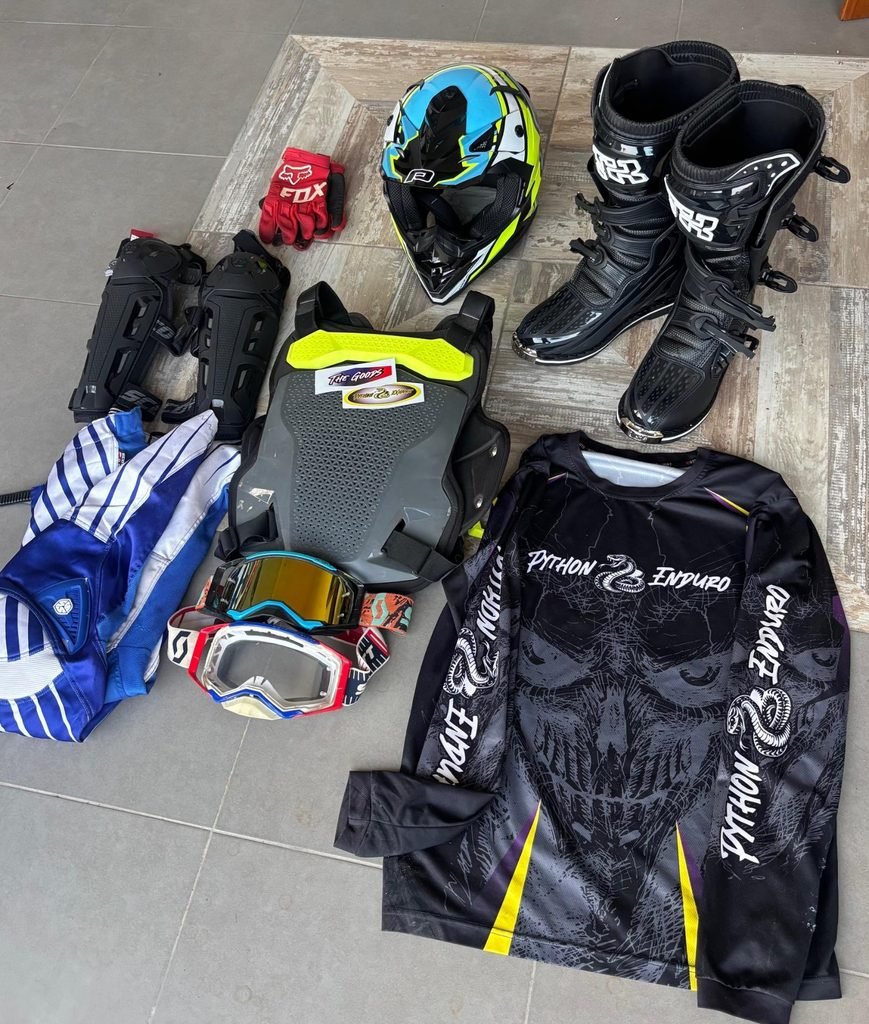
Motorcycle protection is important.
Rider protection is even more important.
A complete Hard Enduro riding setup should normally include:
Off-Road Helmet
Use a properly fitting motorcycle helmet designed for off-road riding.
Goggles
Goggles protect your eyes from dust, branches, mud and stones.
Motocross or Enduro Boots
Good boots protect the:
- Ankles
- Shins
- Feet
- Toes
They also provide better support while standing on the footpegs.
Knee Protection
Knee guards or braces can provide additional protection during impacts and falls.
Body Armor
Options include protective jackets or separate:
- Chest protectors
- Back protectors
- Shoulder protection
- Elbow protection
Gloves
Good gloves improve grip while protecting the hands.
Hydration System
Hard Enduro can be physically demanding, particularly in warm climates.
Carrying water is essential.
The Most Important Hard Enduro Techniques
A powerful motorcycle alone will not make someone a good Hard Enduro rider.
Technique matters much more.
Here are some of the most important skills to develop.
1. Balance
Balance is the foundation of technical riding.
The better you can balance the motorcycle at low speed, the easier everything else becomes.
One excellent exercise is riding very slowly without putting a foot down.
You can also practice tight figure-eights.
Try gradually making the circles smaller while maintaining smooth control.
2. Clutch Control
The clutch is one of the most important controls in Hard Enduro.
Instead of simply engaging and disengaging the clutch, experienced riders constantly use the friction zone to regulate power.
Good clutch control allows you to:
- Ride extremely slowly without stalling
- Control wheelspin
- Generate short bursts of power
- Maintain traction
- Lift the front wheel
- Recover during technical climbs
Learning precise clutch control should come before attempting large obstacles.
3. Throttle Control
Aggressive throttle inputs often create wheelspin.
Smooth throttle control allows the rear tire to maintain traction.
The objective is not always to use maximum power.
Sometimes applying less throttle allows the motorcycle to climb more effectively.
4. Body Position
Hard Enduro requires constant body movement.
Your body influences how the motorcycle:
- Accelerates
- Brakes
- Turns
- Climbs
- Descends
- Finds traction
When climbing, riders often move forward to prevent the front wheel from rising excessively while still keeping enough weight over the rear tire for traction.
During steep descents, body position moves rearward while the rider maintains control through the brakes.
There is no single body position suitable for every situation.
The rider needs to remain flexible.
5. Standing on the Footpegs
Standing provides several advantages off-road.
It allows:
- Better motorcycle movement underneath the body
- Improved visibility
- Better shock absorption through the legs
- Faster weight transfer
- Greater control across rough terrain
Standing does not mean keeping your legs completely straight.
Your knees and elbows should remain flexible.
How to Ride Rocky Terrain
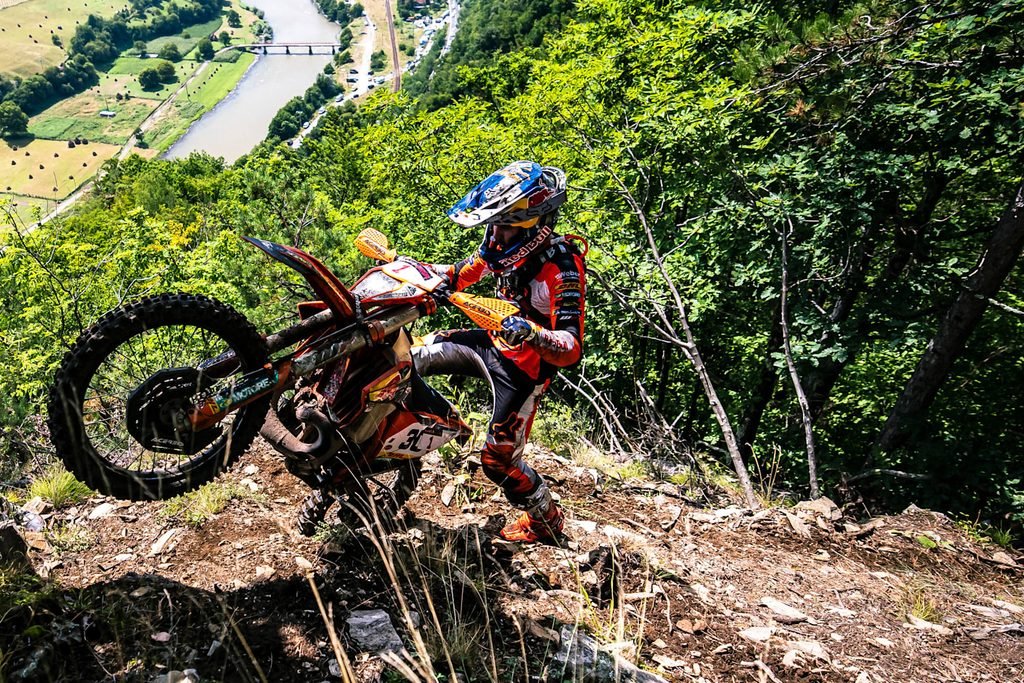
Rocky sections reward smooth riding.
Look ahead rather than directly at the front wheel.
Choose a line and maintain momentum.
Stopping in the middle of a difficult rock garden often makes restarting much harder.
Useful principles include:
- Keep your eyes ahead
- Stay relaxed
- Maintain controlled momentum
- Allow the motorcycle to move underneath you
- Avoid unnecessary wheelspin
- Commit to your chosen line
Trying to fight every movement of the motorcycle usually increases fatigue.
How to Climb Steep Hills
Hill climbs are one of Hard Enduro’s signature challenges.
Before attacking a climb:
- Study the terrain.
- Identify possible lines.
- Look for loose rocks, steps and ruts.
- Select the correct gear.
- Build controlled momentum.
- Maintain traction.
Too much speed can send the motorcycle off line.
Too little momentum can leave you stuck halfway up.
The goal is controlled momentum combined with smooth throttle and clutch input.
What Happens If You Stop on a Hill?
Every Hard Enduro rider eventually gets stuck on a climb.
The important thing is knowing how to react safely.
Avoid continuing to spin the rear wheel while stationary because this can dig the motorcycle deeper into loose terrain.
Control the bike with the brakes, stabilize yourself and decide whether you can restart safely.
If not, turning around and attempting the climb again may be more efficient.
Practicing hill starts in controlled terrain is extremely useful before attempting serious climbs.
How to Ride Steep Descents
Descending requires just as much technique as climbing.
The rider should:
- Look ahead
- Stay balanced
- Keep arms relaxed
- Use both brakes progressively
- Avoid locking the front wheel
- Choose the cleanest available line
Smooth brake control is essential.
Grabbing the front brake aggressively on loose or slippery terrain can quickly cause a crash.
How to Cross Logs and Rock Steps
Trying to simply smash the motorcycle into an obstacle is rarely the best technique.
A controlled front-wheel lift allows the rider to place the front tire onto or over the obstacle.
The suspension, throttle and clutch can then help bring the rear wheel across.
Start with very small obstacles.
As your timing improves, gradually increase the difficulty.
Obstacle technique should be developed progressively rather than by attempting large logs immediately.
Front-Wheel Lifts
A controlled front-wheel lift is one of the most useful technical enduro skills.
It can help with:
- Logs
- Rocks
- Ruts
- Holes
- Ledges
- Stream crossings
This does not require holding a long wheelie.
The goal is simply to place the front tire exactly where you want it.
Precision is more useful than height.
Braking Technique for Hard Enduro
Both brakes are important.
The front brake provides strong stopping force.
The rear brake provides additional control and can help stabilize the motorcycle during technical riding.
Practice applying each brake separately before combining them.
Eventually, braking should become instinctive.
Learning to brake smoothly while standing is particularly important.
Line Selection: One of the Most Underrated Skills
Two riders can approach the same obstacle with completely different results simply because they choose different lines.
Before entering a technical section, look for:
- More stable rocks
- Better traction
- Shallower ruts
- Alternative climbing angles
- Places where momentum can be maintained
The most obvious route is not always the easiest route.
Experienced riders constantly scan ahead rather than reacting at the last second.
How to Train for Hard Enduro
You do not need extreme mountains to begin training.
Many of the most important skills can be developed in a relatively small practice area.
Start With Slow-Speed Control
Before worrying about speed, practice:
- Slow riding
- Balance
- Figure-eights
- Clutch control
- Braking
- Standing position
These fundamentals influence almost every advanced technique.
Practice Tight Turns
Set up markers and practice turning around them.
Gradually decrease the available space.
This improves:
- Balance
- Clutch control
- Body position
- Vision
Practice Small Front-Wheel Lifts
Start with painted lines or very small obstacles.
The objective is precision.
Once the timing becomes natural, progress to small logs or rocks.
Practice Hill Starts
Find a safe moderate slope and deliberately stop halfway.
Practice restarting without excessive wheelspin.
This is one of the most useful real-world Hard Enduro exercises.
Train Your Fitness
Technical riding requires more than strong arms.
Important areas include:
- Cardiovascular endurance
- Core strength
- Leg strength
- Grip endurance
- Mobility
Cycling, running, rowing and similar cardiovascular activities can complement motorcycle riding.
Strength exercises can help, but avoid training only your arms.
Good riding technique should allow much of the motorcycle’s movement to be controlled using the legs and body.
Avoid Arm Pump
Forearm fatigue is common among off-road riders.
A major cause is gripping the handlebars too tightly.
Try to remain relaxed.
Use your legs to grip the motorcycle where appropriate rather than holding your entire body weight through your arms.
Correct lever position and handlebar ergonomics can also make a significant difference.
Hard Enduro Is Also a Mental Sport
One characteristic separating experienced riders from beginners is how they respond when things go wrong.
Imagine failing the same hill climb three times.
Your heart rate is high.
Your arms are tired.
The motorcycle may already have fallen several times.
Trying again immediately without thinking often produces the same result.
Instead:
- Stop safely
- Recover your breathing
- Study the obstacle
- Consider another line
- Identify why the previous attempt failed
- Try again calmly
Energy management is part of Hard Enduro strategy.
Famous Hard Enduro Races Around the World
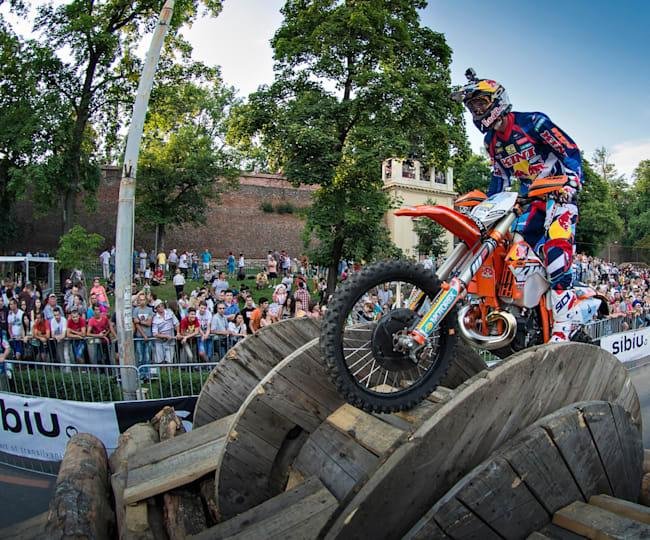
Hard Enduro has produced some of the most spectacular motorcycle events in the world.
Here are several races every off-road enthusiast should know.
Red Bull Erzbergrodeo – Austria
The Erzbergrodeo is probably the most recognizable Hard Enduro event in the world.
Held around the enormous Erzberg iron mine in Austria, the race combines steep climbs, rocks, forest sections and notoriously difficult technical obstacles.
Its main race, the Red Bull Erzbergrodeo, challenges riders across terrain where simply reaching the finish is a major achievement.
Sections such as the rock-filled Carl’s Dinner have become famous throughout the Hard Enduro community.
Professional riders compete alongside ambitious amateurs, creating one of the most unique spectacles in motorcycle racing.
Red Bull Romaniacs – Romania
Red Bull Romaniacs is one of the sport’s most famous multi-day events.
Based around Sibiu, Romania, the event takes riders deep into the Carpathian Mountains.
Unlike a relatively short extreme race, Romaniacs tests competitors over several demanding days.
Terrain can include:
- Forest climbs
- Rocks
- Riverbeds
- Mud
- Mountain trails
- Technical descents
Navigation, fitness and motorcycle reliability become just as important as pure obstacle skills.
Roof of Africa – Lesotho
Often called the Mother of Hard Enduro, the Roof of Africa takes place in the mountain kingdom of Lesotho.
High altitude, rocky mountain terrain and unpredictable conditions make it extremely demanding.
It is also one of the sport’s historic events.
Riders face long days in remote terrain where endurance and consistency are critical.
Sea to Sky – Turkey
Sea to Sky offers one of Hard Enduro’s most distinctive formats.
The event starts near the Mediterranean coast and progressively moves toward the mountains.
Riders experience changing terrain before tackling the final mountain stage.
The combination of beaches, forests and high-altitude technical terrain makes it a favorite among both competitors and fans.
Getzenrodeo – Germany
Getzenrodeo is famous for intense technical riding and a strong spectator atmosphere.
The compact course brings fans extremely close to steep climbs, rocks and technical obstacles.
It produces some of the most dramatic scenes in Hard Enduro.
Hixpania – Spain
Spain’s Hixpania Hard Enduro combines natural technical terrain with an exciting race format.
Rocky trails, steep climbs and difficult sections make it another important fixture in international Hard Enduro.
Famous Hard Enduro Riders
Hard Enduro has produced riders with extraordinary motorcycle-control skills.
Graham Jarvis
Graham Jarvis is one of the most recognizable riders in Hard Enduro history.
His smooth style demonstrates how important balance, patience and technique are.
Instead of relying entirely on aggressive power, Jarvis became famous for making extremely difficult terrain look controlled.
Billy Bolt
Billy Bolt combines exceptional technical ability with speed and aggression.
His success across both indoor and outdoor forms of extreme enduro demonstrates remarkable versatility.
Watching riders such as Bolt also shows how modern Hard Enduro increasingly combines trials-level motorcycle control with high-speed racing ability.
Manuel Lettenbichler
Manuel Lettenbichler has become one of the defining riders of modern Hard Enduro.
His combination of speed, technical precision and consistency has made him one of the benchmarks of the current generation.
Jonny Walker
Jonny Walker has competed at the highest levels of extreme enduro for many years.
His ability across both technical outdoor races and other enduro disciplines demonstrates the importance of being adaptable.
Mario Roman
Spanish rider Mario Roman is another internationally recognized Hard Enduro competitor known for strong performances on difficult terrain.
His riding highlights the level of technique required to compete against the world’s best.
Can Beginners Ride Hard Enduro?
Yes—but beginners should not start with extreme obstacles.
Hard Enduro skills are built progressively.
A sensible progression might be:
Stage 1: Learn basic off-road motorcycle control.
Stage 2: Become comfortable standing on the footpegs.
Stage 3: Develop clutch and throttle control.
Stage 4: Practice slow-speed balance.
Stage 5: Learn small front-wheel lifts.
Stage 6: Practice hills and descents.
Stage 7: Introduce rocks, ruts and small obstacles.
Stage 8: Gradually progress toward more difficult technical terrain.
Trying to imitate professional riders before mastering the fundamentals is one of the easiest ways to develop bad habits—or get injured.
Is Hard Enduro Dangerous?
Hard Enduro involves risk.
Riding motorcycles across rocks, mountains and steep terrain naturally carries the possibility of falls and injuries.
Risk can be reduced through:
- Proper riding equipment
- Correct motorcycle setup
- Progressive training
- Good physical conditioning
- Riding with experienced people
- Choosing terrain appropriate to your ability
- Carrying water and essential tools
- Avoiding riding alone in remote locations
Knowing when to stop is also an important skill.
Fatigue dramatically reduces coordination and judgment.
Hard Enduro Skills for Desert Riding
Hard Enduro is often associated with wet forests and rocky European mountains, but many of the same techniques are extremely useful in desert enduro.
Riders still need:
- Balance
- Throttle control
- Good body positioning
- Traction management
- Line selection
- Endurance
The difference is that desert terrain introduces different challenges.
These can include:
- Deep sand
- Dunes
- Rocky plateaus
- Dry riverbeds
- Fast desert tracks
- Washouts
- Loose climbs
This is where the line between traditional enduro, desert enduro and rally-style riding becomes especially interesting.
Enduro Riding in Morocco
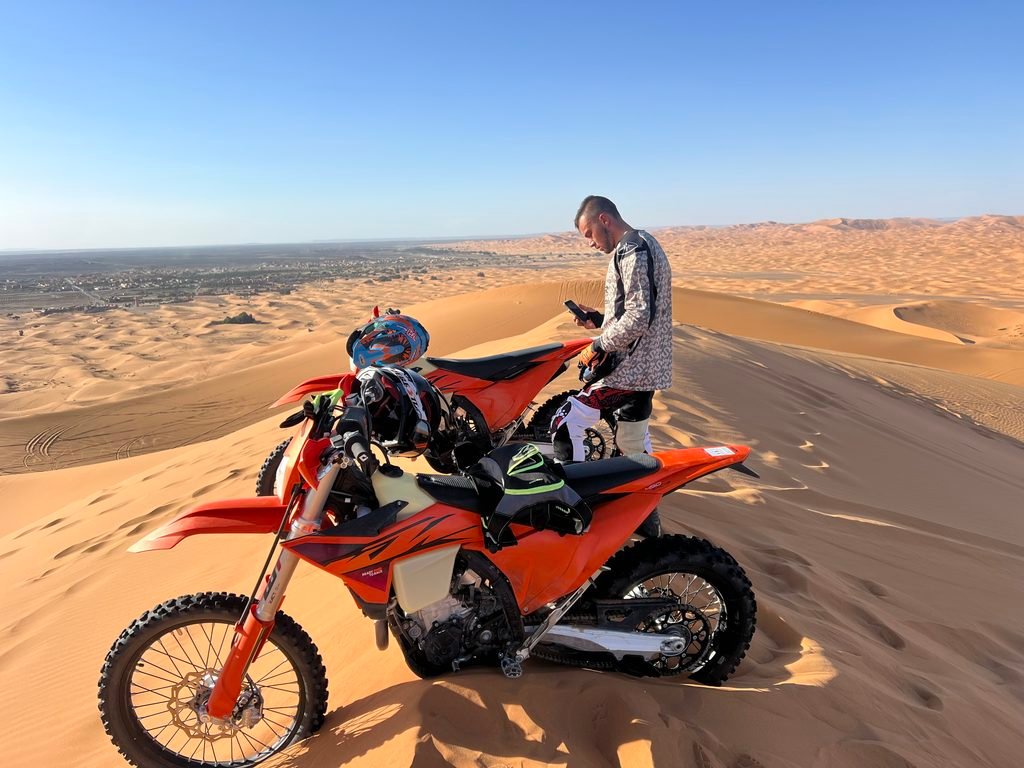
Morocco offers an exceptional variety of terrain for off-road motorcycle riders.
In a single multi-day enduro tour, riders can encounter:
- Sahara dunes
- Rocky mountain tracks
- Dry riverbeds
- Gravel pistes
- Desert plains
- Sand
- Palm groves
- Remote villages
- Mountain passes
- Former rally tracks
Different regions provide completely different riding experiences.
Merzouga and Erg Chebbi
Merzouga is one of Morocco’s best-known desert destinations.
The enormous dunes of Erg Chebbi create an unforgettable environment for motorcycle riding.
However, the area offers far more than dunes.
Routes around Merzouga can combine sandy tracks with rocky desert, dry riverbeds and remote pistes.
Learning correct body position and throttle control becomes especially important in sand.
Ouarzazate and Southern Morocco
Starting an enduro tour from Ouarzazate opens access to an enormous variety of landscapes.
Depending on the route, riders can explore areas around:
- Skoura
- Dades
- Jebel Saghro
- Draa Valley
- Nkob
- Zagora
- M’Hamid
- Erg Chegaga
- Iriki
The terrain varies dramatically.
One day may include rocky mountain pistes while the next moves toward open desert and sand.
This variety is one reason southern Morocco is such an interesting destination for experienced enduro riders.
Errachidia to Merzouga
Errachidia is another excellent starting point for a Moroccan enduro adventure.
Routes toward Merzouga can cross palm groves, rocky plateaus, desert tracks, dry riverbeds and remote villages before reaching Erg Chebbi.
For riders arriving by air, starting directly from the Errachidia region can also simplify logistics.
Hard Enduro vs Desert Enduro in Morocco
It is important to understand that Hard Enduro and Moroccan desert enduro are not exactly the same discipline.
A classic Hard Enduro competition may deliberately send riders through almost impossible technical obstacles.
A multi-day Moroccan enduro tour is generally designed around exploring large areas while enjoying varied off-road terrain.
You may still encounter:
- Technical rocky sections
- Difficult climbs
- Loose terrain
- Sand
- Dry riverbeds
But the objective is normally to enjoy several hours of riding each day rather than repeatedly fighting through extreme artificial difficulty.
For many recreational enduro riders, this provides a better balance between adventure, challenge and enjoyment.
Ride Enduro in Morocco with Morocco Enduro Ride
If you would like to put your off-road skills into practice, Morocco Enduro Ride organizes guided motorcycle tours through some of the most impressive terrain in southern Morocco.
Our routes can start from areas including:
- Merzouga
- Errachidia
- Ouarzazate
Depending on the itinerary, riders can experience Sahara dunes, desert tracks, rocky mountains, dry riverbeds, traditional villages and remote landscapes.
We use KTM 450 EXC-F enduro motorcycles, including recent models, particularly suited to the mixture of open desert, rocky tracks, sand and longer off-road stages found in Morocco.
Our tours can include:
- KTM enduro motorcycle
- Fuel
- Professional local motorcycle guide
- Assistance vehicle
- Mechanical support
- Accommodation
- Breakfast, lunch and dinner
- Drinking water
- Luggage transport
- Riding equipment when required
Routes can be adapted according to the riding experience of the group whenever conditions allow.
For experienced riders, this can mean faster stages and more demanding technical sections.
For riders developing their off-road skills, the objective can be discovering Morocco while progressively improving confidence and motorcycle control.
A valid full motorcycle licence is required to participate in our motorcycle tours.
Hard Enduro Frequently Asked Questions
What is Hard Enduro?
Hard Enduro is an extreme form of enduro motorcycle riding that focuses on highly technical natural terrain such as steep climbs, rocks, mud, roots, logs and difficult riverbeds. Riders need excellent balance, traction control, clutch technique, fitness and endurance.
Is Hard Enduro the same as extreme enduro?
The terms Hard Enduro and Extreme Enduro are often used to describe the same general style of highly technical enduro motorcycle racing.
What motorcycle is best for Hard Enduro?
Lightweight 250cc and 300cc two-stroke enduro motorcycles are particularly popular. Models such as the KTM 300 EXC, Husqvarna TE 300, GASGAS EC 300, Sherco 300 SE and Beta RR 300 are commonly associated with technical enduro riding.
Why are two-strokes popular in Hard Enduro?
Two-stroke motorcycles are popular because of their relatively low weight, responsive engines and strong power-to-weight ratio. These characteristics make them easier to maneuver and recover in very technical terrain.
Is a KTM 450 good for Hard Enduro?
A KTM 450 EXC-F is a very capable enduro motorcycle, particularly for longer routes, desert riding, rocky tracks and faster open terrain. However, a lighter 250cc or 300cc two-stroke is usually easier to handle in extremely slow and technical Hard Enduro terrain.
Can beginners learn Hard Enduro?
Yes. Beginners should first develop basic off-road skills such as standing position, balance, clutch control, throttle control and braking before gradually attempting more difficult obstacles.
What are the most important Hard Enduro skills?
The most important skills include balance, clutch control, smooth throttle use, braking, body positioning, standing technique, front-wheel placement, traction management and line selection.
What equipment do I need for Hard Enduro?
Essential protective equipment normally includes an off-road helmet, goggles, enduro or motocross boots, gloves, knee protection, body armor and suitable riding clothing. Hydration is also extremely important.
Do you need to be physically fit for Hard Enduro?
Yes. Hard Enduro requires cardiovascular endurance, leg and core strength, grip endurance and good overall mobility. Proper technique also helps conserve energy.
What are the most famous Hard Enduro races?
Some of the best-known Hard Enduro events include:
- Red Bull Erzbergrodeo
- Red Bull Romaniacs
- Roof of Africa
- Sea to Sky
- Getzenrodeo
- Hixpania
What is the hardest part of Hard Enduro?
For many riders, the hardest part is combining technical motorcycle control with physical and mental endurance. A difficult obstacle becomes much harder after several hours of riding.
Final Thoughts: Hard Enduro Is About Control, Not Just Speed
Hard Enduro represents one of the purest tests of motorcycle control.
It is not simply about having the most powerful motorcycle or riding faster than everyone else.
Success comes from combining:
- Balance
- Precision
- Throttle control
- Clutch technique
- Traction
- Fitness
- Patience
- Determination
Professional riders make impossible terrain appear easy because they have spent years developing these fundamentals.
For recreational riders, the goal does not have to be winning Erzbergrodeo or Romaniacs.
Learning Hard Enduro techniques can simply make you a better and more confident off-road motorcycle rider.
And if you want to combine those skills with long desert pistes, rocky mountains, dunes and remote landscapes, Morocco provides an entirely different kind of enduro challenge.
Ready to ride? Explore our guided KTM enduro motorcycle tours in Morocco and discover the Sahara from the seat of an enduro motorcycle.
2 thoughts on “Hard Enduro: Complete Guide to Bikes, Gear, Techniques”