

Choosing your first motorcycle should be exciting—not intimidating.
The best beginner motorcycle isn’t necessarily the smallest motorcycle, the cheapest motorcycle, or the bike with the least horsepower. It is the motorcycle that lets you comfortably learn braking, cornering, clutch control, balance and low-speed maneuvering without constantly fighting excessive weight or power.
For most new riders, manageable weight, predictable power delivery, comfortable ergonomics and the ability to put at least one foot confidently on the ground matter more than impressive horsepower numbers.
And if your goal is adventure or off-road riding, weight becomes even more important.
Trying to learn sand, gravel, rocky trails and standing riding techniques on a 500-pound adventure motorcycle can make an already challenging learning process considerably harder. Starting on a lightweight dual-sport allows you to develop the fundamentals first and transfer those skills to a larger adventure motorcycle later.
For 2026, there are excellent beginner motorcycles across almost every category—from lightweight dual-sports and low-seat cruisers to genuinely exciting sport bikes and versatile naked motorcycles.
Best Beginner Motorcycles in 2026: Quick Picks
| Category | Recommended Models | Best For |
|---|---|---|
| Adventure/Dual-Sport | Honda XR150L, Yamaha TW200, Kawasaki KLX300, Kawasaki KLE500, Royal Enfield Himalayan 450 | Mixed road and dirt riding |
| Cruiser | Honda Rebel 300 E-Clutch, Honda Rebel 500, Kawasaki Eliminator, Royal Enfield Meteor 350 | Shorter riders and relaxed road riding |
| Sport | Kawasaki Ninja 500, Yamaha YZF-R3, Honda CBR500R, Aprilia RS 457 | Riders who want sporty handling |
| Standard/Naked | Yamaha MT-03, Kawasaki Z500, KTM 390 Duke, Royal Enfield Guerrilla 450 | Commuting and all-around street riding |
| Budget | Honda XR150L, Royal Enfield Hunter 350, Yamaha MT-03, Yamaha TW200 | Maximum value |
| Tall Riders | Kawasaki KLX300, Suzuki DR-Z4S, Kawasaki KLE500 | More legroom and off-road capability |
| Short Riders | Honda Rebel 300/500, Kawasaki Eliminator, Yamaha MT-03 | Easy reach to the ground |
What Makes a Good Beginner Motorcycle?
Engine displacement is only one part of the equation. A well-designed 450cc or 500cc twin can actually be easier to ride than a poorly balanced smaller motorcycle.
When choosing your first bike, pay particular attention to:
- Manageable weight: A lighter motorcycle is easier to balance, turn around, park and recover from mistakes.
- Predictable power: Smooth throttle response is more useful to a beginner than maximum horsepower.
- Comfortable seat height: You should feel confident supporting the motorcycle when stopping.
- Narrow seat and fuel tank: Seat height alone can be misleading. A narrow motorcycle often makes it easier for shorter riders to reach the ground.
- ABS: Anti-lock brakes can add an important safety margin during emergency braking on pavement.
- Neutral ergonomics: Upright riding positions generally make learning easier.
- Reasonable ownership costs: Your first motorcycle may get scratched or dropped. Expensive bodywork is not always ideal for learning.
- The right bike for your riding: A motorcycle intended for technical trails is very different from one designed primarily for highways.
The most important question is therefore not simply, “What is the best beginner motorcycle?”
It is: What kind of riding do you want to do?
Best Adventure and Dual-Sport Motorcycles for Beginners
Adventure motorcycles have become enormously popular, but beginners should distinguish between an adventure motorcycle and a dual-sport motorcycle.
Dual-sports are generally lighter, simpler and more dirt-oriented. Adventure motorcycles tend to provide better road comfort, fuel range and wind protection but usually weigh significantly more.
If learning off-road riding is your priority, start lighter.
1. Honda XR150L — Best Affordable Beginner Dual-Sport
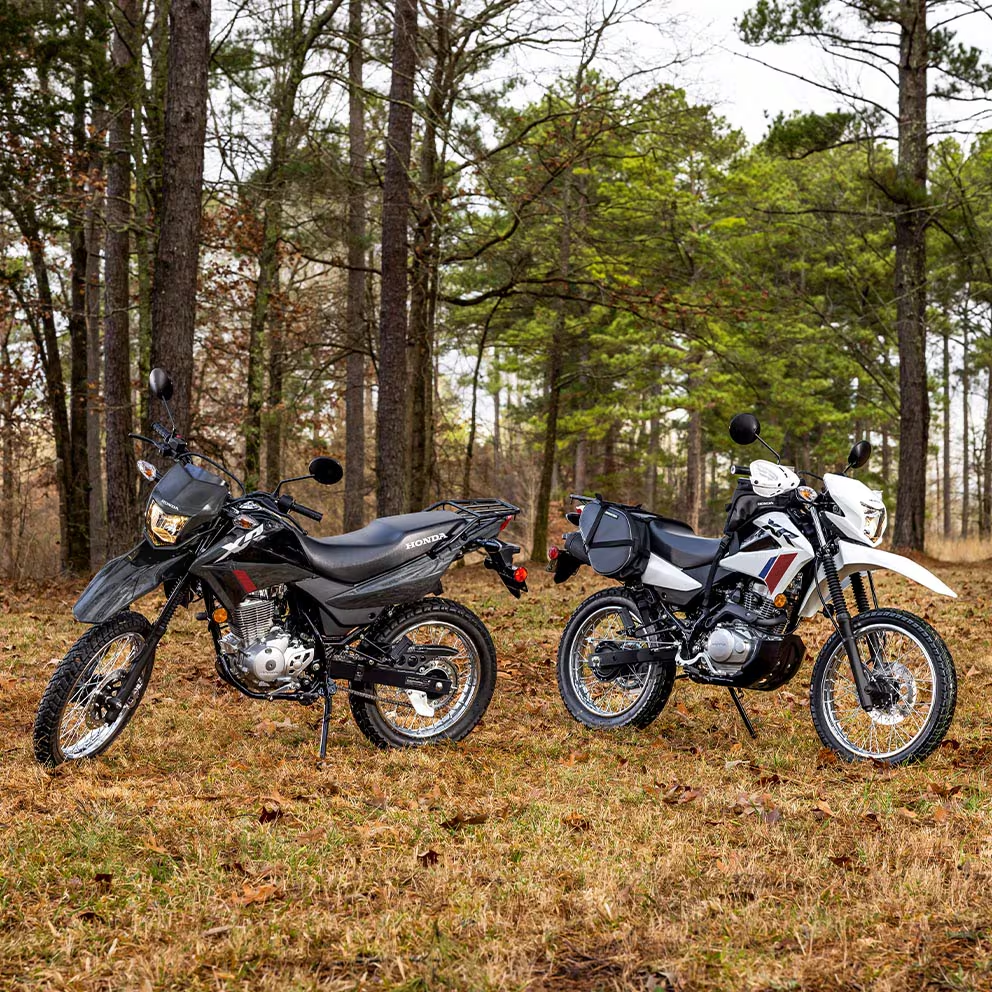
The Honda XR150L remains one of the simplest ways to enter dual-sport motorcycling.
For 2026, Honda lists the XR150L at a base MSRP of $3,399 with a 149cc air-cooled single-cylinder engine and 32.8-inch seat height.
It isn’t designed to dominate highways, but that is not really the point. The XR150L is approachable, inexpensive and simple enough for new riders to concentrate on technique rather than managing excessive performance.
It makes particular sense for backroads, commuting, gravel roads and easy trails.
Best for: Budget-conscious beginners and riders learning basic off-road skills.
Keep in mind: Highway performance is limited.
2. Yamaha TW200 — Best Beginner Motorcycle for Sand and Low-Speed Exploring
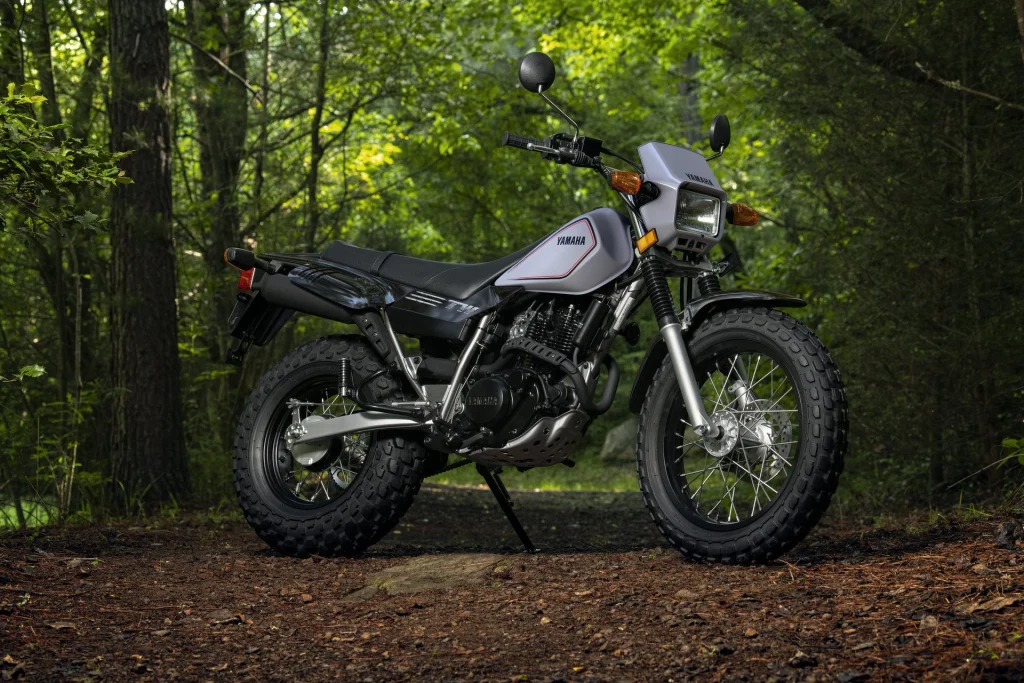
Few motorcycles look quite like the Yamaha TW200.
Its oversized tires give it a unique appearance, but they also provide reassuring traction on loose terrain. The 2026 TW200 has a 31.1-inch seat height and weighs approximately 278 pounds wet, helping make it approachable for many shorter riders.
Its 196cc air-cooled engine is simple and friendly rather than fast.
That makes the TW200 particularly enjoyable for trails, farms, backroads, desert tracks and relaxed exploration where outright speed isn’t important.
Best for: Shorter adventure riders, trails, loose terrain and low-speed exploration.
Keep in mind: Limited highway performance and basic suspension.
3. Kawasaki KLX230 S — A Great First Proper Dual-Sport

The KLX230 family sits in a useful position between extremely basic small dual-sports and more performance-oriented 300cc motorcycles.
The lower-seat KLX230 S configuration makes the bike especially interesting for riders who want genuine trail capability without climbing onto an exceptionally tall enduro-style motorcycle. Kawasaki’s 2026 KLX230 S ABS is listed at $5,499.
Its fuel-injected single-cylinder engine provides manageable power, while its dirt-bike-style ergonomics encourage proper standing techniques.
For beginners who genuinely intend to ride trails rather than just gravel roads, the KLX230 platform deserves serious consideration.
4. Kawasaki KLX300 — Best for Taller Beginner Off-Road Riders

The Kawasaki KLX300 is a noticeable step up in off-road capability.
For 2026, it uses a 292cc fuel-injected single-cylinder engine, weighs about 302 pounds ready to ride and has a 35.2-inch seat height. Kawasaki lists base pricing in the mid-$5,000 range depending on color.
That tall seat will discourage some shorter riders, but taller beginners should appreciate the spacious ergonomics.
More importantly, the KLX300 has genuinely useful long-travel suspension. This means a new rider can develop considerably before the motorcycle itself becomes the limiting factor.
Best for: Taller riders who expect to spend significant time off-road.
Keep in mind: The tall seat can be intimidating for shorter beginners.
5. Kawasaki KLE500 — Best Beginner Adventure Bike for Road and Gravel
The KLE500 is one of the most important new motorcycles for this guide in 2026.
Kawasaki’s new adventure bike uses a 451cc parallel-twin engine and starts at $6,599 in the U.S. It receives a 21-inch front wheel, long-travel suspension, upright ergonomics and rally-inspired bodywork.
Its approximately 34.3-inch seat and roughly 426-pound curb weight make it considerably larger than a KLX300 or TW200.
That is why we would separate two types of beginners.
If you want to learn technical off-road riding, choose something lighter first. If your riding will primarily involve pavement, touring, gravel roads and relatively easy trails, the KLE500 makes much more sense.
It also has enough engine performance to handle highway travel comfortably.
Best for: New adventure riders who expect substantial road mileage.
Keep in mind: It is heavier than a true beginner dual-sport.
6. Royal Enfield Himalayan 450 — Best Relaxed Adventure Motorcycle

The Himalayan 450 represents a huge evolution over the original Himalayan 411.
Its modern liquid-cooled 452cc single-cylinder engine, upright ergonomics and adventure-focused chassis make it comfortable for commuting, backroad exploration and longer trips.
Royal Enfield currently lists U.S. Himalayan 450 variants starting around $5,999, depending on model year and color.
It is significantly heavier than small dual-sports, so we would not choose it as the easiest motorcycle for learning technical sand or single-track.
For relaxed adventure travel, however, the Himalayan’s tractable engine and comfortable riding position make it approachable.
Best for: New riders interested in travel, gravel roads and relaxed adventure touring.
Best Cruiser Motorcycles for Beginners
Cruisers offer one major advantage to nervous new riders: low seat heights.
Being able to confidently put your feet down can make stops, parking and slow-speed maneuvering feel far less intimidating.
7. Honda Rebel 300 E-Clutch — Best Cruiser for Complete Beginners
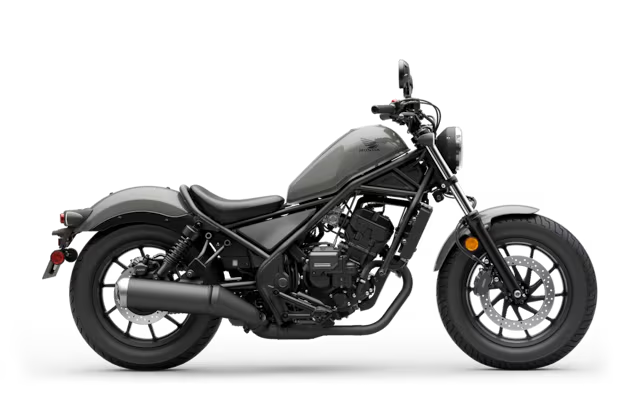
Honda has made the Rebel 300 particularly interesting for 2026 by adding Honda E-Clutch.
The 286cc single-cylinder Rebel has an extremely low 27.2-inch seat height, and E-Clutch allows riders to stop, start and shift without manually operating the clutch lever if they don’t want to. Honda lists the 2026 Rebel 300 E-Clutch at $5,349 before destination charges.
You still shift gears normally with your foot, making it different from a fully automatic motorcycle.
For riders worried about coordinating throttle, clutch and gear changes during their first few rides, this technology can make the learning process considerably less stressful.
Best for: Short riders and complete beginners.
8. Honda Rebel 500 — Best Beginner Cruiser You Can Keep for Years
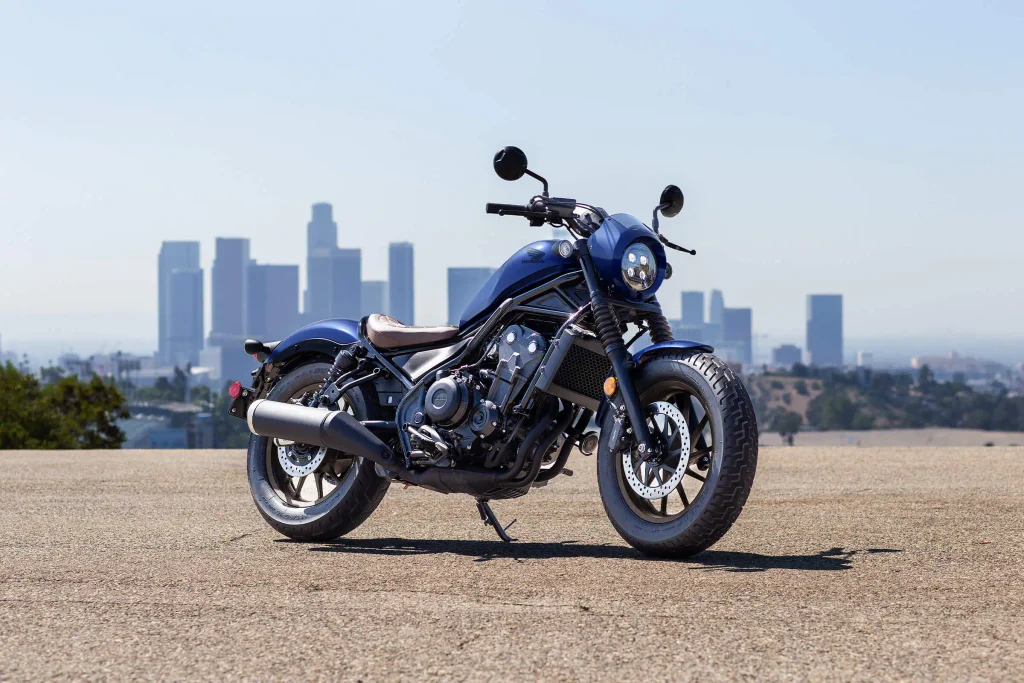
If you want a beginner motorcycle with enough performance to remain satisfying after your first riding season, the Rebel 500 is difficult to overlook.
Its 471cc parallel-twin engine produces smooth, usable power without the abrupt delivery associated with more aggressive motorcycles.
The 2026 Rebel 500 retains the extremely accessible 27.2-inch seat height, and Honda now includes ABS as standard. Base MSRP is $6,799.
At 414 pounds ready to ride, it is heavier than many small naked or sport motorcycles, but its low center of gravity helps make that weight manageable.
Best for: Short-to-average-height riders wanting a motorcycle they won’t quickly outgrow.
9. Kawasaki Eliminator — Best Sporty Beginner Cruiser
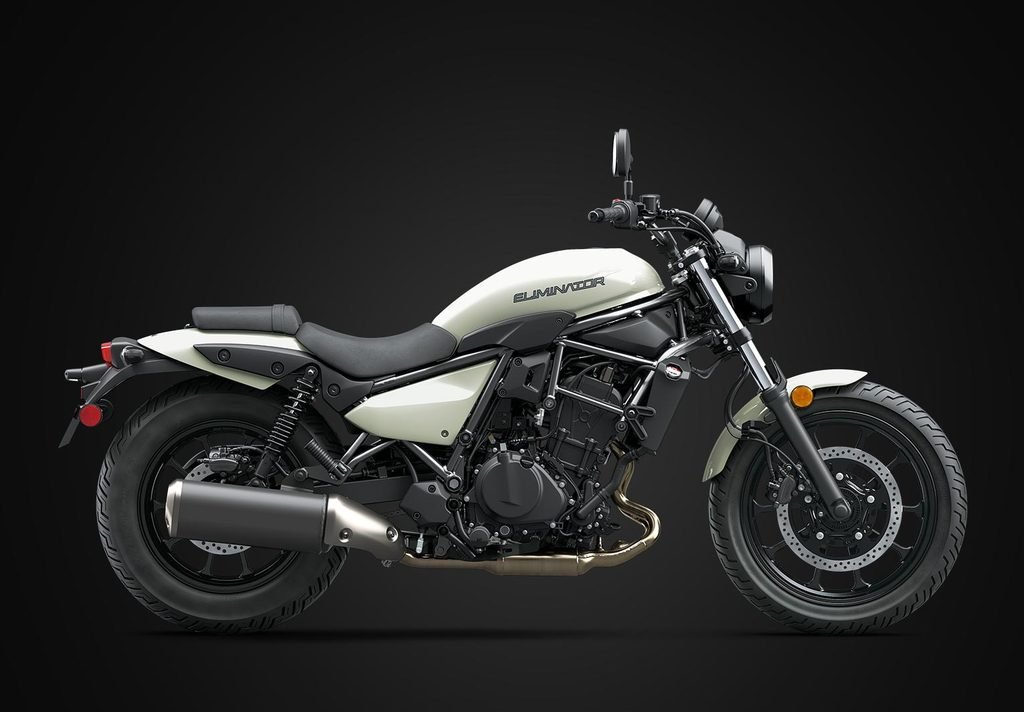
The Kawasaki Eliminator combines cruiser ergonomics with a more energetic 451cc parallel-twin engine.
Its 28.9-inch seat is extremely approachable, while the relatively upright riding position makes it less extreme than many traditional cruisers.
For 2026, Kawasaki lists the Eliminator from $6,499, with the ABS version starting at $6,799.
The result is a motorcycle that feels low and confidence-inspiring at a stop but has enough engine performance to remain entertaining on faster roads.
Best for: Beginners who want cruiser styling without giving up sporty performance.
10. Royal Enfield Meteor 350 — Best Relaxed Beginner Cruiser
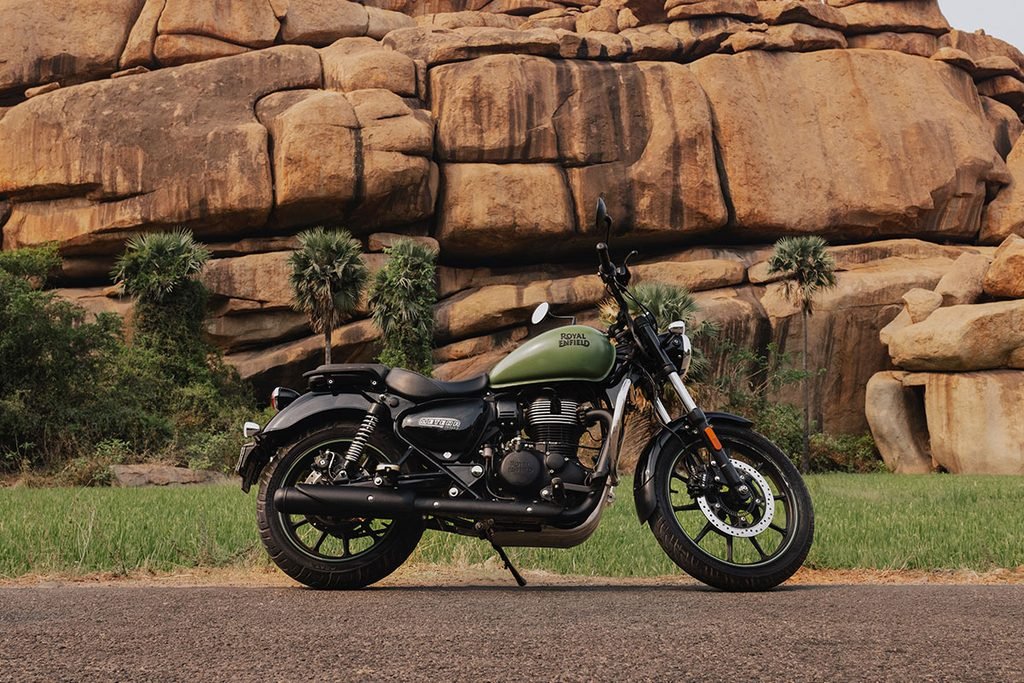
The Royal Enfield Meteor 350 prioritizes simplicity and character over outright speed.
Its air/oil-cooled single-cylinder engine delivers its performance gently, making throttle control straightforward for new riders.
Current U.S. pricing for 2026 variants starts in the $4,000 range depending on trim.
This is a motorcycle designed to enjoy rather than rush.
For commuting, country roads and relaxed weekend rides, that personality can be ideal for someone learning.
Best Sport Bikes for Beginners
Buying your first sport bike does not mean you need a 600cc supersport.
Modern 300–500cc sport motorcycles can look like full-sized performance machines while offering far more manageable power, friendlier ergonomics and lower running costs.
11. Kawasaki Ninja 500 — Best All-Around Beginner Sport Bike

The Ninja 500 is arguably the sweet spot in Kawasaki’s beginner sport-bike family.
Its 451cc parallel-twin engine provides enough performance for highways and spirited riding while remaining considerably more approachable than a traditional 600cc supersport.
The 2026 Ninja 500 starts around $5,399, with ABS-equipped versions available above that.
Its riding position is sporty without forcing the rider into an extreme racing crouch.
That combination makes the Ninja 500 suitable for commuting, weekend rides and even a rider’s first track experience.
Best for: Beginners who want one sport motorcycle for almost everything.
12. Yamaha YZF-R3 — Best Lightweight Beginner Sport Bike
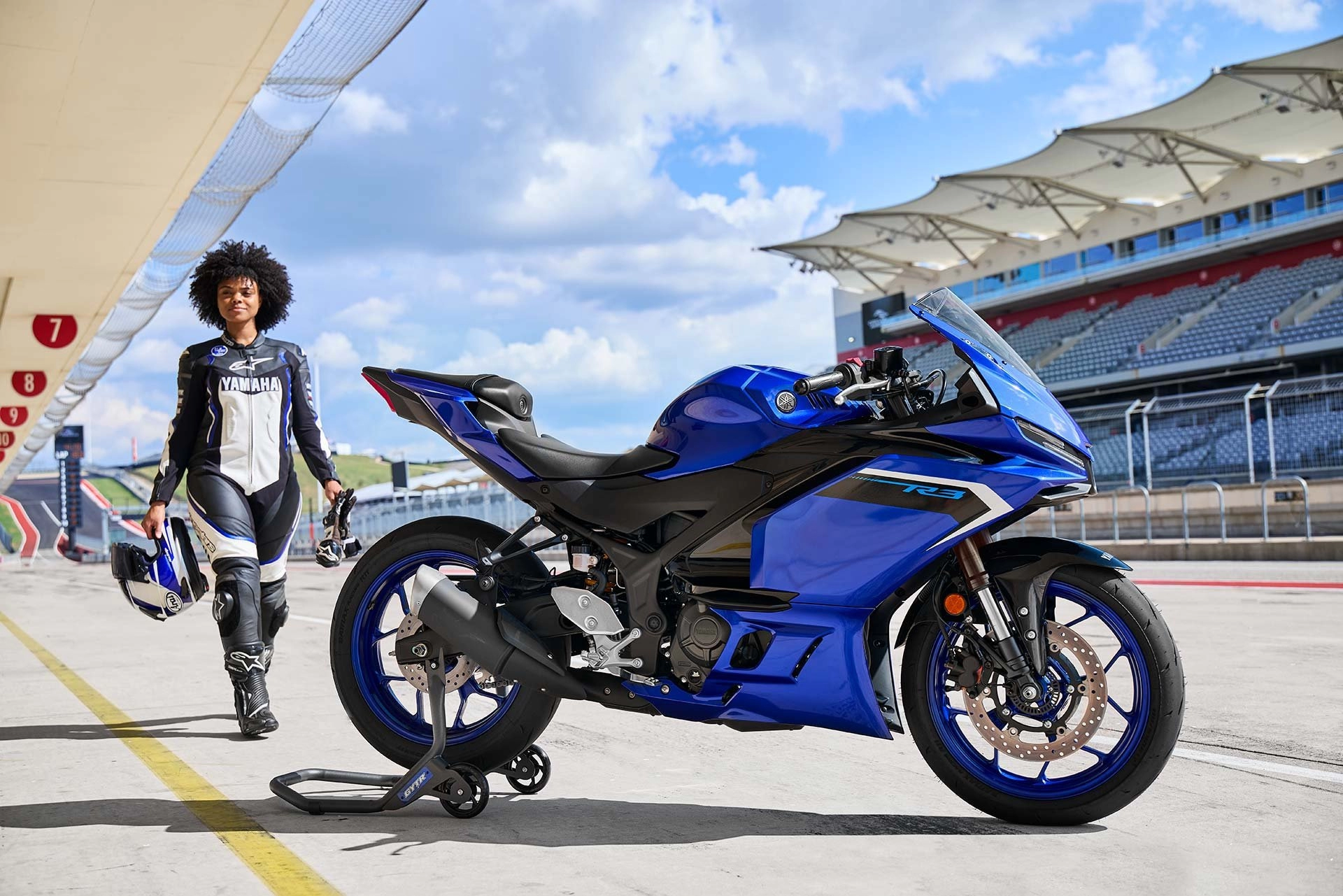
The Yamaha R3 has built a strong reputation by being easy to ride without feeling like a toy.
For 2026, Yamaha lists the R3 at $5,499. Its 321cc parallel-twin engine is combined with a 30.7-inch seat height and approximately 373-pound wet weight.
The engine rewards revs without delivering intimidating torque at low speeds, which is useful while learning precise throttle control.
Its light handling also makes the R3 enjoyable on twisty roads and suitable for introductory track riding.
Best for: Lightweight handling and riders who want a traditional sport-bike experience.
13. Honda CBR500R — Best Beginner Sport Bike for Everyday Use
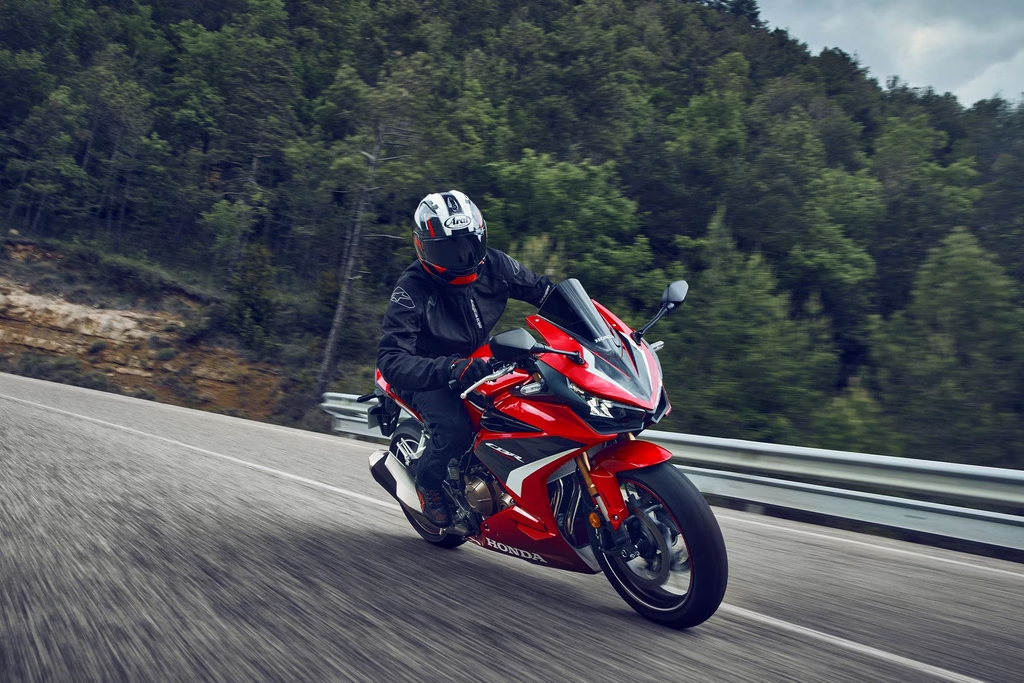
The Honda CBR500R combines sport styling with real-world comfort.
Its 471cc parallel-twin engine offers smooth power delivery, while its 31.1-inch seat height remains manageable for a broad range of riders. Honda lists the 2026 CBR500R at a $6,399 base MSRP.
Compared with smaller 300cc sport bikes, the Honda feels substantial and stable on highways.
That makes it particularly attractive if your riding includes commuting or longer distances in addition to weekend fun.
14. Aprilia RS 457 — Best Premium Beginner Sport Bike
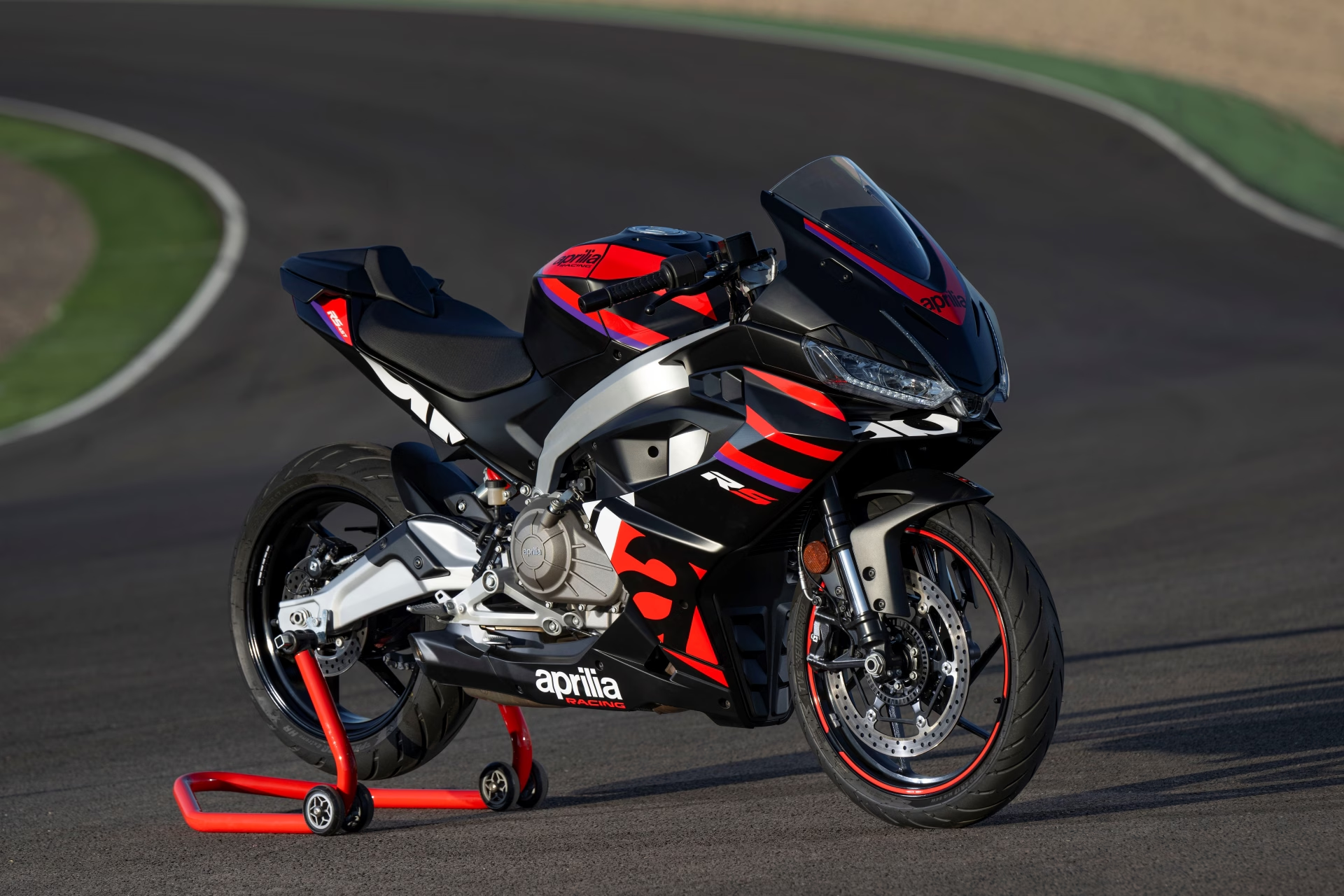
The Aprilia RS 457 brings some genuinely premium equipment into the beginner and intermediate sport-bike category.
Its 457cc parallel twin produces a claimed 47 horsepower, while the chassis uses an aluminum frame and modern rider electronics. Aprilia lists a 31.5-inch seat height and approximately 385-pound wet weight in its technical specifications.
U.S. pricing is around $6,849 depending on availability.
The RS 457 is sportier than something like a Yamaha MT-03, but its manageable size makes it far more sensible for newer riders than jumping directly onto a high-powered supersport.
Best for: Beginners who prioritize sporty handling, technology and premium styling.
Best Standard and Naked Motorcycles for Beginners
For many people, a naked or standard motorcycle is actually the smartest first bike.
Wide handlebars, upright ergonomics and minimal bodywork make these motorcycles easy to control and relatively practical to own.
15. Yamaha MT-03 — Best Lightweight Naked Bike for Beginners
The Yamaha MT-03 combines the R3’s proven 321cc parallel-twin engine with a more relaxed upright riding position.
For 2026, it starts at $4,999, weighs approximately 373 pounds wet and has a low 30.7-inch seat.
That combination works particularly well in cities.
The wide handlebar gives the rider plenty of leverage during low-speed maneuvers while the engine remains friendly enough for learning.
Best for: Commuters, shorter riders and urban beginners.
16. Kawasaki Z500 — Best Beginner Naked Bike with More Power

The Z500 is essentially the naked counterpart to Kawasaki’s Ninja 500.
The 2026 Z500 ABS starts at $5,699 and uses Kawasaki’s 451cc parallel-twin engine. Kawasaki lists a 30.9-inch seat and a curb weight around 370 pounds depending on specification.
That gives it an excellent combination of manageable dimensions and useful performance.
The upright riding position is excellent for everyday use, while the engine provides enough power for highway travel.
Best for: Beginners wanting a first bike they can keep as their experience grows.
17. KTM 390 Duke — Best Fun Beginner Naked Bike
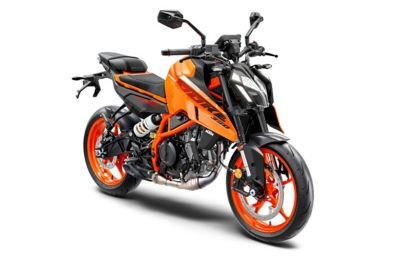
The KTM 390 Duke is one of the more performance-focused motorcycles on this list, but its compact dimensions keep it accessible.
The 2026 model uses a 398.7cc single-cylinder engine producing a claimed 45 PS and comes with features including ride modes, cornering ABS and adjustable suspension. U.S. base MSRP is $5,499.
Its responsive chassis makes it especially entertaining on tight roads.
Beginners should still respect its punchier throttle response compared with more relaxed motorcycles such as the Meteor 350, but riders with good training can grow with it for years.
Best for: New riders who prioritize lightweight handling and sporty performance.
18. Royal Enfield Guerrilla 450 — Best Value Modern Roadster
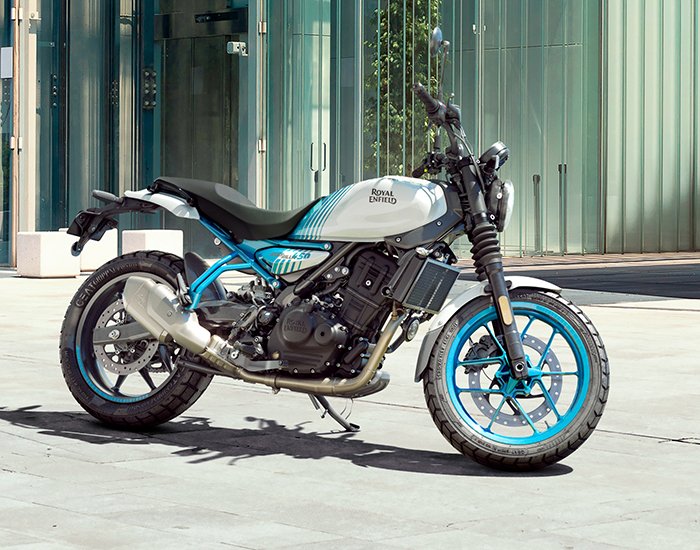
The Guerrilla 450 takes Royal Enfield’s 452cc liquid-cooled Sherpa engine and puts it into a compact roadster platform.
It delivers a claimed 40 PS and 40 Nm while offering an upright riding position, wide handlebars and a relatively low seat.
U.S. 2026 pricing starts at approximately $5,299 depending on color.
For riders who like the mechanical character of a single-cylinder motorcycle but want modern technology and stronger performance than a traditional 350, the Guerrilla makes a compelling alternative.
What About the Suzuki SV650?
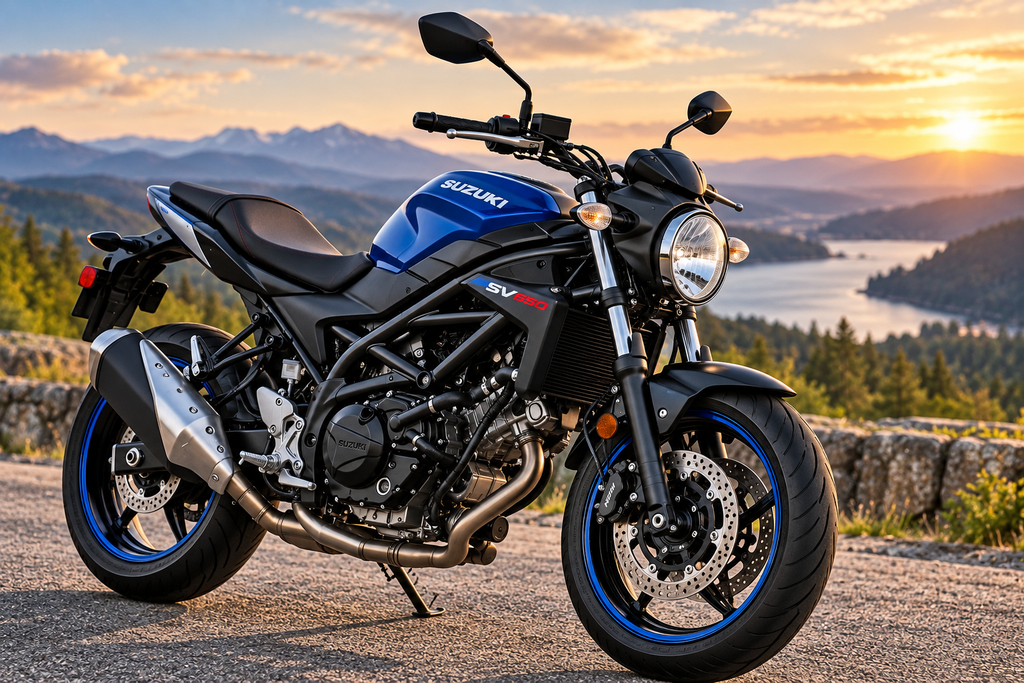
The Suzuki SV650 deserves a special mention because it has been recommended to beginners for decades.
Its 645cc V-twin is remarkably smooth and usable, and features such as Suzuki’s Low RPM Assist can make pulling away easier.
However, the 2026 SV650 ABS weighs approximately 437 pounds and starts at $8,149.
For a confident adult who has completed professional motorcycle training, it can still make a sensible first motorcycle.
For a nervous or physically smaller beginner, however, an MT-03, Z500 or Rebel 500 will usually make the first months of riding easier.
Best Beginner Motorcycle for Tall Riders
Tall riders face almost the opposite problem from shorter beginners.
A very low motorcycle can leave the knees excessively bent and make standing during off-road riding uncomfortable.
The Kawasaki KLX300 is one of the strongest options because its 35.2-inch seat and spacious dirt-bike ergonomics provide plenty of room.
More experienced beginners who specifically want serious dual-sport performance can also look at the new Suzuki DR-Z4S. The redesigned 2026 motorcycle has fuel injection, ride-by-wire, sophisticated adjustable suspension, a 36.2-inch seat height and a claimed 333-pound curb weight. Suzuki lists the DR-Z4S at $8,999.
The new Kawasaki KLE500 can also suit taller riders who want more highway comfort than a lightweight dual-sport.
Best Beginner Motorcycle for Short Riders
Short riders should not focus on seat height alone.
Seat width, suspension sag, motorcycle weight and where the footpegs are positioned all influence how easily you can reach the ground.
For road riding, the Honda Rebel range remains exceptionally accessible thanks to its 27.2-inch seat.
The Kawasaki Eliminator is another excellent choice at 28.9 inches.
If you prefer a standard motorcycle, the Yamaha MT-03 and Kawasaki Z500 combine roughly 31-inch seat heights with relatively narrow chassis.
For dirt riding, the Yamaha TW200 remains one of the easiest dual-sports for shorter riders because of its 31.1-inch seat and low weight.
Should a Beginner Buy a 300cc or 500cc Motorcycle?
Both can be excellent choices.
A 250–300cc motorcycle usually makes learning easier because it tends to be lighter, cheaper and less intimidating.
A modern 400–500cc twin, however, gives you substantially better highway performance and may prevent you from wanting to replace your first motorcycle after one season.
Rather than obsessing over engine displacement, compare the motorcycle’s weight, throttle response, seat height and intended use.
A Kawasaki Ninja 500 can be perfectly manageable for a responsible beginner, while a much more powerful 600cc supersport is an entirely different proposition despite the relatively small difference in engine capacity.
Is a 600cc Motorcycle Too Much for a Beginner?
Engine capacity does not tell the complete story.
A relaxed 650cc twin and a 600cc four-cylinder supersport behave very differently.
Traditional 600cc supersport motorcycles are designed around high performance, aggressive brakes, high-revving engines and track-focused handling. They leave a beginner less room for error.
For most first-time riders, a motorcycle in the 300–500cc category provides more than enough performance while making it easier to develop good technique.
What Is the Best Beginner Motorcycle for Highway Riding?
If highway riding will be a major part of your life, avoid choosing an extremely small motorcycle simply because it seems safer.
A Honda XR150L or Yamaha TW200 can be fantastic learning machines, but extended high-speed riding is not their strength.
For primarily paved highway riding, motorcycles such as the Kawasaki Ninja 500, Honda CBR500R, Honda Rebel 500, Kawasaki Z500 and Kawasaki KLE500 offer more useful power and stability while still remaining approachable.
What Is the Best Beginner Motorcycle for Off-Road Riding?
For genuine off-road learning, lighter is usually better.
A Yamaha TW200, Kawasaki KLX230 S, Kawasaki KLX300 or Honda CRF300L-family motorcycle allows the rider to practice standing, braking, clutch control, hill starts and recovering from mistakes without fighting the mass of a full-sized adventure motorcycle.
This becomes particularly important in sand.
Once you can comfortably control a lightweight motorcycle on loose terrain, moving to a larger adventure bike becomes considerably easier.
Starting on a 450-pound adventure motorcycle and trying to learn those same techniques at the same time can slow down the learning process.
Should Your First Motorcycle Have ABS?
For primarily street riding, ABS is highly desirable.
A new rider may instinctively grab too much brake during an emergency. ABS can help prevent wheel lock under hard braking and gives beginners additional protection while they develop proper braking technique.
Many motorcycles in this guide—including the Honda Rebel 500, Kawasaki Z500 and numerous versions of the Ninja 500—offer or include ABS.
For serious off-road riding, the situation is different because experienced riders sometimes need greater control over rear-wheel locking. Adventure motorcycles may therefore provide switchable ABS or dedicated off-road settings.
New vs. Used Motorcycle for a Beginner
There is nothing wrong with buying a used first motorcycle.
In fact, a well-maintained used motorcycle can be an excellent choice because beginners sometimes drop their bikes at walking speed while learning parking, U-turns and hill starts.
A few cosmetic scratches hurt less on a $3,500 used motorcycle than on a brand-new premium machine.
Buying new brings different advantages: warranty coverage, known maintenance history, modern ABS and financing availability.
Whichever route you choose, condition is more important than age. A poorly maintained bargain can quickly become more expensive than a good motorcycle purchased at a fair price.
Our Advice for New Adventure Riders
If your ultimate goal is riding a big adventure motorcycle across deserts, mountain passes and technical trails, don’t feel pressured to begin on the motorcycle you eventually want to own.
Start light.
Learn proper body positioning.
Practice clutch and throttle control.
Take professional training.
Ride gravel, dirt, mud and sand progressively rather than trying to master everything on your first weekend.
A rider who becomes genuinely skilled on a 250–300cc dual-sport will usually adapt to a larger adventure motorcycle much more easily than someone who tries to learn every fundamental while wrestling with a heavy ADV bike.
The same principle applies to street riding: skill first, horsepower later.
Final Thoughts: What Is the Best Motorcycle for a Beginner in 2026?
There is no single motorcycle that is perfect for every beginner.
For off-road-focused riders, lightweight machines such as the Yamaha TW200, Kawasaki KLX230 S and Kawasaki KLX300 make excellent starting points.
For adventure riders who will spend more time on pavement, the Kawasaki KLE500 and Royal Enfield Himalayan 450 provide greater comfort and highway ability.
Shorter road riders should consider the Honda Rebel 300, Rebel 500 or Kawasaki Eliminator, while sport-bike fans have excellent options in the Kawasaki Ninja 500, Yamaha R3, Honda CBR500R and Aprilia RS 457.
For everyday versatility, it is difficult to go wrong with a lightweight naked bike such as the Yamaha MT-03, Kawasaki Z500 or KTM 390 Duke.
Whatever you choose, don’t buy a motorcycle simply because someone tells you that you’ll “outgrow” a smaller bike.
You can always buy more motorcycle later.
Learning proper braking, cornering, balance, throttle control and off-road technique will make every motorcycle you ride afterward safer—and much more enjoyable.
Pricing note: MSRP figures in this guide refer primarily to U.S. manufacturer base pricing available for the 2026 model year at the time of writing. Destination charges, taxes, dealer fees, availability and specifications can vary by market.