
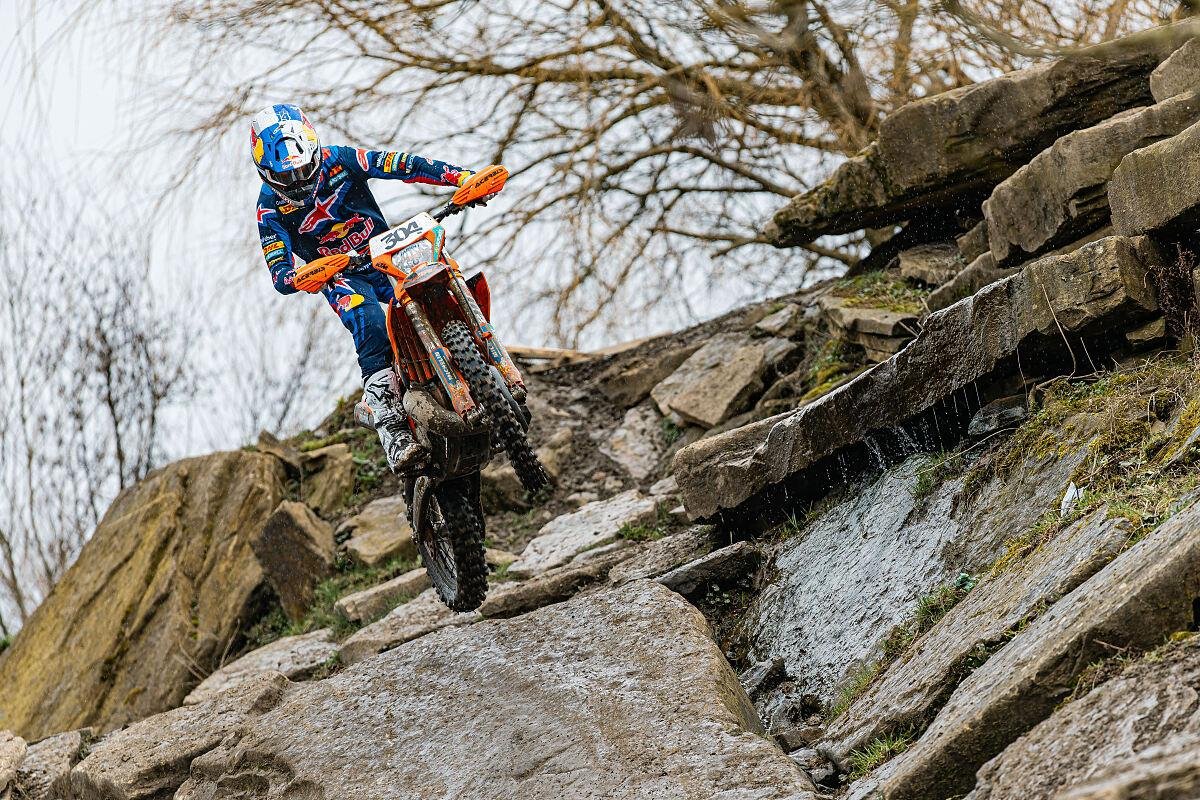
Two-stroke enduro bikes remain some of the most effective motorcycles for technical off-road riding. They are light, responsive, relatively simple mechanically, and capable of producing huge usable torque without the weight and engine braking normally associated with larger four-strokes.
For hard enduro in particular, the 300cc two-stroke has become one of the most popular engine formats. Rocks, roots, steep climbs, mud, riverbeds and tight singletrack reward a motorcycle that can produce strong torque from low rpm while remaining easy to maneuver.
But a 300 is not automatically the right choice for every rider.
A 250cc two-stroke can feel lighter and more energetic, while a 300cc two-stroke generally offers more low-rpm torque and allows the rider to use a higher gear through difficult terrain.
In this guide, we compare five of the most important 300cc enduro motorcycles:
- KTM 300 EXC
- Husqvarna TE 300
- GASGAS EC 300
- Beta RR X-PRO 300 2T
- Sherco 300 SE Factory
We will also explain 250 vs 300 two-strokes, TBI vs carburetors, PDS vs linkage suspension, and what actually matters when choosing an enduro bike.
Quick Comparison: Top 300cc Two-Stroke Enduro Bikes
| Bike | Engine | Fuel System | Weight* | Rear Suspension | Seat Height |
|---|---|---|---|---|---|
| KTM 300 EXC | 293.15cc 2T | Keihin TBI/EFI | 104.7 kg | PDS | 963 mm |
| Husqvarna TE 300 | 293.2cc 2T | Keihin TBI/EFI | 106.8 kg | Linkage | 952 mm |
| GASGAS EC 300 | 293.15cc 2T | Keihin TBI/EFI | 107.6 kg | Linkage | 956 mm |
| Beta RR X-PRO 300 | 292.6cc 2T | Keihin PWK 36 carb | 103.5 kg dry | Linkage | 930 mm |
| Sherco 300 SE Factory | 293.2cc 2T | Keihin PWK 36 carb | — | Linkage | 950 mm |
KTM, Husqvarna and GASGAS use 39 mm Keihin throttle-body fuel injection on their current 300s. Beta continues with a Keihin PWK 36 carburetor combined with electronic oil injection, while the Sherco uses a PWK 36 carburetor and 2% premix.
*Be careful comparing published weights directly. Manufacturers do not always measure motorcycles under identical conditions. Beta, for example, specifies a dry weight, while KTM, Husqvarna and GASGAS state weight without fuel.
Why Are 2-Strokes So Popular in Hard Enduro?
Hard enduro is different from high-speed motocross or conventional cross-country racing.
A rider might have to crawl through rocks at walking speed, stop halfway up a climb, restart on an incline, pivot the motorcycle around a tree and immediately attack another obstacle.
In these conditions, several two-stroke characteristics become extremely valuable.
Low Weight
When you are riding normally, a few kilograms may not sound important.
When the motorcycle is lying sideways on a rocky hill for the fourth time, those kilograms become very important.
A lighter-feeling motorcycle is easier to change direction, lift, pivot and correct when traction disappears.
Strong Low-RPM Torque
Modern 300 two-strokes do not need to be ridden constantly at maximum rpm.
They can pull surprisingly high gears at low engine speeds, helping the rear tire find traction instead of immediately spinning.
That is one of the biggest reasons 300s are so effective on long technical climbs.
Low Engine Braking
Two-strokes produce much less engine braking than four-strokes.
That gives the motorcycle a freer feeling when entering technical descents or moving over loose rocks.
Some riders love this sensation. Riders coming directly from four-strokes may need time to adapt.
Simple, Compact Engine
A two-stroke engine has fewer moving components than an equivalent four-stroke engine.
Maintenance still matters—and hard enduro is extremely demanding on clutches, cooling systems and top ends—but rebuilding a two-stroke top end is generally more straightforward.
250 vs 300 2-Stroke Enduro: Which Is Better?
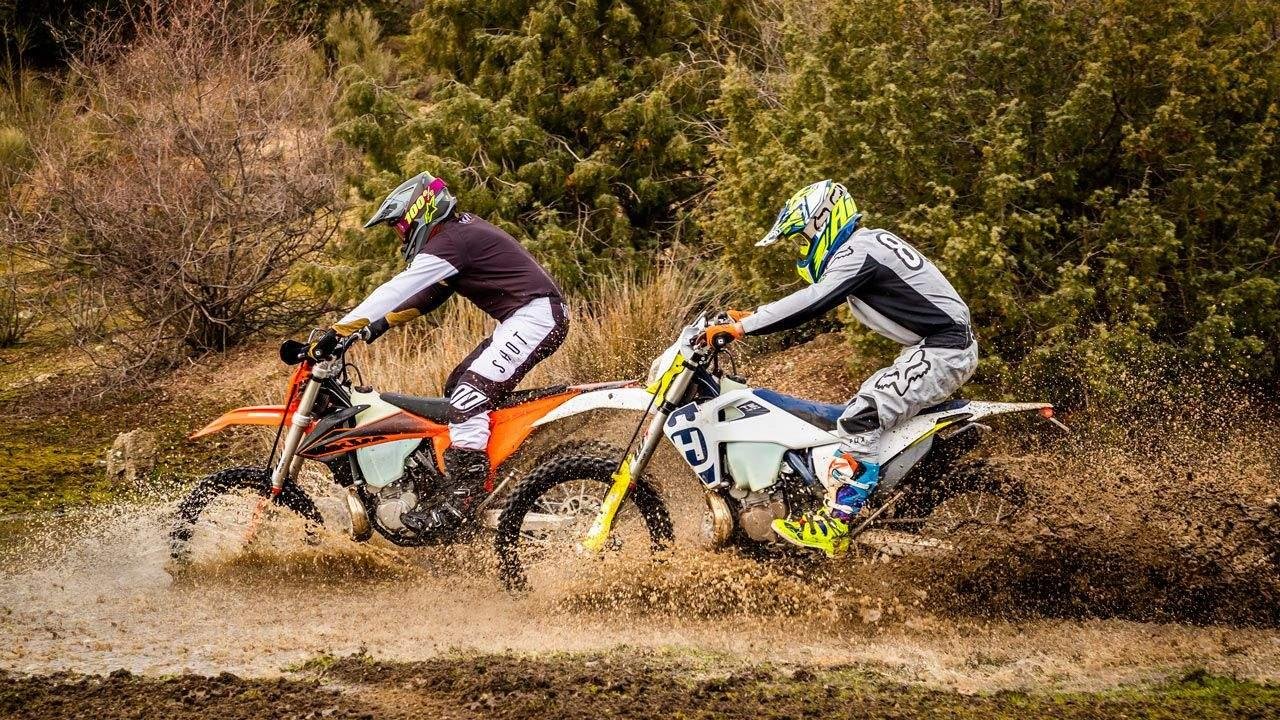
This is one of the biggest questions for riders shopping for a new enduro motorcycle.
The difference between a 250 and 300 is much more than 50cc.
Choose a 250 Two-Stroke If You Want:
A 250 generally rewards a more aggressive riding style.
The engine likes to rev, and the rider may use the gearbox and clutch more actively to keep the motorcycle in the strongest part of its power delivery.
For experienced riders, that can make a 250 extremely enjoyable.
A 250 makes particular sense if you:
- like an energetic engine character;
- ride faster enduro terrain;
- enjoy using the clutch and gearbox;
- prefer revving the motorcycle;
- want slightly less torque when traction is limited.
Choose a 300 Two-Stroke If You Want:
The 300 is particularly good at producing usable torque at low rpm.
Instead of constantly changing gears, you can often leave the motorcycle in second or third and allow the engine to pull through technical sections.
That can reduce rider workload during a long day.
A 300 makes particular sense if you:
- ride hard enduro;
- regularly tackle steep climbs;
- ride rocks, roots and technical singletrack;
- prefer short-shifting instead of revving the engine;
- want maximum low-rpm torque;
- ride at altitude.
Is a 300 Two-Stroke Too Powerful?
Not necessarily.
The interesting thing about modern 300s is that their extra displacement does not simply make them more aggressive.
Their torque can actually allow a rider to use lower rpm and a higher gear, which can make technical riding smoother.
But throttle control still matters. A 300 can deliver serious power very quickly when the throttle is opened.
For a complete off-road beginner, jumping directly onto a competition-focused 300 may therefore be unnecessarily demanding.
1. KTM 300 EXC
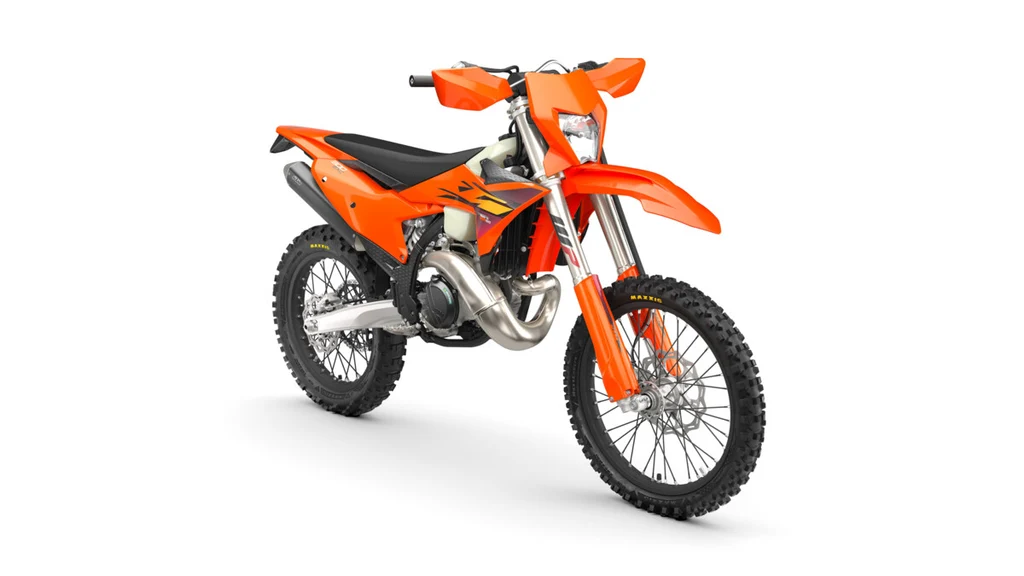
The KTM 300 EXC is one of the best-known names in hard enduro.
The 2026 model uses a 293.15cc single-cylinder two-stroke engine with Keihin 39 mm throttle-body fuel injection, a six-speed transmission and electric start.
KTM lists its weight at 104.7 kg without fuel. KTM
KTM 300 EXC Key Specifications
Engine: 293.15cc single-cylinder two-stroke
Fueling: Keihin EFI/TBI, 39 mm throttle body
Transmission: 6-speed
Weight: 104.7 kg without fuel
Fuel capacity: approximately 9 litres
Front suspension: WP XACT 48 mm
Rear suspension: WP XPLOR PDS
Seat height: 963 mm
Ground clearance: 347 mm
One characteristic that separates the KTM from most of the motorcycles in this comparison is the PDS rear suspension system.
Instead of using a linkage underneath the swingarm, the shock connects directly to the swingarm.
That removes the linkage hanging underneath the bike—something that can be useful when crossing large logs and rocks.
Who Should Consider the KTM 300 EXC?
The KTM makes sense for riders who want modern fuel injection, strong low-end performance and a PDS chassis designed around technical enduro.
It is particularly interesting for riders who frequently encounter:
- rocks;
- logs;
- steep technical climbs;
- tight forest trails;
- extreme enduro terrain.
Related article: PDS vs Linkage Suspension for Hard Enduro: Which Is Better?
2. Husqvarna TE 300

The Husqvarna TE 300 shares important engine technology with the KTM, but the motorcycles should not be considered identical.
The 2026 TE 300 uses a 293.2cc two-stroke with Keihin 39 mm throttle-body injection, six-speed gearbox and electric starter.
Husqvarna lists the motorcycle at 106.8 kg without fuel. Husqvarna Motorcycles
Husqvarna TE 300 Key Specifications
Engine: 293.2cc two-stroke
Fueling: Keihin EFI/TBI, 39 mm
Transmission: 6-speed
Weight: 106.8 kg without fuel
Front suspension: WP XACT cartridge 48 mm
Rear suspension: WP XACT linkage
Seat height: 952 mm
Ground clearance: 343 mm
The important difference for technical riders is at the rear.
While the KTM uses PDS, the Husqvarna TE 300 uses a linkage system.
Linkage gives suspension designers a progressive leverage curve and many riders prefer its feel when the rear suspension is working hard through repeated impacts.
The compromise is additional components underneath the swingarm.
Who Should Consider the Husqvarna TE 300?
The TE 300 deserves consideration from riders who want the benefits of modern 300cc TBI technology but prefer linkage rear suspension.
It combines a technical-enduro-focused two-stroke engine with a chassis configuration that can feel familiar to riders coming from motocross and linkage-equipped enduro motorcycles.
3. GASGAS EC 300
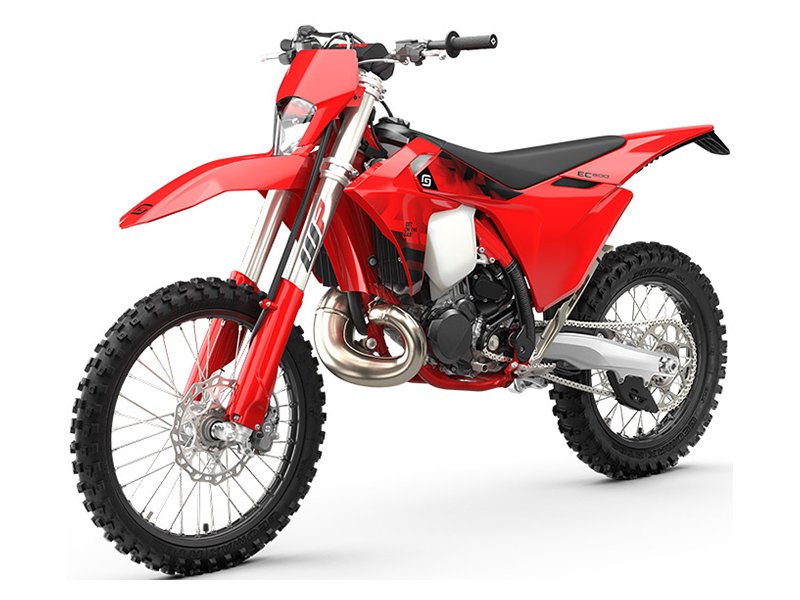
The GASGAS EC 300 is another modern fuel-injected 300cc two-stroke.
For 2026 it uses a 293.15cc engine, Keihin 39 mm throttle-body fuel injection, electric start and six-speed transmission.
Its published weight is 107.6 kg without fuel, with a 9-litre fuel tank and linkage rear suspension.
GASGAS EC 300 Key Specifications
Engine: 293.15cc two-stroke
Fueling: Keihin EFI/TBI, 39 mm
Transmission: 6-speed
Weight: 107.6 kg without fuel
Fuel tank: approximately 9 litres
Front suspension: WP XPLOR 48 mm
Rear suspension: WP XACT linkage
Seat height: 956 mm
Ground clearance: 354 mm
The GASGAS sits in the same broad Austrian technical family as KTM and Husqvarna, but specifications and components differ.
One example is the braking and clutch hardware, with the GASGAS using Braktec hydraulics on the 2026 EC 300. GASGAS
Who Should Consider the GASGAS EC 300?
It is worth considering if you want:
- modern TBI fuel injection;
- electric start;
- a linkage rear suspension;
- strong 300cc two-stroke torque;
- a modern European enduro platform.
Do not assume that a KTM, Husqvarna and GASGAS will feel identical simply because they share some technology. Ergonomics, suspension settings and components can produce meaningful differences on the trail.
4. Beta RR X-PRO 300 2T

Beta takes a noticeably different approach with the RR X-PRO 300 2T.
Instead of throttle-body fuel injection, the 2026 motorcycle uses a Keihin PWK 36 carburetor with electronic oil injection.
Its engine displacement is 292.6cc, and Beta lists a particularly accessible 930 mm seat height. The manufacturer lists dry weight at 103.5 kg.
Beta RR X-PRO 300 Key Specifications
Engine: 292.6cc single-cylinder two-stroke
Fueling: Keihin PWK 36 carburetor
Lubrication: Electronic oil pump
Transmission: 6-speed
Dry weight: 103.5 kg
Fuel tank: 9.5 litres
Seat height: 930 mm
Ground clearance: 320 mm
Rear suspension: Progressive linkage
The oil-injection system means the standard X-PRO does not require the rider to manually premix every tank in the same way as a conventional premix-only two-stroke.
Beta describes the 300 as producing a full, linear delivery designed to work from low rpm and pull taller gears through technical sections.
Who Should Consider the Beta 300?
The Beta becomes particularly interesting for riders who want:
- traditional carburetor response;
- oil injection;
- strong 300cc torque;
- linkage suspension;
- a lower standard seat height.
At 930 mm, its published seat height is notably lower than the figures listed for the KTM, Husqvarna, GASGAS and Sherco in this comparison.
For shorter riders tackling slow technical terrain, that difference deserves serious attention.
5. Sherco 300 SE Factory
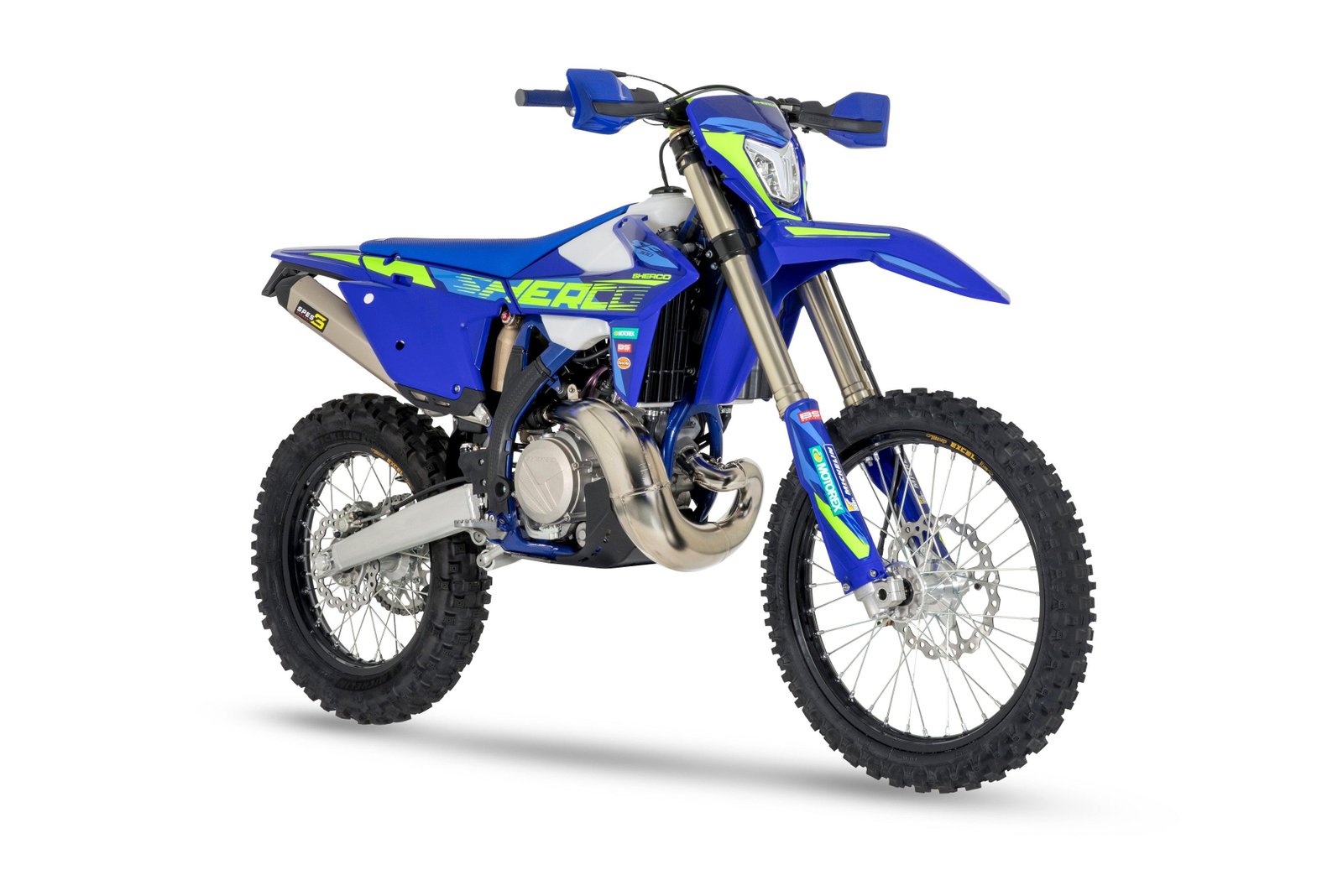
The Sherco 300 SE Factory keeps a more traditional two-stroke formula while combining it with high-spec enduro components.
Its 2026 engine is a 293.2cc two-stroke using a Keihin PWK 36 carburetor and electronically controlled power valve.
Unlike the oil-injected Beta, Sherco specifies a 2% fuel-oil mixture.
Sherco 300 SE Factory Key Specifications
Engine: 293.2cc two-stroke
Fueling: Keihin PWK 36 carburetor
Lubrication: 2% premix
Transmission: 6-speed
Front suspension: 48 mm KYB closed-cartridge fork
Rear suspension: KYB shock with linkage
Fuel tank: 10 litres
Seat height: 950 mm
Ground clearance: 355 mm
One of the major attractions is the suspension package.
Sherco equips the Factory model with a 48 mm KYB closed-cartridge fork and KYB rear shock, combined with Brembo brakes and hydraulic clutch components. sherco.com
Who Should Consider the Sherco 300 SE Factory?
The Sherco is particularly interesting for riders looking for:
- a carbureted 300cc engine;
- KYB suspension;
- Brembo braking components;
- traditional premix;
- serious technical-enduro equipment.
It offers a distinctly different alternative to the TBI-equipped KTM-family machines.
TBI vs Carburetor on a 300 Two-Stroke
Fuel delivery has become one of the biggest differences between today’s 300cc enduro motorcycles.
The KTM 300 EXC, Husqvarna TE 300 and GASGAS EC 300 use electronic throttle-body injection, while Beta and Sherco retain carburetors on the models discussed here. KTM
Advantages of TBI
Electronic injection can automatically compensate for changing operating conditions.
That is particularly useful when an enduro route moves through large altitude or temperature changes.
Advantages include:
- automatic fueling adjustment;
- no carburetor jet changes;
- consistent starting;
- precise electronic engine management.
Advantages of a Carburetor
A properly tuned carburetor remains extremely effective.
Many riders also enjoy the direct, mechanical character of a carbureted two-stroke.
Advantages can include:
- mechanical simplicity;
- familiar tuning;
- easy access for experienced mechanics;
- distinctive throttle response.
Neither system automatically makes a motorcycle better.
The right choice depends on where you ride, how much you enjoy tuning and what type of throttle response you prefer.
Read next: Fueling for Hard Enduro: TBI vs TPI vs Carb on 2-Strokes.
PDS vs Linkage for Hard Enduro
Rear suspension design matters almost as much as engine choice.
The KTM 300 EXC uses PDS, while the Husqvarna TE 300, GASGAS EC 300, Beta RR X-PRO 300 and Sherco 300 SE Factory use linkage-style rear suspension systems. KTM
Why Riders Choose PDS
Because there is no linkage hanging below the swingarm, PDS offers excellent clearance around obstacles.
That matters in hard enduro when the motorcycle is sliding over:
- logs;
- large rocks;
- ledges;
- deep ruts.
There are also fewer linkage bearings to maintain.
Why Riders Choose Linkage
A linkage system allows engineers to control the progressive relationship between rear-wheel movement and shock compression.
Many riders appreciate the planted feeling of a well-set-up linkage system through repeated impacts and faster terrain.
Neither design eliminates the need for correct suspension setup.
Spring rate, sag, damping and tire setup can make a much larger difference than simply choosing one system over the other.
Don’t Choose a 300 Two-Stroke by Horsepower Alone
Horsepower numbers look great in specification tables, but they can be misleading.
You may see figures of around 45–50 horsepower quoted for modern 300 two-strokes, but manufacturers do not all provide directly comparable official horsepower specifications.
Different dynos, correction methods, exhaust setups, fuel and testing conditions can change the number.
More importantly, maximum horsepower tells you very little about how useful a hard-enduro engine will be at 3,000 rpm halfway up a wet rocky climb.
For technical enduro, pay more attention to:
- low-rpm torque;
- throttle response;
- flywheel feel;
- gearing;
- clutch control;
- traction;
- suspension;
- ergonomics.
A motorcycle that produces slightly less peak power but gives the rider more control can be considerably faster in difficult terrain.
Which 300cc Two-Stroke Enduro Bike Should You Choose?
There is no single specification that decides the answer.
Instead, start with the characteristics you want.
KTM 300 EXC: Consider it if you want TBI fuel injection combined with PDS suspension and high ground clearance around the rear shock area.
Husqvarna TE 300: Consider it if you want modern TBI performance with linkage rear suspension and Husqvarna ergonomics.
GASGAS EC 300: Consider it if you want an injected 300 with linkage suspension and the GASGAS interpretation of the Austrian enduro platform.
Beta RR X-PRO 300: Consider it if you value a carburetor, electronic oil injection, linkage and a significantly lower published seat height.
Sherco 300 SE Factory: Consider it if you want a carbureted, premix 300 with KYB closed-cartridge suspension and Brembo components.
Whenever possible, ride the motorcycles before buying.
Ergonomics and engine character can influence your confidence far more than a specification table suggests.
What Else Matters More Than the Bike?
One of the easiest mistakes in enduro is spending thousands on motorcycle modifications while ignoring setup.
A properly prepared bike with the correct tires and suspension can outperform a more expensive motorcycle with the wrong setup.
Before chasing engine modifications, concentrate on:
Tires and Tire Pressure
Traction changes everything in hard enduro.
Mousse, Tubliss and heavy-duty tube systems all offer different compromises involving pressure, puncture protection, feel and maintenance.
Recommended: Hard Enduro Tire Systems: Tubliss vs Mousse vs Advanced Tubes.
Gearing
Changing a front or rear sprocket can completely change how a 300 behaves at low speed.
Technical riders often want gearing that makes second and third gear easier to use without constantly abusing the clutch.
Recommended: Enduro Gearing Guide: Dial In Your 300 2-Stroke and 350 4-Stroke.
Suspension Setup
Set sag before judging the motorcycle.
Then adjust compression and rebound systematically rather than randomly turning clickers.
Rider Fitness
A motorcycle upgrade cannot compensate for exhausted forearms.
Grip technique, riding position, hydration and physical conditioning all affect control during long technical rides.
Recommended: Arm Pump in Hard Enduro: Prevention, Treatment & Complete Guide.
300 Two-Stroke vs 350 Four-Stroke
There is another comparison worth considering.
A modern 350cc four-stroke sits between lightweight two-strokes and larger 450cc machines.
A 350 four-stroke generally provides:
- more engine braking;
- smoother four-stroke traction;
- broad power;
- predictable acceleration.
A 300 two-stroke generally provides:
- a lighter engine feel;
- less engine braking;
- easier direction changes;
- strong power relative to weight;
- excellent low-speed technical performance.
For extreme rocks, logs and difficult climbs, many riders gravitate toward the 300 two-stroke.
For riders combining technical riding with faster special tests and open terrain, a 350 four-stroke deserves consideration.
Frequently Asked Questions
What is the best 2-stroke enduro bike?
There is no universal answer because the KTM 300 EXC, Husqvarna TE 300, GASGAS EC 300, Beta RR X-PRO 300 and Sherco 300 SE Factory use different suspension, fueling and ergonomic approaches. Choose according to your terrain, riding style, size and preferred engine character.
Is a 250 or 300 two-stroke better for enduro?
A 250 generally rewards higher rpm and more active gearbox use. A 300 produces stronger low-rpm torque and can often be ridden a gear higher, making it especially effective for slow technical enduro.
Is a 300 two-stroke good for beginners?
It can be manageable in experienced hands because a 300 can be short-shifted and ridden at low rpm, but its potential power is significant. Complete off-road beginners will often develop faster on a less demanding motorcycle before moving to a competition-focused 300.
Are 300 two-strokes good for hard enduro?
Yes. Their combination of low weight, strong low-rpm torque, limited engine braking and compact dimensions makes 300cc two-strokes particularly well suited to rocks, roots, logs and steep technical climbs.
Which 300 two-strokes are fuel injected?
The current KTM 300 EXC, Husqvarna TE 300 and GASGAS EC 300 use Keihin throttle-body electronic fuel injection. The Beta RR X-PRO 300 and Sherco 300 SE Factory discussed here use Keihin PWK carburetors.
Does the KTM 300 EXC use linkage?
No. The KTM 300 EXC uses WP’s PDS rear suspension system. Husqvarna TE 300 and GASGAS EC 300 use linkage-equipped rear suspension.
How much does a KTM 300 EXC weigh?
KTM lists the 2026 KTM 300 EXC at 104.7 kg without fuel.
Final Thoughts
The modern 300cc two-stroke remains one of the most capable enduro motorcycle formats available, especially when the terrain becomes slow, steep and technical.
But buying the biggest engine is not automatically the correct decision.
A 250 rewards an aggressive rider who enjoys revs, clutch work and frequent gear changes. A 300 allows the rider to rely more heavily on torque, short-shifting and controlled low-rpm traction.
The KTM 300 EXC, Husqvarna TE 300, GASGAS EC 300, Beta RR X-PRO 300 and Sherco 300 SE Factory all approach the same problem differently.
Rather than asking only “Which 300 has the most horsepower?”, ask:
Which engine, suspension system, fueling setup and ergonomics will let me ride difficult terrain with the most control?
That is the question that will lead you toward the right two-stroke enduro bike.