
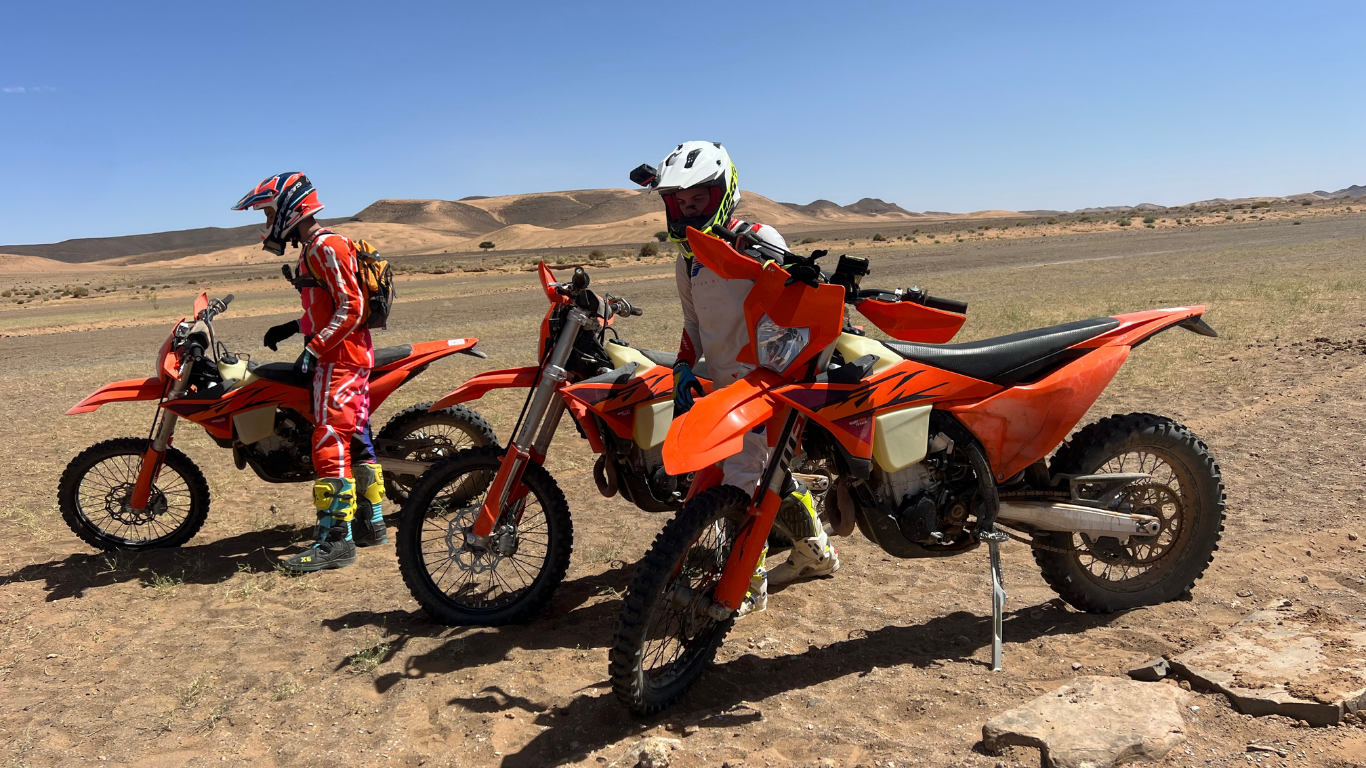
If you are interested in off-road riding, desert adventures, mountain trails, or motorcycle tours, you have probably heard the term enduro motorcycle. But what exactly is an enduro motorcycle, and how is it different from a motocross bike, trail bike, or adventure motorcycle?
An enduro motorcycle is a lightweight off-road motorcycle designed to handle long distances across challenging terrain. Unlike motorcycles built mainly for paved roads or short motocross races, enduro bikes are designed for endurance, control, traction, and reliability.
They can tackle rocky tracks, sand, gravel, steep climbs, dry riverbeds, forest trails, mountain passes, and technical off-road sections.
For riders who want to explore places that normal motorcycles cannot easily reach, an enduro bike is one of the most capable motorcycles available.
At Morocco Enduro Ride, we use enduro motorcycles such as the KTM 450 EXC-F to explore the desert tracks, mountains, dunes, valleys, and remote landscapes of southern Morocco.
What Is an Enduro Motorcycle?
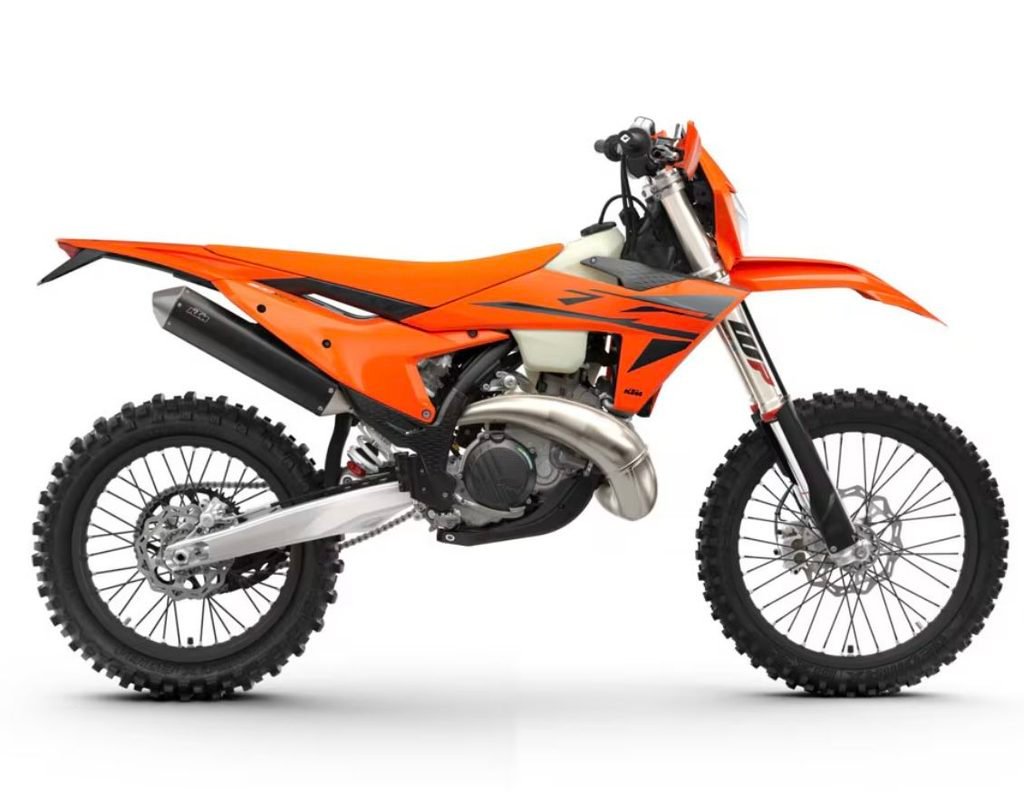
An enduro motorcycle is an off-road motorcycle specifically designed for riding long and demanding routes over different types of natural terrain.
The word “enduro” comes from endurance.
While motocross motorcycles are designed mainly for short races around prepared circuits, enduro motorcycles need to remain comfortable, controllable, and reliable for several hours of riding.
A typical enduro ride might include fast gravel tracks in the morning, rocky mountain trails around midday, technical climbs in the afternoon, and sandy desert tracks before reaching the hotel or desert camp.
Because of this variety, an enduro motorcycle must perform well in many different situations rather than being optimized for only one type of terrain.
Main Characteristics of an Enduro Motorcycle
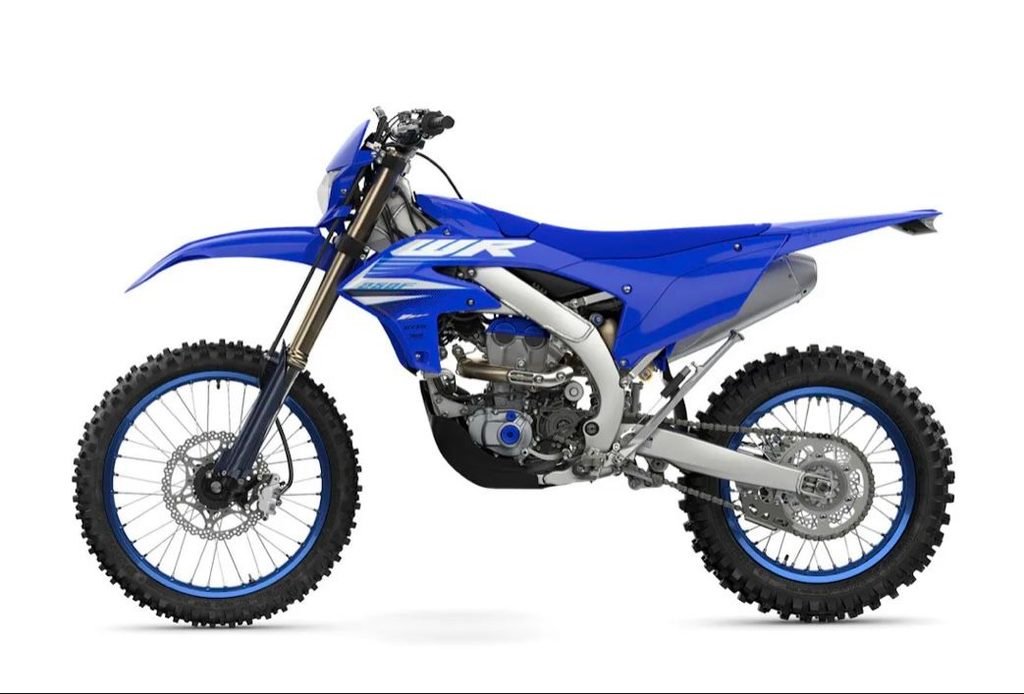
Several features separate a real enduro motorcycle from other dirt bikes.
Lightweight Construction
Enduro motorcycles are relatively light compared with adventure motorcycles.
Weight becomes extremely important when riding difficult terrain. A lighter motorcycle is easier to control through sand, around rocks, across narrow trails, and during technical climbs.
It is also considerably easier to recover if the rider drops the motorcycle.
This is one reason many experienced off-road riders prefer lightweight enduro motorcycles instead of large adventure motorcycles when the route becomes technical.
Long-Travel Suspension
Enduro motorcycles use suspension designed to absorb repeated impacts from rough natural terrain.
During a single ride, the suspension may have to deal with rocks, holes, bumps, small jumps, riverbeds, sand, and uneven mountain tracks.
Compared with motocross suspension, enduro suspension is normally tuned to provide better control and comfort over longer riding periods.
The objective is not simply to absorb one large jump. It must continue working effectively for hours.
Strong Low-Speed Control
Technical enduro often requires riding relatively slowly.
When crossing rocky sections, climbing steep trails, navigating dunes, or following narrow mountain tracks, precise throttle and clutch control can be more important than maximum horsepower.
Enduro engines are therefore designed to provide usable power across a wide range of engine speeds.
The rider can control the motorcycle smoothly at low speed while still having enough power when acceleration is needed.
Enduro Gearbox
One important characteristic of many enduro motorcycles is their transmission.
Enduro bikes normally need lower gears for technical sections while also requiring higher gears for faster tracks and connecting sections.
This makes the motorcycle suitable for everything from slow rocky climbs to open desert pistes.
A good enduro gearbox gives the rider much more flexibility than a motorcycle designed specifically for racing around a short motocross circuit.
Off-Road Protection
Falling occasionally is part of off-road motorcycle riding.
For this reason, enduro motorcycles usually include or can be fitted with protective components such as handguards, engine protection, skid plates, radiator protection, stronger handlebars, and other components designed for demanding terrain.
These parts help protect important mechanical components when riding through rocky areas or if the motorcycle falls.
Full-Size Off-Road Wheels
Most serious enduro motorcycles use large wheels designed for off-road riding.
A common configuration is a 21-inch front wheel and 18-inch rear wheel.
The large front wheel helps the motorcycle roll over rocks, holes, and rough surfaces more easily, while the rear wheel allows the use of specialized enduro tires designed for traction.
Choosing the correct tires is especially important when riding surfaces such as loose stones, mud, sand, gravel, or rocky tracks.
Enduro Motorcycle vs Motocross Motorcycle

Enduro and motocross motorcycles may look very similar, but they are designed for different purposes.
A motocross motorcycle is primarily designed for racing on prepared dirt circuits. These races usually involve jumps, berms, fast acceleration, and relatively short riding sessions.
For this reason, motocross bikes often have firmer suspension, aggressive engine characteristics, and gearing optimized for racing.
An enduro motorcycle, however, needs to perform across changing natural terrain for much longer periods.
Enduro riding may include rocks, riverbeds, sand, mountains, valleys, narrow trails, and fast gravel pistes during the same day.
The suspension, gearing, engine response, fuel capacity, and overall setup are therefore designed around endurance and versatility rather than short circuit performance.
Enduro Motorcycle vs Dual-Sport Motorcycle
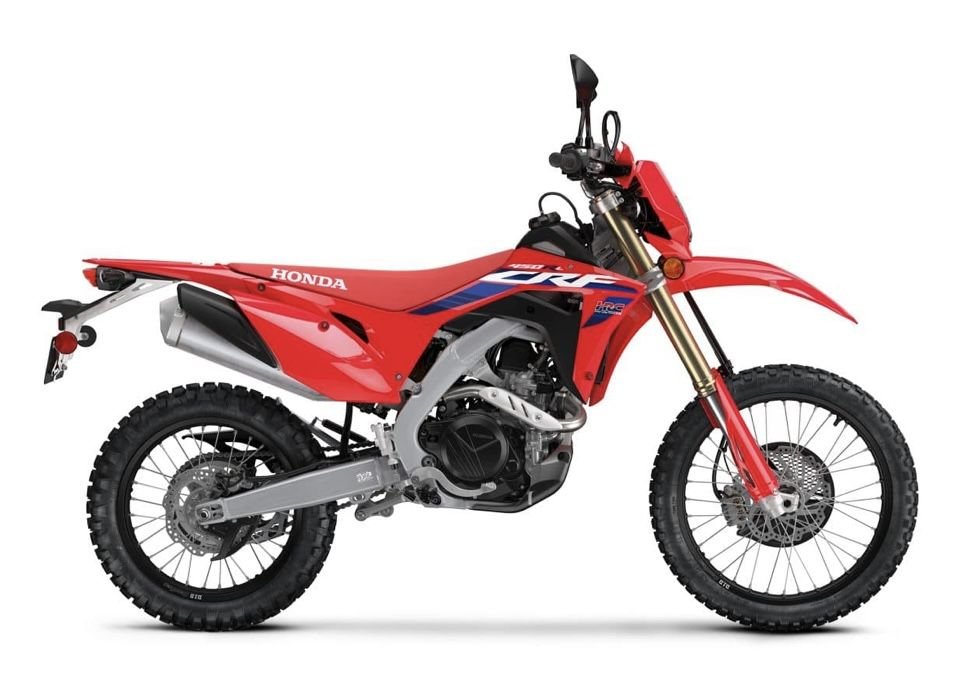
Dual-sport motorcycles are designed to combine road riding with off-road riding.
They normally include road equipment such as headlights, indicators, mirrors, road-oriented seats, and other components required for everyday transportation.
Because they must work well on paved roads, dual-sport motorcycles are often heavier than pure enduro motorcycles.
An enduro motorcycle places greater priority on off-road performance.
If your riding involves difficult trails, dunes, rocky terrain, mountain tracks, or technical off-road sections, an enduro motorcycle will normally feel considerably lighter and easier to control.
However, motorcycle classifications and road-registration rules vary between countries and individual models.
Enduro Motorcycle vs Adventure Motorcycle
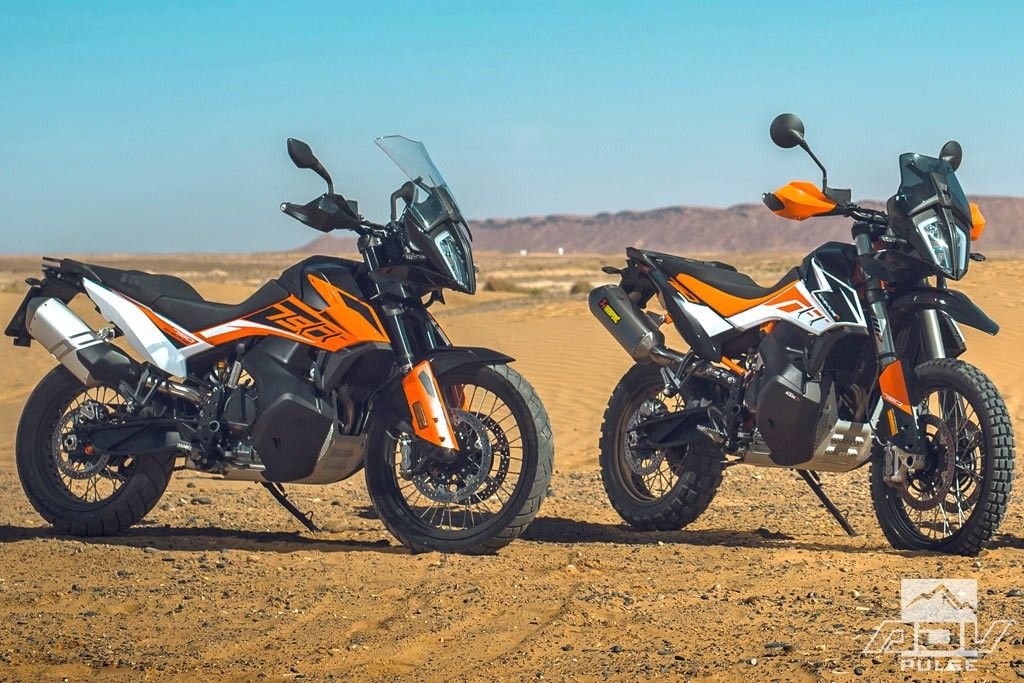
Adventure motorcycles such as large-capacity touring enduros are excellent for covering long distances while combining paved roads with moderate off-road tracks.
However, they can weigh considerably more than competition-style enduro motorcycles.
That difference becomes obvious in difficult terrain.
Imagine trying to cross deep sand, climb a rocky trail, or recover a motorcycle after falling on a steep slope.
A lighter enduro motorcycle gives the rider much greater freedom.
Adventure motorcycles are excellent for long-distance travel.
Enduro motorcycles are generally the better choice when the main objective is serious off-road riding.
What Terrain Can an Enduro Motorcycle Ride?

One of the biggest advantages of an enduro motorcycle is its versatility.
Depending on the rider’s ability, the motorcycle can handle gravel tracks, rocky mountain trails, dry riverbeds, sandy pistes, desert terrain, dunes, forest trails, mud, steep climbs, descents, and narrow technical tracks.
This variety is exactly what makes enduro riding so interesting.
Instead of riding around the same circuit repeatedly, riders can explore entire regions and encounter different terrain throughout the day.
Enduro Riding in Morocco
Morocco is particularly well suited to enduro motorcycles because the country offers an enormous variety of terrain.
Southern Morocco combines desert, mountains, open gravel pistes, dry riverbeds, rocky plateaus, remote Berber villages, valleys, and the dunes of the Sahara.
Around Merzouga and Erg Chebbi, riders can experience everything from fast desert tracks to sand and dune riding.
From Ouarzazate, routes can cross areas such as the Atlas Mountains, Anti-Atlas Mountains, Draa Valley, Saghro Mountains, Zagora, M’Hamid, Erg Chegaga, and Iriki.
Starting from Errachidia also gives riders access to remote desert trails before continuing toward Merzouga and Erg Chebbi.
This combination makes Morocco one of the most interesting destinations for riders who want to experience a genuine enduro motorcycle adventure.
What Is the Difference Between Enduro and Hard Enduro?
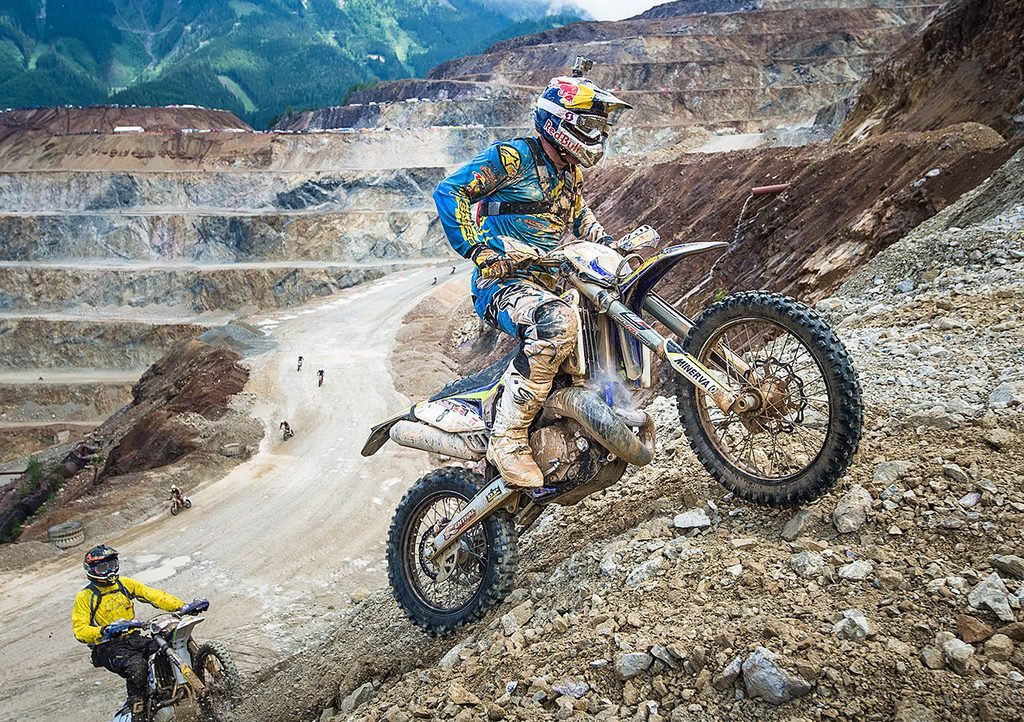
Normal enduro already involves challenging off-road terrain, but hard enduro takes technical difficulty much further.
Hard enduro routes may involve extremely steep climbs, large rocks, narrow canyons, difficult riverbeds, logs, slippery surfaces, and sections where riders may need to push or lift their motorcycles.
The objective is often simply to complete terrain that initially appears almost impossible.
Traditional enduro generally places more emphasis on riding longer routes efficiently while maintaining a good pace.
For most recreational riders, normal guided enduro riding provides more than enough excitement without requiring extreme hard-enduro skills.
2-Stroke vs 4-Stroke Enduro Motorcycles
One of the biggest decisions when choosing an enduro motorcycle is whether to ride a 2-stroke or 4-stroke engine.
Both can be excellent, but they provide different riding experiences.
2-Stroke Enduro Motorcycles
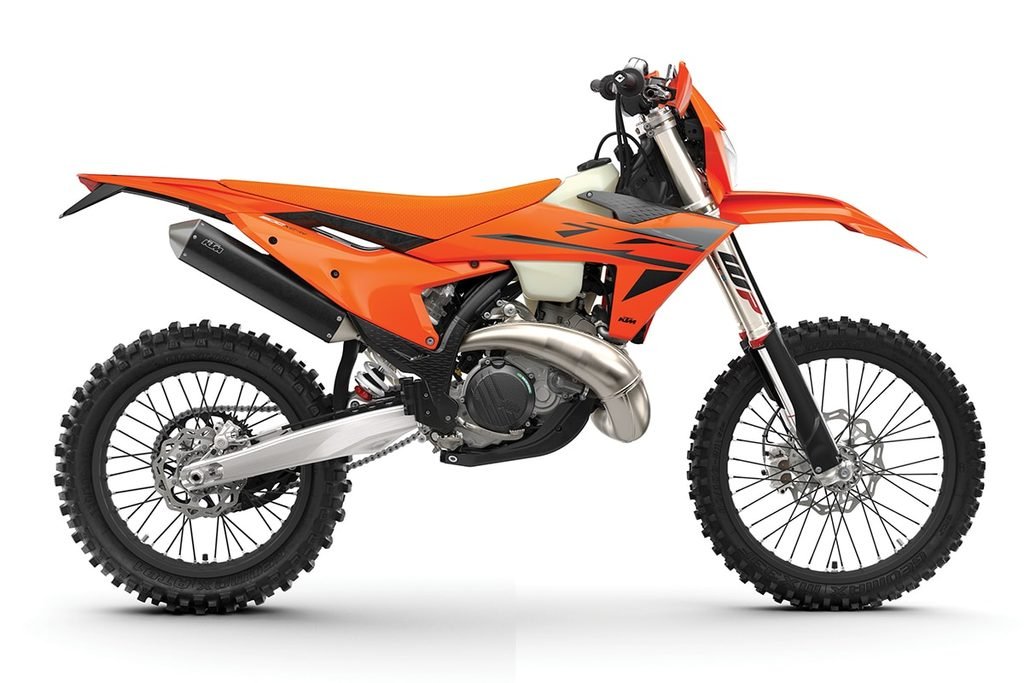
Two-stroke enduro motorcycles are popular among technical and hard-enduro riders because they feel very light and responsive.
Popular examples include 250cc and 300cc enduro motorcycles.
Their lightweight character can make them easier to control during extremely technical riding.
For this reason, 300cc two-strokes have become particularly popular in hard enduro.
4-Stroke Enduro Motorcycles
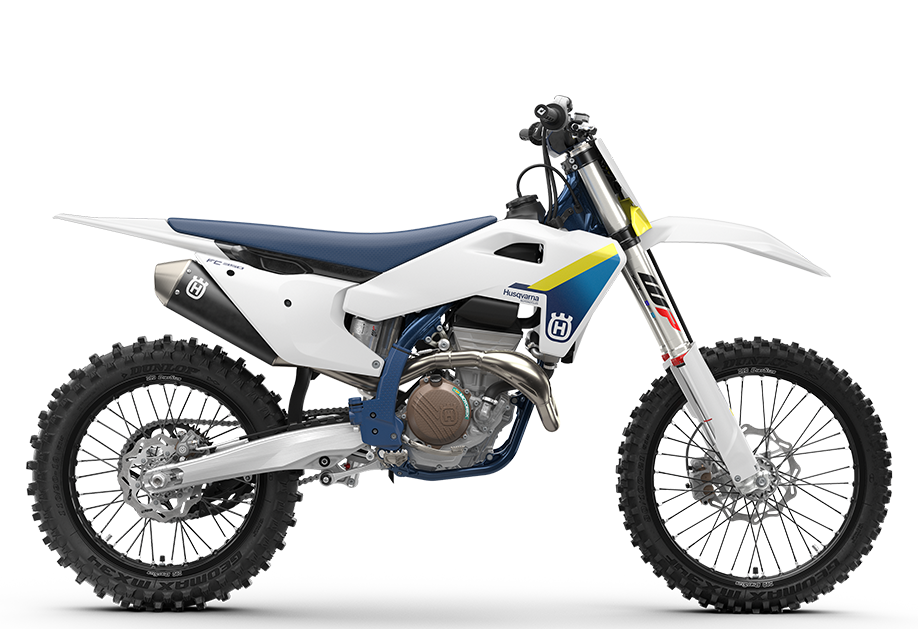
Four-stroke enduro motorcycles offer smooth, predictable torque and excellent performance across many types of terrain.
Models in the 350cc and 450cc categories are especially popular for longer enduro routes, fast pistes, desert riding, and rally-style terrain.
At Morocco Enduro Ride, the KTM 450 EXC-F is particularly well suited to Moroccan conditions.
Its combination of manageable weight, strong torque, suspension performance, and power makes it capable of handling everything from rocky tracks to fast desert pistes and sand.
Is a KTM 450 Good for Enduro Riding?
The KTM 450 EXC-F is one of the most capable four-stroke motorcycles for demanding enduro riding.
Its powerful engine works particularly well across open terrain where riders need both control and speed.
In Morocco, this type of motorcycle is extremely versatile because routes frequently change between technical sections and faster desert terrain.
During one motorcycle tour, riders may encounter rocky trails in the morning, Dakar-style pistes in the afternoon, and sand near Erg Chebbi before finishing the day.
The KTM 450 provides enough power for experienced riders while remaining controllable when ridden smoothly.
Are Enduro Motorcycles Good in Sand?
Yes.
Enduro motorcycles are among the best motorcycles for riding sand because they combine low weight, long suspension travel, off-road tires, and strong power.
However, riding sand requires a different technique from riding on hard ground.
The motorcycle naturally moves underneath the rider, especially through soft sand.
Maintaining momentum, keeping your vision forward, staying relaxed on the handlebars, and using the correct standing position can make sand riding considerably easier.
Dune riding requires additional experience because gradients, visibility, and soft sand can change quickly.
On guided enduro tours in Morocco, routes can normally be adapted according to the riders’ experience.
Can Beginners Ride an Enduro Motorcycle?
Yes, but choosing the correct terrain and learning basic techniques first is important.
A complete beginner should not immediately attempt extremely technical trails or difficult dunes.
Learning good riding habits from the beginning makes the experience much more enjoyable.
Important skills include standing correctly on the footpegs, smooth throttle control, clutch control, front and rear braking, looking ahead, balancing at slow speeds, climbing and descending, and understanding how the motorcycle reacts on loose terrain.
Riders who already have road motorcycle experience often adapt relatively quickly, although off-road riding requires a different riding technique.
At Morocco Enduro Ride, routes can be adapted according to the experience of the group, and riders can receive guidance before tackling more demanding terrain.
What Motorcycle Licence Do You Need for Enduro Riding?
Licence requirements depend on the country, the motorcycle, and whether public roads are involved.
For guided motorcycle tours in Morocco, riders should have the appropriate valid motorcycle licence required for the motorcycle they will be riding.
This is particularly important because multi-day enduro routes may occasionally use connecting roads between off-road sections.
Always confirm licence requirements before booking an international motorcycle tour.
What Equipment Do You Need for Enduro Riding?
Proper motorcycle equipment is essential because off-road riding involves considerably more rider movement and a higher probability of low-speed falls than normal road riding.
A suitable enduro setup normally includes a motorcycle helmet, off-road boots, riding trousers, jersey or jacket, gloves, knee protection, and body protection.
Good boots are especially important because the rider’s feet and ankles can be exposed to rocks and impacts.
When joining one of our guided motorcycle tours in Morocco, riding equipment can be provided if required, although experienced riders may prefer to bring their own boots for maximum comfort.
Is Enduro Riding Physically Difficult?
Enduro riding can be physically demanding.
Riders frequently stand on the footpegs, move their body around the motorcycle, control the bike through loose terrain, and absorb continuous movement from the terrain.
Technical riding can require considerable concentration as well.
However, an enduro tour does not need to be a race.
A good route should match the group’s ability.
Experienced riders may prefer faster and more technical tracks, while less experienced riders can follow easier pistes and gradually build confidence.
Regular breaks, hydration, appropriate riding pace, and a professional guide can make long riding days much more enjoyable.
Why Enduro Motorcycles Are Perfect for Exploring Morocco
Morocco is not simply about riding dunes.
The real attraction is the enormous variety of terrain available within relatively short distances.
A multi-day enduro motorcycle tour can take riders through palm groves, Berber villages, mountain passes, open desert plains, abandoned mining areas, rocky plateaus, Dakar Rally tracks, dry riverbeds, dunes, and remote Saharan settlements.
Many of these locations would be difficult or impossible to explore with a normal road motorcycle.
An enduro motorcycle gives riders the freedom to leave the asphalt behind and discover a very different side of Morocco.
Guided Enduro Motorcycle Tours in Morocco
For riders who want to experience enduro without transporting their own motorcycle to Morocco, a guided tour is one of the easiest options.
At Morocco Enduro Ride, we organize guided KTM enduro tours from destinations including Merzouga, Errachidia, and Ouarzazate.
Tours can range from shorter desert experiences to multi-day expeditions through remote areas of southern Morocco.
Our guided tours can include the KTM enduro motorcycle, fuel, professional motorcycle guide, assistance vehicle, riding equipment, accommodation, meals, luggage transport, and logistical support depending on the selected itinerary.
Routes are adapted according to rider experience whenever possible.
For experienced riders, this can mean longer stages and more technical terrain.
For intermediate riders, the objective can be discovering Morocco while progressively improving off-road skills.
Is an Enduro Motorcycle Right for You?
An enduro motorcycle could be the perfect choice if you enjoy exploring beyond paved roads.
It is particularly suitable for riders who prefer natural terrain over motocross circuits and who want a motorcycle capable of handling different surfaces during the same journey.
Enduro riding is about much more than speed.
It combines motorcycle control, endurance, exploration, navigation, changing terrain, and adventure.
That combination is exactly why so many riders become passionate about it.
And when the landscape includes the Sahara Desert, Atlas Mountains, remote Moroccan villages, and endless off-road pistes, the motorcycle becomes much more than transportation.
It becomes the key to the adventure.
Frequently Asked Questions About Enduro Motorcycles
What does enduro mean in motorcycles?
Enduro refers to a form of off-road motorcycle riding focused on endurance across varied natural terrain. Enduro motorcycles are designed to remain controllable and reliable during longer rides involving rocks, trails, mud, sand, climbs, and other challenging surfaces.
Is an enduro motorcycle the same as a dirt bike?
An enduro motorcycle is a type of dirt bike, but not every dirt bike is an enduro motorcycle. Motocross bikes, trials motorcycles, and recreational trail motorcycles also fall within the broader dirt-bike category.
Can you ride an enduro motorcycle on the road?
Some enduro motorcycles can be road registered depending on the model and country. Others are intended exclusively for off-road use. Riders should always check local registration and licence requirements.
Are enduro motorcycles good for beginners?
They can be. Lightweight enduro motorcycles are easier to control than large adventure motorcycles, but beginners should start on suitable terrain and learn basic off-road riding techniques before attempting difficult technical sections.
What is the best engine size for an enduro motorcycle?
There is no single best engine size. Smaller motorcycles can be easier for beginners, while 250cc, 300cc, 350cc, and 450cc motorcycles are commonly used by more experienced riders depending on terrain and riding style.
Is a 450 too powerful for enduro?
A 450cc enduro motorcycle is powerful, but experienced riders can benefit from its strong torque and versatility. It is particularly effective for desert riding, open pistes, rally-style terrain, and longer off-road routes.
What is better for enduro, a 2-stroke or 4-stroke?
Two-strokes are popular for very technical riding because of their lightweight feel, while four-strokes provide smooth torque and excellent performance across mixed terrain. The best option depends on riding experience and the type of terrain.
Can enduro motorcycles ride in the Sahara Desert?
Yes. Lightweight enduro motorcycles are extremely capable in desert conditions. With appropriate tires and riding technique, they can handle sandy tracks, rocky desert pistes, dry riverbeds, and dunes.
Experience an Enduro Motorcycle in Morocco
Reading about enduro motorcycles explains what these machines can do.
Riding one through Morocco shows you why they were built.
From the dunes of Erg Chebbi near Merzouga to remote Dakar-style desert tracks, mountain trails, valleys, and Saharan villages, Morocco offers some of the most varied off-road motorcycle terrain in the world.
With a lightweight KTM 450 EXC-F, professional guide, assistance vehicle, and routes adapted to your riding experience, you can discover Morocco far beyond the normal tourist roads.
Explore our Morocco Enduro Motorcycle Tours and experience real off-road riding in the Sahara.
2 thoughts on “What Is an Enduro Motorcycle? Complete Beginner Guide”