
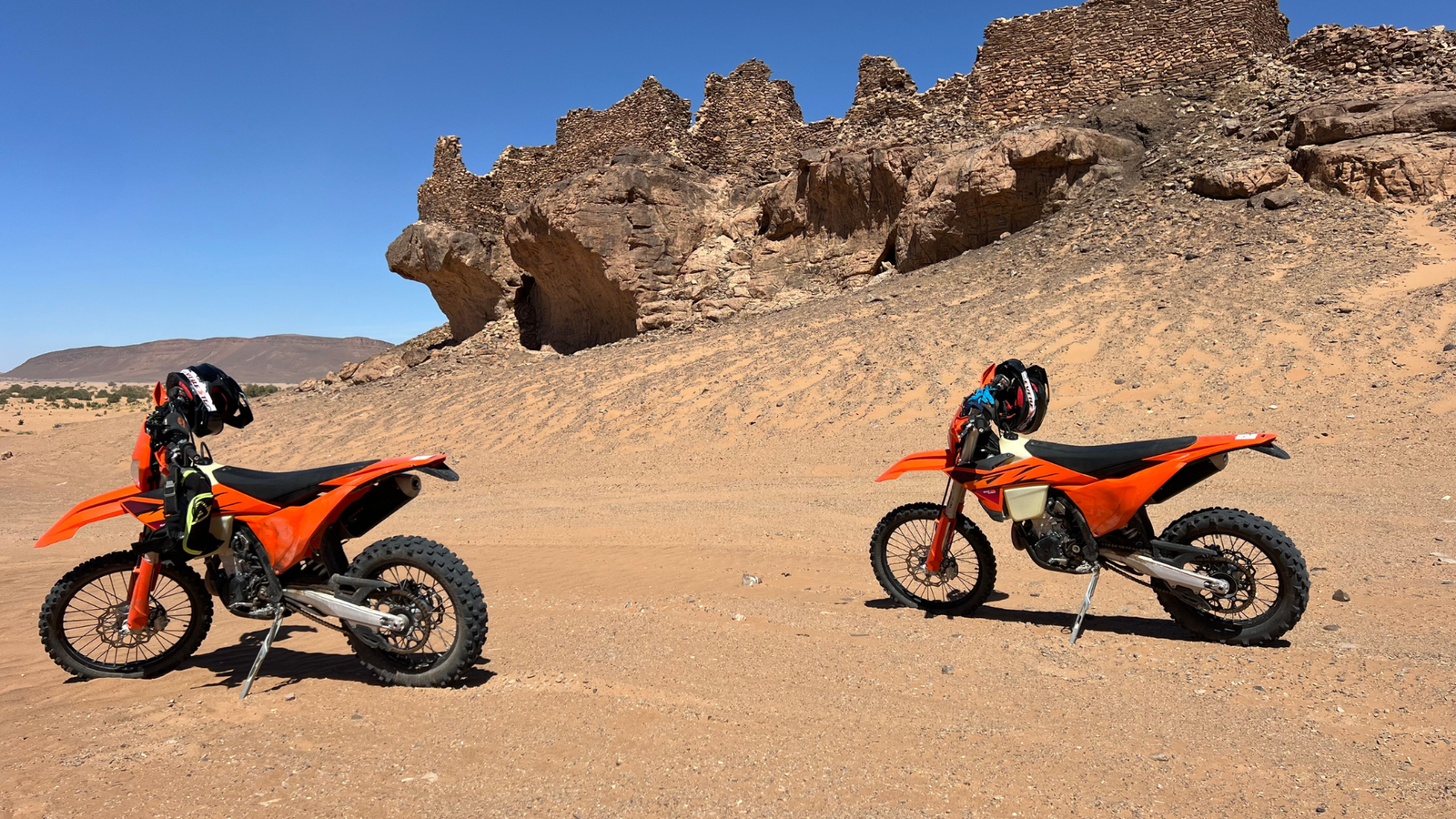
The weather in the Merzouga Desert shapes nearly every part of the Sahara experience in Morocco. Located in southeastern Morocco near the Algerian border, Merzouga is famous for the spectacular golden dunes of Erg Chebbi.
Travelers preparing for Morocco desert tours, camel trekking, luxury desert camps, Merzouga motorcycle tours, or off-road adventures often wonder what temperatures and riding conditions they can expect in the Sahara.
Understanding the climate of Merzouga is important because the season you choose can influence everything from the comfort of your desert camp to the conditions of the tracks, dunes, and desert trails.
For motorcycle riders in particular, weather plays an important role. Cooler temperatures make long days of enduro riding much more comfortable, while dry conditions provide excellent opportunities to explore desert pistes, rocky tracks, dry riverbeds, and the famous dunes surrounding Erg Chebbi.
Merzouga experiences a genuine Saharan desert climate. Rainfall remains scarce throughout the year, sunshine dominates nearly every season, and the difference between daytime and nighttime temperatures can sometimes be surprisingly dramatic.
Whether you are traveling from Marrakech, Fes, Ouarzazate, or Errachidia, understanding the desert climate beforehand helps you choose the best period for your Sahara adventure.
Spring Weather in Merzouga Desert (March to May)
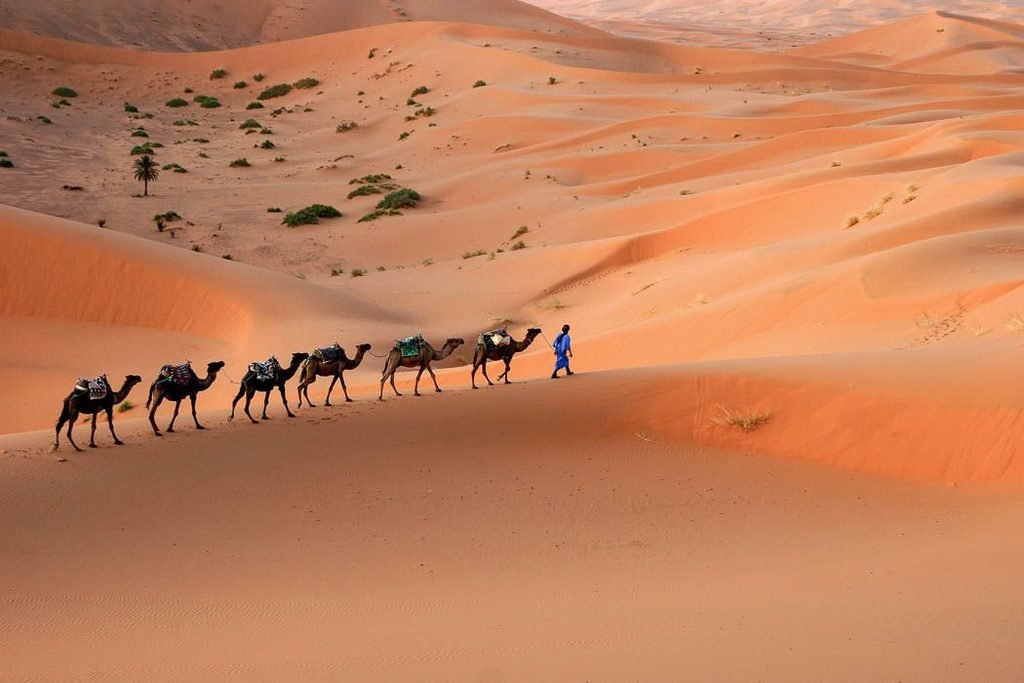
Spring drapes the Merzouga Desert in remarkably agreeable weather, making it one of the most cherished periods for Morocco Sahara tours. The fierce furnace-like heat of summer has not yet arrived, while winter’s icy desert evenings slowly retreat into memory.
March introduces gentler warmth across the dunes. The days feel radiant yet comfortable, ideal for wandering through Erg Chebbi without exhaustion. As dusk settles, the air cools pleasantly, creating perfect conditions for campfires and traditional Berber music beneath open skies.
April and May gradually elevate the temperatures, though conditions remain favorable for nearly every desert activity imaginable. Camel trekking, quad biking, sandboarding, and overnight desert camps become exceptionally enjoyable during this period. The dunes glow with richer golden shades, and the crystalline skies offer extraordinary visibility for photographers and stargazers alike.
Spring attracts a wide spectrum of visitors — families exploring Morocco together, students seeking cultural adventures, honeymoon travelers, and private tour groups searching for balanced weather without climatic extremes. Long strolls over rolling dunes become effortless, and the Sahara reveals a softer, more welcoming temperament.
Summer Weather in Merzouga Desert (June to August)
Summer in Merzouga arrives with formidable intensity. During June, July, and August, the desert sun reigns relentlessly across the landscape, pushing daytime temperatures to blistering heights. Midday exposure can feel overwhelming, especially for travelers unfamiliar with arid environments.
Yet, despite the scorching afternoons, summer unveils a quieter and deeply authentic side of the Sahara.
Most desert excursions during this season are organized during early morning hours or shortly before sunset, when the heat softens slightly. These moments reveal astonishing beauty — enormous silent dunes painted in copper and crimson hues while the horizon flickers beneath the fading sun.
One unexpected surprise awaits many visitors: desert nights during summer are often remarkably pleasant. After sunset, the oppressive heat dissolves quickly, replaced by calmer air and tranquil evenings inside traditional desert camps.
Travelers who embrace summer Morocco tours often appreciate the serenity that arrives with fewer crowds. Camps feel more intimate, dune landscapes appear untouched, and prices may become more affordable compared to peak travel months. Skilled local guides, well-planned itineraries, and air-conditioned transportation make summer desert journeys manageable and rewarding for adventurous spirits.
Autumn Weather in Merzouga Desert (September to November)
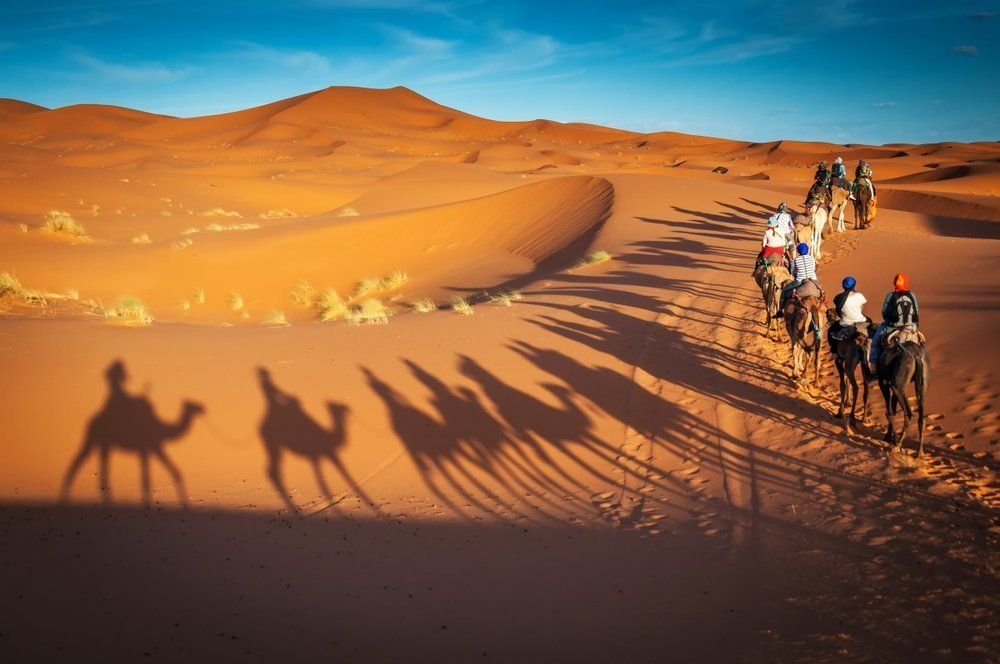
Autumn restores balance to the Merzouga Desert after the fierce blaze of summer. Temperatures begin descending gradually, allowing the Sahara to regain its gentle rhythm.
September still carries traces of summer warmth, though conditions become increasingly comfortable as October and November unfold. Clear blue skies dominate the horizon, while the dunes shimmer beneath softer sunlight that enhances the desert’s natural colors.
This season is exceptionally popular for camel trekking adventures, luxury desert camps, photography tours, and romantic Sahara escapes. Many couples choose autumn for honeymoon experiences in Morocco because the climate permits peaceful evenings without excessive heat or bitter cold.
Photographers particularly admire autumn light in Merzouga. Sunrise and sunset produce velvety golden reflections across the dunes, creating landscapes that appear almost surreal. The atmosphere feels calm, dry, and wonderfully cinematic.
Because of these ideal conditions, autumn has become one of the busiest periods for Morocco desert tours, especially among travelers arriving from Europe, North America, and Asia.
Winter Weather in Merzouga Desert (December to February)
Winter unveils an entirely different character in the Merzouga Desert. While daytime temperatures remain mild and enjoyable, the nights can become piercingly cold once darkness settles over the Sahara.
December and January often deliver crisp desert mornings accompanied by luminous sunshine during the afternoon. Walking through the dunes during winter feels comfortable and refreshing, making this season especially appealing for travelers who dislike excessive heat.
However, desert nights should never be underestimated. Temperatures may drop sharply after sunset, particularly during January. Travelers staying in desert camps should arrive prepared with warm jackets, scarves, gloves, and layered clothing.
Snowfall in Merzouga is exceedingly uncommon, yet the chill can still feel intense because of the dry desert air. Even so, winter continues to attract many visitors seeking peaceful Morocco desert experiences away from crowded tourist seasons.
Families, senior travelers, and those preferring gentler daytime conditions often consider winter the ideal moment to discover the Sahara. The desert becomes quieter, calmer, and deeply atmospheric during these months.
Rainfall and Wind in Merzouga Desert
Rain rarely interrupts life in the Merzouga Desert. Many months pass beneath uninterrupted sunshine without a single drop touching the dunes. This arid stability makes Merzouga a dependable destination for outdoor adventures throughout the year.
Occasionally, light showers may appear during winter or early spring, though such rainfall is usually brief and seldom disrupts travel plans.
Wind, however, plays a more visible role within the Sahara landscape. Seasonal gusts sometimes sweep across Erg Chebbi, sculpting elegant ripple patterns across the dunes and reshaping the sand into breathtaking formations. These desert winds contribute to the raw beauty that makes the Sahara feel alive and ever-changing.
Experienced local guides monitor weather conditions carefully to ensure safe and enjoyable desert excursions, particularly during periods of stronger winds.
Best Time to Visit Merzouga Desert
The finest season for visiting the Merzouga Desert depends largely on personal comfort and travel preferences.
Spring and autumn are generally considered the most favorable periods because temperatures remain balanced and outdoor activities feel comfortable throughout the day. Winter suits travelers seeking cooler daytime exploration, while summer appeals to adventurous visitors who appreciate quieter dunes and fewer crowds.
Regardless of season, Merzouga remains one of Morocco’s most unforgettable destinations. Camel rides across towering dunes, luxury desert camps beneath star-filled skies, sandboarding adventures, and encounters with local Berber communities create memories that linger long after the journey ends.
Final Thoughts on Merzouga Desert Weather
The weather in the Merzouga Desert is not merely background scenery — it becomes part of the experience itself. Fierce sunlight, immense open horizons, silent nights, and dramatic temperature shifts shape the authentic soul of the Sahara.
With thoughtful preparation and the right seasonal choice, a Merzouga desert journey transforms into one of the most extraordinary chapters of any Morocco itinerary.
Whether you are traveling from Marrakech to Merzouga, joining a Sahara tour from Fes, or crafting a tailor-made Morocco adventure, understanding the desert climate allows you to experience the Sahara with greater comfort, confidence, and wonder.